

5 Signs Your Joint Pain Is Caused by Oxidative Stress
If you’re struggling with joint pain, oxidative stress might be the hidden culprit. Oxidative stress happens when there’s an imbalance between free radicals (unstable molecules that damage cells) and antioxidants (molecules that protect cells). This imbalance can lead to joint damage, inflammation, and cartilage breakdown.
Here are 5 signs your joint pain could be linked to oxidative stress:
- Constant fatigue with joint pain: Cellular damage disrupts energy production, leaving you exhausted even after rest.
- Morning stiffness lasting over an hour: Oxidative stress weakens cartilage and affects joint lubrication.
- Swelling and warmth in joints: Persistent inflammation caused by free radicals can make joints feel hot and puffy.
- Brain fog during flare-ups: Oxidative stress impacts brain cells, causing memory lapses and difficulty focusing.
- Slow healing and prolonged soreness: Free radicals interfere with tissue repair, delaying recovery from minor injuries.
Addressing oxidative stress can help ease joint pain. Molecular hydrogen, a targeted antioxidant, neutralizes harmful free radicals and supports joint health. Taking hydrogen-infused water daily has shown promising results in reducing inflammation and improving mobility.
Key takeaway: If you notice these symptoms, consider managing oxidative stress with antioxidants and lifestyle changes to protect your joints and overall well-being.
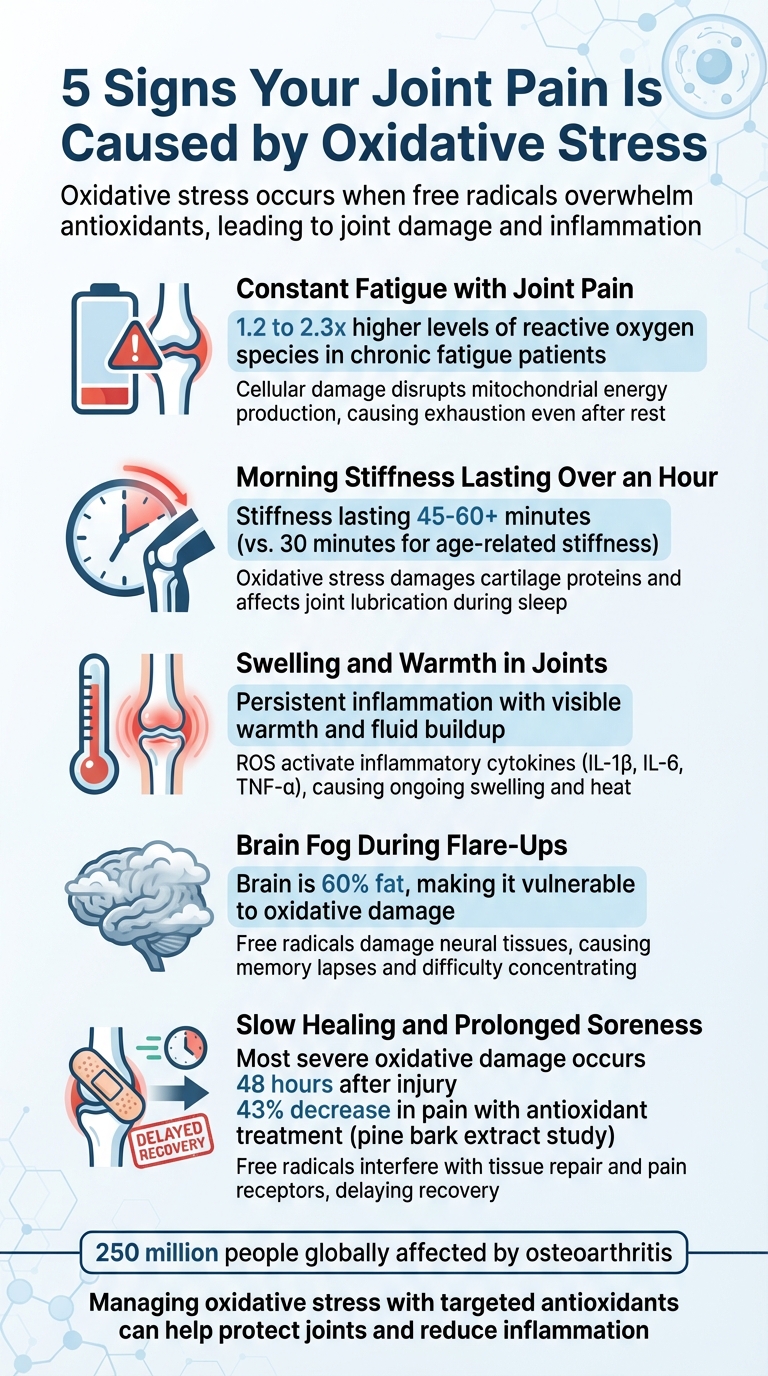
5 Signs Joint Pain Is Caused by Oxidative Stress
Arthritis: Taming the Flame by Treating Oxidative Stress
sbb-itb-6860cc4
Sign 1: Constant Tiredness Along with Joint Pain
If you're dealing with joint pain paired with an unshakable sense of fatigue, oxidative stress might be the culprit. This isn’t your usual end-of-the-day exhaustion - it’s a deeper, cellular-level fatigue that leaves you feeling depleted, even after a full night of sleep.
Oxidative stress directly impacts your mitochondria, the tiny "power plants" in your cells responsible for producing ATP, the energy your body relies on. When free radicals damage the membranes and enzymes within mitochondria, your cells essentially run out of fuel. Studies on chronic fatigue reveal that affected individuals have 1.2 to 2.3 times higher levels of reactive oxygen species (ROS) and oxidized lipids compared to those without the condition. This disruption not only saps your energy but also makes your body more sensitive to stressors, including physical activity.
Adding to the challenge, exercise can actually worsen the problem. Strenuous activity ramps up free radical production, which can overwhelm your body’s already weakened antioxidant defenses. This leads to a vicious cycle, aggravating both fatigue and joint pain.
As health writer Robyn Kellin puts it:
"When free radicals overwhelm antioxidants, they damage mitochondrial membranes and enzymes, impairing energy production and causing cells to 'starve' for fuel. This inefficiency manifests as profound tiredness, especially post-exertion."
The link between fatigue and joint pain isn’t just a coincidence. Oxidative damage triggers the release of pro-inflammatory cytokines like TNF-α, which not only depletes your energy but also attacks your joint tissues. This creates a feedback loop of mitochondrial damage, increased ROS, and ongoing pain and fatigue.
Sign 2: Morning Stiffness and Limited Joint Movement
If you wake up feeling stiff, with joints that take their time to loosen up, it might hint at something more than just a bad sleeping position. This kind of stiffness often points to oxidative stress affecting your joints while you rest. The root cause lies in changes to your joint lubrication during sleep.
When you’re asleep, your synovial fluid - the natural lubricant in your joints - tends to thicken, much like motor oil that hasn’t been stirred up. This reduces its ability to keep your joints moving smoothly. Adding oxidative stress to the mix makes things worse. Reactive oxygen species (ROS) can harm cartilage cells (chondrocytes) and break down structural proteins, such as Collagen type II and Aggrecan. This damage weakens cartilage, leaving it less capable of withstanding daily wear and tear, resulting in stiffness that lingers.
Here’s a key difference to note: stiffness caused by oxidative stress usually lasts 45 to 60 minutes or longer. On the other hand, stiffness tied to aging tends to ease up within 30 minutes of moving around. So, if your joints regularly take an hour or more to loosen up, it could signal a deeper issue. Also, since cortisol - your body’s natural anti-inflammatory hormone - reaches its lowest levels between 3:00 AM and 4:00 AM, any oxidative damage or inflammation may feel more intense in the morning.
Another telltale sign is symmetry. Stiffness from oxidative stress often affects both sides of the body, like both knees or both hands. In contrast, stiffness from overuse or injury is usually isolated to one joint or area.
To ease morning stiffness, consider a few simple remedies. Gentle movements, like ankle pumps and knee bends, while still in bed, can help improve synovial fluid circulation. A warm 15–20 minute shower can also loosen up your joints. And don’t forget to stay hydrated - proper hydration keeps your joint fluid functioning effectively.
Sign 3: Ongoing Inflammation with Swelling and Heat
If your joints feel warm to the touch and appear swollen, this could point to oxidative stress at work. This happens when damaged mitochondria produce too many Reactive Oxygen Species (ROS), which drive persistent inflammation. Instead of subsiding as it should, this inflammation continues, amplifying the oxidative stress signals tied to joint pain.
Here’s what’s happening inside your joints: ROS activate proinflammatory cytokines like IL-1β, IL-6, and TNF-α. These, in turn, trigger the NF-κB pathway, which ramps up inflammatory mediators such as COX-2, PGE2, and nitric oxide. The result? Swelling, heat, and that throbbing pain you might feel.
The warmth you notice isn’t random - it’s a direct result of TNF-α promoting angiogenesis, or the growth of new blood vessels, through vascular endothelial growth factor (VEGF). This process increases blood flow to the area, causing redness and heat. While osteoarthritis (OA) might show only slight warmth, oxidative stress-related inflammatory conditions often present with what doctors describe as a "warm knee" and a noticeable effusion (fluid buildup).
"OA pathogenesis arises from maladaptive crosstalk between sustained joint inflammation and intracellular organelle dysfunction." - Nature: Signal Transduction and Targeted Therapy
If your joint inflammation comes with ongoing warmth and swelling, oxidative stress could be the root cause. Breaking this cycle of inflammation may require addressing oxidative stress directly to manage the pain effectively.
Sign 4: Mental Fog During Flare-Ups
When joint pain flares up, mental fog often tags along, thanks to oxidative stress disrupting brain cell function. This stress doesn’t just mess with your joints - it also targets your brain, leading to overlapping symptoms.
Here’s how it works: oxidative damage to mitochondria in brain cells lowers ATP production, which is the energy your brain needs to function. As a result, you might struggle to concentrate, experience memory lapses, or feel like your thoughts are moving in slow motion. The same oxidative stress that wreaks havoc on your joints also affects your brain, amplifying these cognitive challenges.
The brain, composed of nearly 60% fat, is particularly vulnerable to oxidative damage. Free radicals attack these fatty structures, impairing memory, attention, and processing speed. On top of that, oxidative stress triggers pro-inflammatory cytokines like TNF-α. These chemicals interfere with neurotransmitter activity and reduce blood flow to the brain, making cognitive fog even worse.
"Brain fog - trouble concentrating, memory lapses, or mental sluggishness - arises as radicals damage neural tissues." – Robyn Kellin
Researchers describe this as a "feed-forward loop." Essentially, the imbalance in your body’s redox system keeps central sensitization going, meaning pain and brain fog can persist even after the initial joint injury. If your mind feels fuzzy every time your joint pain flares, it’s likely oxidative stress is hitting both your brain and joints at the same time.
Sign 5: Delayed Healing and Ongoing Muscle Soreness
If minor strains or injuries around your joints seem to take much longer than usual to heal, oxidative stress could be interfering with your body’s cellular recovery processes. This prolonged soreness often reflects how free radicals disrupt cellular recovery mechanisms.
Interestingly, research shows that the most severe oxidative damage happens about 48 hours after an injury - not immediately. During this period, mitochondrial oxidative stress becomes a major factor in cell death. In fact, studies reveal that only a small number of cartilage cells die at the time of injury, while the majority succumb in the following two days due to oxidative stress. Mitchell Coleman puts this into perspective:
"The time to complete joint destruction can be as fast as two to four years. That can be devastating for an 18-year-old who injures an ankle falling off a ladder or playing sports."
Free radicals don’t just slow healing - they also interfere with pain receptors, making it harder for your body to manage discomfort. This means soreness can linger even when there’s no visible swelling or clear reason for the pain. OptiHealth Products highlights this connection:
"Studies have shown that in patients who deal with chronic pain, there is an imbalance between free radicals and antioxidants. It has also been shown to impact pain receptors and inhibit the body's ability to reduce pain."
If small injuries like cuts or bruises near your joints heal unusually slowly, or if muscle soreness sticks around for weeks, oxidative stress might be the culprit. This is especially concerning given that around 5.6 million people in the U.S. live with posttraumatic osteoarthritis, a condition where oxidative stress accelerates joint degeneration.
The good news? Prompt treatment with antioxidants can significantly help. Coleman’s research team discovered that:
"posttraumatic osteoarthritis that occurs in an ankle after a severe injury can be significantly blunted by suppressing mitochondrial activity or providing antioxidants immediately after injury."
In one 2018 study, patients with knee pain who took pine bark extract - a powerful antioxidant - over three months reported a 43% decrease in pain levels. These findings emphasize how addressing oxidative stress can play a key role in speeding up recovery and reducing long-term damage.
How Oxidative Stress Damages Joint Health
Oxidative stress sets off a destructive chain reaction in the structures that support your joints. Free radicals activate matrix metalloproteinases (MMPs) - specifically MMP-1, MMP-8, and MMP-13 - which target type I and II collagen. These proteins are crucial for giving your joints both strength and flexibility. Interestingly, type I collagen accounts for roughly 30% of the protein in your body.
This process becomes a vicious cycle. As collagen breaks down, the fragments produced actually increase the generation of reactive oxygen species (ROS). These ROS, in turn, stimulate even more MMP activity, leading to further collagen destruction. Gary J. Fisher, from the University of Michigan's Department of Dermatology, describes the impact of this cycle:
"Age-dependent collagen fragmentation results in accumulation of fragmented collagen, which irreversibly impairs the functional and structural integrity of connective tissue."
ROS not only degrade existing collagen but also interfere with your body's ability to produce new collagen. Specifically, they suppress genes like COL2A1, which are vital for creating fresh type II collagen. Research indicates that aged tissue contains 4.3 times more fragmented collagen than younger tissue, and fibroblast interaction with collagen fibrils drops by 80% as we age.
Inflammation in joints creates a low-oxygen (hypoxic) environment, forcing cells to work harder to produce energy. This added stress disrupts mitochondrial function, leading to excessive ROS production as a byproduct of impaired ATP synthesis. As the Journal of Nanobiotechnology explains:
"Mitochondrial metabolic dysregulation promotes ROS production, which further fuels inflammatory responses and extracellular matrix (ECM) degradation, ultimately forming a vicious cycle that accelerates cartilage degeneration."
These combined effects shed light on why osteoarthritis - a condition characterized by the progressive destruction of joint cartilage and collagen - affects around 250 million people globally. The table below highlights key differences between joint pain caused by oxidative stress and pain resulting from injuries.
Comparison Table: Oxidative Stress vs. Injury-Related Joint Pain
| Feature | Oxidative Stress-Related Pain | Injury-Related Joint Pain |
|---|---|---|
| Pain Type | Chronic, dull ache | Sharp, acute pain |
| Onset | Gradual, linked to aging or chronic inflammation | Sudden, following trauma or a specific incident |
| Fatigue | Often includes systemic tiredness or "mental fog" | Rarely involves systemic fatigue |
| Swelling | Persistent swelling and warmth | Immediate swelling post-injury |
| Healing | Slower recovery with ongoing soreness | Follows a typical healing timeline |
| Mechanism | Driven by ROS and MMP enzyme activity | Caused by physical tissue damage |
Solution: Molecular Hydrogen as a Targeted Antioxidant
Edenvia Molecular Hydrogen tablets tackle oxidative stress, a key factor in joint health issues, by breaking the cycle of oxidative damage. Unlike general antioxidants that work throughout the entire body, molecular hydrogen (H₂) operates with precision. It targets and neutralizes the most harmful free radicals, such as hydroxyl radicals (•OH), while preserving beneficial reactive oxygen species that are essential for normal cellular functions.
Due to its incredibly small molecular size, H₂ can easily cross cell membranes and reach critical areas like mitochondria and the cell nucleus, addressing oxidative damage right at its source. Research published in the Journal of Nanobiotechnology highlights this unique ability:
"During the process of hydrogen therapy, small hydrogen molecules can readily penetrate mitochondria, specifically reducing the levels of •OH thereby protecting mitochondrial function."
A study from September 2024 by Tri-Service General Hospital in Taipei demonstrated that taking one 170 mg hydrogen-rich capsule daily improved lab parameters, increased protective PD-1⁺ T cells, and significantly reduced fatigue levels - from 8.1 to 3.0 - in a patient with rheumatoid arthritis.
Beyond neutralizing harmful free radicals, molecular hydrogen helps reduce inflammation in the joints by downregulating NF-κB and MAPK signaling pathways. It also promotes mitophagy, the process of clearing out damaged mitochondria, which helps restore balance in reactive oxygen species. This process supports the production of Type II collagen and proteoglycans, essential components for maintaining joint structure and function.
Edenvia tablets are easy to use - simply dissolve them in water. Each tablet releases approximately 1.7 × 10²¹ hydrogen molecules, providing a safe, non-toxic way to support joint health as part of your daily routine.
How to Add Molecular Hydrogen to Your Daily Routine
To start incorporating molecular hydrogen into your day, dissolve 1–2 tablets in 12–16 oz of room-temperature or chilled water. Avoid using hot water, as it can reduce effectiveness. Let the tablets fully dissolve for about 3 minutes, then drink the hydrogen-infused water within 30 minutes. This simple routine ensures you get the full antioxidant benefits to help combat oxidative stress.
For the best results, take one dose in the morning and another in the evening. This twice-daily practice provides ongoing support for joint health. Many users begin to notice improvements, like reduced inflammation and less daily discomfort, within the first 1–2 weeks. In fact, 90% of people report these changes during that time. Over 2–4 weeks, as the antioxidant effects build up, deeper benefits - like improved joint comfort and mobility - tend to develop.
To maximize the effects, pair hydrogen water with an anti-inflammatory diet rich in foods containing Vitamin C (like citrus fruits, bell peppers, and broccoli), Vitamin E (such as almonds, sunflower seeds, and spinach), and selenium (found in tuna, salmon, and eggs). A Mediterranean-style diet, which focuses on antioxidant-packed foods, complements molecular hydrogen by naturally reducing free radicals in the body.
Staying properly hydrated is also key. Aim to drink 1–2 liters of water daily to support free radical neutralization and cellular recovery. Using hydrogen-rich water as your main hydration source ensures the gas reaches your cells and mitochondria, where oxidative stress begins.
To track your progress, pay attention to changes in your body - like reduced morning stiffness, less joint swelling, increased energy, and better mobility. Keeping tabs on these improvements helps confirm the positive impact of molecular hydrogen. Patricia M. shared her story:
"This hydrogen tablet helped reduce the constant aches in my knees and hips. I feel looser throughout the day, recover faster after activity, and don't rely on ibuprofen anymore".
With consistent use, 92% of users report better joint comfort and mobility, including easier movement and reduced pain in the hips and knees.
Conclusion
Feeling constantly tired, waking up with stiff joints, dealing with persistent swelling, struggling with mental fog, or noticing slower healing times could all point to oxidative stress affecting the tissues that keep your joints working smoothly.
Understanding these warning signs allows for focused action. Oxidative stress doesn't just harm tissues - it also disrupts pain regulation, fueling inflammation and scar tissue buildup.
Taking a proactive approach to protect your cells from oxidative damage is key to maintaining joint health. Edenvia Molecular Hydrogen tablets are designed to tackle harmful free radicals directly at the source. Molecular hydrogen reaches deep into your mitochondria - the starting point of oxidative stress - helping to protect cartilage and support your body's natural repair mechanisms. Clinical research highlights that molecular hydrogen therapy can help reduce fatigue and improve immune function in as little as one month.
FAQs
How can I tell if my joint pain is oxidative stress or an injury?
Joint pain caused by oxidative stress tends to be chronic and ongoing, without being tied to a specific injury or event. It often comes with symptoms like inflammation, stiffness, and a gradual worsening over time. On the other hand, pain from an injury usually follows a clear incident, like a fall, and may involve noticeable swelling or bruising. If your pain feels widespread, persists for a long time, and isn’t linked to any trauma, oxidative stress might play a role.
What tests can confirm oxidative stress is driving my symptoms?
Tests such as the Oxidative Stress Profile Test can help identify whether oxidative stress is playing a role in your symptoms. This test measures your body's oxidative stress levels alongside your antioxidant balance, offering a clearer picture of any imbalances that might be impacting your overall health.
Is hydrogen water safe to use every day with my medications?
Hydrogen water is considered safe for daily use, even if you're taking medications. That said, it’s always a good idea to check with your healthcare provider before incorporating it into your routine. This ensures there won’t be any unexpected interactions, keeping your health and safety the top priority.