

7 Natural Ways to Reduce Joint Inflammation Fast
Joint pain and inflammation can disrupt your daily life, but there are effective ways to address it naturally. This guide highlights seven methods to help reduce swelling, ease discomfort, and improve mobility without relying solely on medication. Here's what you can try:
- Hydrogen-Rich Water: Drink water infused with molecular hydrogen using Edenvia tablets to reduce inflammation at the cellular level.
- Turmeric & Ginger Tea: These powerful spices lower inflammation and support joint health.
- Hot & Cold Compresses: Alternate between heat to relax muscles and cold to reduce swelling.
- Epsom Salt Baths: Soak in magnesium-rich baths to ease joint pain and improve relaxation.
- Olive Oil Massage: Use extra-virgin olive oil to relieve pain and stiffness naturally.
- Omega-3 Foods: Add fatty fish, walnuts, or flaxseeds to your diet to fight inflammation.
- Peppermint & Eucalyptus Oil: Apply a diluted blend for quick, soothing relief.
These methods are simple to incorporate into your routine and can provide immediate relief while promoting long-term joint health. Start small by trying one or two and see what works best for you.
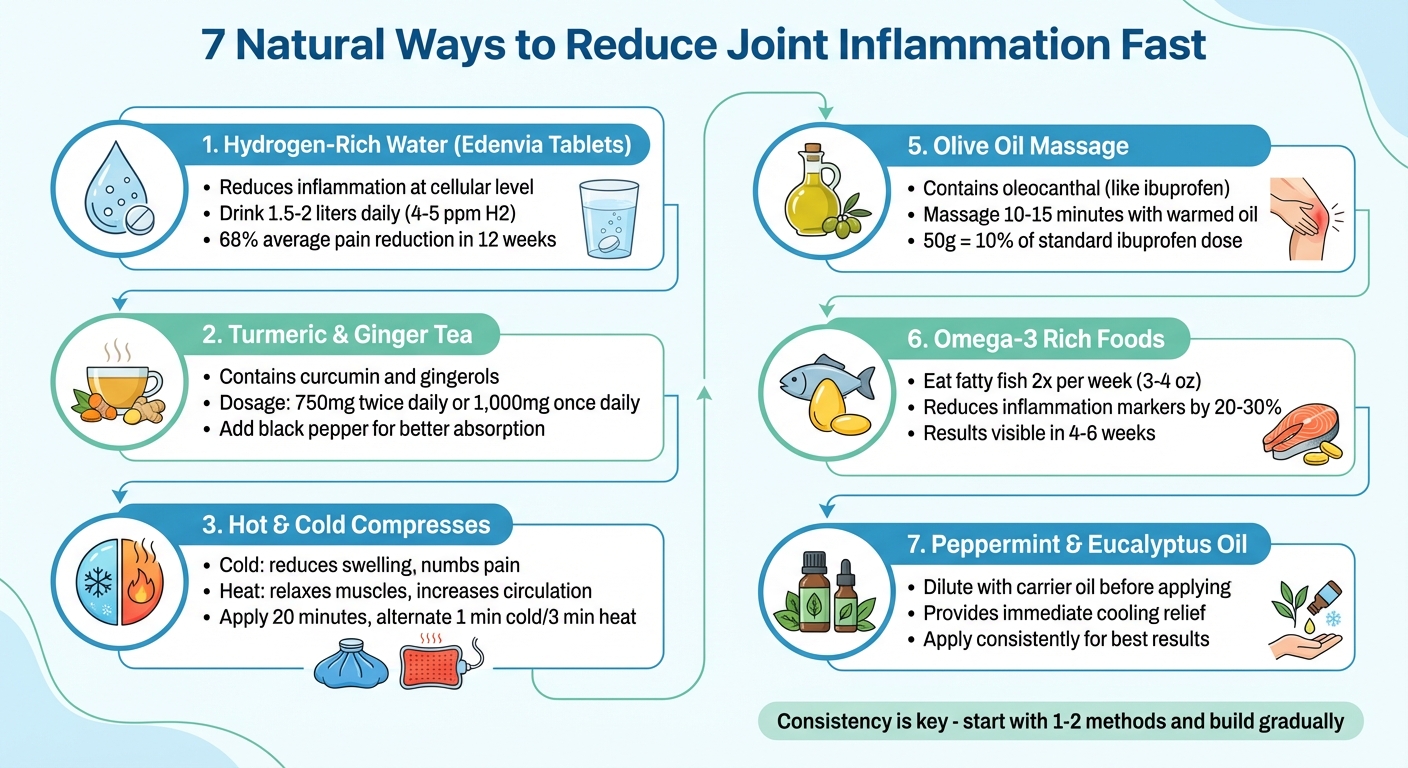
7 Natural Methods to Reduce Joint Inflammation Fast
1. Drink Molecular Hydrogen-Rich Water with Edenvia Tablets

Anti-inflammatory effectiveness
Molecular hydrogen (H2) acts as a selective antioxidant, targeting harmful free radicals like hydroxyl radicals while sparing the beneficial ones. This helps tackle inflammation right at its source without upsetting the body's natural balance. Additionally, hydrogen molecules can influence gene expression, reducing the production of pro-inflammatory cytokines that contribute to joint pain and swelling.
Clinical studies have demonstrated that drinking water containing 4–5 ppm of hydrogen daily for 12 weeks can significantly lower joint tenderness, swelling, and inflammatory markers such as IL-6 and TNF-α.
Ease of implementation
Using Edenvia tablets is simple. Drop one tablet into a sealable bottle filled with clean water, seal it, and wait 10–20 minutes for the tablet to fully dissolve. Once opened, drink the water within 15 to 30 minutes since hydrogen dissipates quickly when exposed to air.
For the best results, drink the hydrogen-rich water 30 minutes before breakfast or within 30 minutes after exercising. Research suggests consuming 1.5 to 2 liters (about 50–68 ounces) daily to achieve therapeutic effects. If you're just starting, begin with 20 ounces and gradually increase your intake while observing how your body responds.
This simple routine not only helps reduce joint inflammation but also provides a range of additional health benefits.
Additional health benefits
The benefits of molecular hydrogen extend beyond easing inflammation. Its ability to penetrate cell membranes supports mitochondrial energy production and cellular repair. It can even cross the blood-brain barrier, potentially reducing neuroinflammation and improving mental clarity. In clinical trials, adults with metabolic syndrome experienced enhanced antioxidant capacity after just four weeks of regular use. Plus, it helps reduce muscle fatigue and soreness by counteracting oxidative stress caused by exercise.
sbb-itb-6860cc4
2. Drink Turmeric and Ginger Tea
Anti-inflammatory Benefits
Turmeric and ginger are known for their ability to reduce joint inflammation, thanks to their powerful active compounds. Turmeric contains curcumin, which helps lower the body's inflammatory response and may ease joint pain. Ginger, on the other hand, boasts nearly 40 anti-inflammatory compounds, with gingerols being the most notable. When ginger is heated, gingerol transforms into shogaols, which have even stronger anti-inflammatory properties.
Both spices work by calming inflammatory pathways at the cellular level. Dr. Meena Malhotra, Medical Director at Heal n Cure, highlights that ginger's compounds "help calm inflammatory pathways and also support digestion, which indirectly lowers inflammation". For inflammation management, a typical turmeric dosage is 750 mg taken twice daily or 1,000 mg once daily.
Simple to Incorporate
Adding turmeric and ginger tea to your daily routine is easy. To make the tea, combine 1 tablespoon each of freshly grated turmeric and ginger with 3 cups of filtered water in a saucepan. Heat the mixture over medium-high heat until it starts to simmer, then turn off the heat just before it boils to preserve the active compounds.
For better curcumin absorption, add a pinch of black pepper and a small amount of coconut oil. If you prefer, you can enhance the flavor with lemon juice or zest. Make a larger batch to store in the refrigerator for up to 3 days, reheating portions as needed.
Added Health Perks
This tea does more than just soothe joints. It delivers antioxidants, supports digestion, eases muscle soreness, and promotes brain health. It may also help with other inflammatory conditions like psoriasis and ulcerative colitis. This natural remedy is a practical addition to any plan for managing inflammation and improving overall well-being.
3. Use Hot and Cold Compresses
How They Work
Hot and cold compresses tackle joint inflammation in different but complementary ways. Cold therapy works by constricting blood vessels, which reduces swelling and numbs the affected area. On the other hand, heat therapy does the opposite - it dilates blood vessels to boost circulation, relax muscles, and loosen stiff joints. Dr. Rochelle Rosian, a rheumatologist at Cleveland Clinic, highlights this dual approach:
"Cold reduces swelling and numbs the area, while heat loosens up muscles, increases flexibility and increases circulation".
By alternating between hot and cold compresses, you create a "pumping" effect. This action helps push inflammation out of the joint while bringing in nutrients to support recovery. Heat therapy is particularly useful for chronic issues like osteoarthritis, easing stiffness and improving flexibility. Meanwhile, cold therapy is better suited for numbing acute pain. A practical tip? Use heat before physical activity to prepare your joints and cold afterward to reduce any swelling or discomfort.
Easy to Try at Home
You don’t need fancy equipment to get started. For cold therapy, you can use items like gel packs, a bag of ice wrapped in a towel, or even a pack of frozen peas. For heat therapy, options include heating pads, warm baths, or a damp washcloth heated in the microwave for about 20 seconds. Apply either therapy for around 20 minutes at a time to avoid skin irritation while gaining the benefits.
To maximize results, alternate between cold and heat - 1 minute of cold followed by 3 minutes of heat, repeating the cycle three times. Always finish with cold. Kristi Wheeler, PA-C at OrthoCarolina, explains the reasoning:
"This acts as a pumping mechanism to the inflammation, pushing it away from the injured area. Most importantly, end the treatment cycle on ice".
This method is simple yet effective, offering relief without requiring special tools or extensive preparation.
Quick Relief
Both hot and cold therapies work quickly when applied correctly. Cold therapy numbs pain within minutes, acting like a natural anesthetic. Heat therapy, on the other hand, starts loosening stiff joints almost immediately. For safe heat application, keep shower temperatures between 92 and 100°F (33.3 to 37.7°C). Always test the temperature beforehand and use a cloth barrier to protect your skin from burns.
Reduce Inflammation Fast: Quick Relief for Joint Pain and Stiffness
4. Take Epsom Salt Baths
Mineral baths, like those using Epsom salt, offer a natural way to help with inflammation, complementing other temperature-based methods.
How It Works
Epsom salt, or magnesium sulfate, has been used for centuries for its potential health benefits. When dissolved in warm water, it releases magnesium and sulfate ions. These may be absorbed through the skin, helping to address magnesium deficiencies and reduce inflammation. Dr. Naoki Umeda, an expert in integrative medicine, notes:
"Some experts also think that magnesium is good for reducing inflammation in internal organs."
Simple to Use
To try this at home, dissolve about 1.25 cups (300 grams) of pure magnesium sulfate Epsom salt in warm water. Test the water temperature to ensure it’s comfortable, and soak for about 15 minutes. This method is affordable, easy to incorporate into your routine, and considered low-risk by integrative medicine specialists.
Beyond Inflammation Relief
Epsom salt baths may offer additional benefits beyond easing joint discomfort. Magnesium is thought to increase serotonin levels, potentially improving mood and promoting relaxation. Some experts also suggest that its anti-inflammatory properties may support better digestion and cardiovascular health. However, avoid using Epsom salt baths on open wounds or if you have serious skin conditions.
5. Massage Joints with Extra-Virgin Olive Oil
Massaging inflamed joints with extra-virgin olive oil offers a natural way to ease discomfort while avoiding the side effects that can come with oral medications.
Anti-Inflammatory Benefits
Extra-virgin olive oil contains oleocanthal, a compound that works similarly to ibuprofen by blocking cyclooxygenase enzymes. Studies suggest that consuming 50 grams (1.75 oz) of this oil provides an anti-inflammatory effect comparable to about 10% of a standard adult ibuprofen dose. Additionally, its polyphenols, such as oleuropein and hydroxytyrosol, have been associated with reduced joint damage in conditions like rheumatoid arthritis.
How to Use
To maximize absorption, warm 1–2 tablespoons of extra-virgin olive oil. You can do this by rubbing it between your hands or placing the oil in a warm water bath. Gently massage the affected joint using circular motions for 10–15 minutes. For best results, consider consulting a physical therapist to learn effective self-massage techniques.
Additional Health Benefits
Beyond joint relief, extra-virgin olive oil supports heart health thanks to its monounsaturated fats, which can lower LDL (bad cholesterol) and increase HDL (good cholesterol). Dietitian and Chef Sara Haas highlights this benefit:
"Monounsaturated fats can help lower your blood LDL [bad cholesterol] level and raise HDL [good] cholesterol, which in turn can help prevent cardiovascular disease."
To keep the oil fresh and maintain its healthful properties, store it in a cool, dark place and replace it if it starts to smell off. Up next, learn about more natural ways to combat joint inflammation.
6. Eat More Omega-3 Rich Foods
Adding omega-3-rich foods to your diet can naturally ease inflamed joints without the side effects of long-term medication. These fatty acids help by blocking the NF-κB pathway, which triggers inflammatory proteins. They also produce molecules called resolvins that actively "turn off" inflammation and aid in tissue repair.
How Omega-3s Help
Omega-3s work by competing with inflammatory compounds, reducing the production of substances like prostaglandin E2, which contribute to joint pain and swelling. Studies indicate that increasing omega-3 intake can lower C-reactive protein levels - a key marker of inflammation - by 20–30% within just eight weeks. Additionally, they protect cartilage by inhibiting enzymes that break down joint tissue.
Simple Ways to Add Omega-3s
Incorporating omega-3s into your meals is easy. Fatty fish such as salmon, mackerel, sardines, and trout are excellent sources of EPA and DHA, the most effective forms of omega-3s that your body can use right away. Aim for 3–4 ounces of fatty fish twice a week. If you prefer plant-based options, try walnuts, chia seeds, flaxseeds, and hemp seeds, though keep in mind that your body converts only a small percentage (5–10%) of plant-based omega-3s (ALA) into EPA and DHA. Frozen or canned fish are just as effective as fresh and can be a more budget-friendly option.
When to Expect Results
Although omega-3s are often considered a long-term solution, many people notice reduced stiffness and pain within 4–6 weeks, with more significant improvements by 8–12 weeks. Some individuals even report being able to cut back on or stop using pain medications after making dietary changes. José M. Ordovás, PhD, from Tufts University, highlights that regular nut consumption is linked to a 51% lower risk of dying from inflammatory diseases like rheumatoid arthritis. These dietary changes work well alongside other natural approaches for maintaining joint health.
More Than Just Joint Relief
Omega-3s offer benefits beyond soothing joints. They support heart health by improving cholesterol and blood pressure, enhance brain function by reducing anxiety and mental fatigue, and can even promote better sleep and healthier skin. Julia Zumpano, RD, LD, from Cleveland Clinic, notes that positive changes can appear within 2–3 weeks of adding omega-3-rich foods to your diet, though the most noticeable results often take 3–6 months. To maximize benefits, prioritize healthier fats over omega-6-rich oils and consider using ground flaxseeds for better omega-3 absorption.
7. Apply Peppermint Eucalyptus Oil Blend
A combination of peppermint and eucalyptus oils offers a quick topical option for addressing joint inflammation. Eucalyptus oil contains eucalyptol (also called cineole), a compound known for its anti-inflammatory and mild pain-relieving effects. When applied, this blend can help ease inflammation in soft tissues, boost blood circulation to sore areas, and create a cooling or warming sensation. It's particularly helpful for alleviating arthritis-related stiffness and muscle soreness after physical activity. Here's how to safely incorporate it into your care routine.
Ease of Implementation
To avoid skin irritation, always dilute essential oils with a carrier oil like extra-virgin olive oil. The diluted blend can be used in several ways: as a massage oil, added to a topical pain cream, or as part of a warm compress. This method of application minimizes the risk of gastrointestinal or kidney-related side effects that are often associated with oral pain medications, as only a small amount of the oil is absorbed through the skin.
Speed of Relief
The cooling or warming effect of the oil blend provides immediate comfort, while regular use enhances its benefits over time. UT Southwestern Medical Center emphasizes that topical treatments are most effective when applied consistently rather than sporadically. Pairing the application with massage techniques such as myofascial release or deep-tissue massage can further help in reducing muscle tension. Linda Rath from the Arthritis Foundation highlights this point:
"Various forms of bodywork can provide temporary pain relief".
Additional Health Benefits
In addition to easing joint pain, eucalyptus oil may support respiratory health by helping to loosen mucus and reduce airway inflammation. Its invigorating scent can also promote mental clarity, and its antibacterial properties may help with minor skin irritations. However, avoid applying the blend to broken skin, and keep it away from your eyes and nose. Never ingest eucalyptus oil, as it can be toxic when swallowed.
Conclusion
This article has outlined practical, research-supported ways to address joint inflammation naturally. From drinking molecular hydrogen-rich water and enjoying anti-inflammatory teas to trying therapeutic massages and topical oil blends, these seven strategies offer manageable steps for reducing pain and stiffness.
The key to success is consistency, not intensity. Whether it’s drinking enough water - like aiming for 75 ounces daily if you weigh 150 pounds - or incorporating short "movement snacks" of 10–15 minutes throughout your day, sticking with these habits is what makes the difference. Regular use of these methods can provide immediate relief while promoting long-term joint health and overall wellness.
Chronic inflammation doesn’t just affect your joints - it can impact multiple body systems. Preventive medicine experts emphasize that these natural approaches not only protect your joints but also support your heart, brain, gut, and even skin health. As Carissa Lane, a physical therapist at Hinge Health, explains:
"What you're doing for your joints could also be helpful for other parts of your body, including your heart, your cognition, your gut health, and your skin quality".
The best approach is to start small - pick one or two methods to try and gradually expand your routine. The goal isn’t to eliminate all pain overnight but to manage inflammation so it doesn’t dominate your life. With patience and consistency, many people have reported an average 68% reduction in pain within 12 weeks of using these techniques. Together, these natural strategies form a well-rounded approach to keeping inflammation in check.
FAQs
Which method works fastest for joint swelling?
The fastest way to ease joint swelling naturally is by making smart dietary changes and incorporating supplements that support joint health. These approaches work to reduce inflammation, provide quicker relief, and tackle the root causes of discomfort.
Can I combine these remedies safely in one day?
Combining natural approaches to manage joint inflammation can be a safe practice, provided you take it step by step and consult your healthcare provider. Start by incorporating small changes, like adding anti-inflammatory foods to your meals or introducing supplements such as omega-3 fatty acids. It's important not to overwhelm your body - pay attention to how it reacts to these changes. If you’re dealing with existing medical conditions or taking medications, always check with your doctor to ensure these remedies are appropriate for your situation.
When should joint inflammation be checked by a doctor?
If you're dealing with joint inflammation, it's time to see a doctor if certain symptoms persist or worsen. For example, if swelling, pain, or warmth around the joint doesn’t improve with basic self-care, gets progressively worse, or starts interfering with your daily life, medical attention is crucial. Don’t ignore it if the discomfort becomes too much to handle or begins to impact your overall quality of life.