

Does Molecular Hydrogen Really Reduce Inflammation?
Yes, molecular hydrogen (H₂) shows promise in reducing inflammation. Research indicates that H₂ acts as a selective antioxidant, neutralizing harmful free radicals like hydroxyl radicals without interfering with beneficial ones. This helps reduce oxidative stress - a key driver of chronic inflammation linked to conditions such as arthritis, heart disease, and diabetes.
Key findings include:
- Lowering inflammation markers: Studies show H₂ can reduce C-Reactive Protein (CRP) levels by 15-30% within 4-12 weeks.
- Regulating inflammatory pathways: H₂ inhibits NF-κB, reducing pro-inflammatory cytokines like TNF-α, IL-1β, and IL-6.
- Boosting antioxidant defenses: It activates Nrf2, increasing natural antioxidants (e.g., SOD, catalase) and promoting tissue repair.
Clinical trials and preclinical research support these effects, with benefits observed in metabolic syndrome, COVID-19 recovery, and more. Edenvia Molecular Hydrogen Tablets, offering high H₂ concentrations, are an accessible option for incorporating H₂ into daily routines.
While more large-scale human trials are needed, existing studies suggest H₂ is a safe, natural option for managing inflammation.
Hydrogen Gas: Reduce Inflammation, Restore Redox Balance & Activates NRF2 (The Recovery Molecule)
sbb-itb-6860cc4
How Molecular Hydrogen Reduces Inflammation
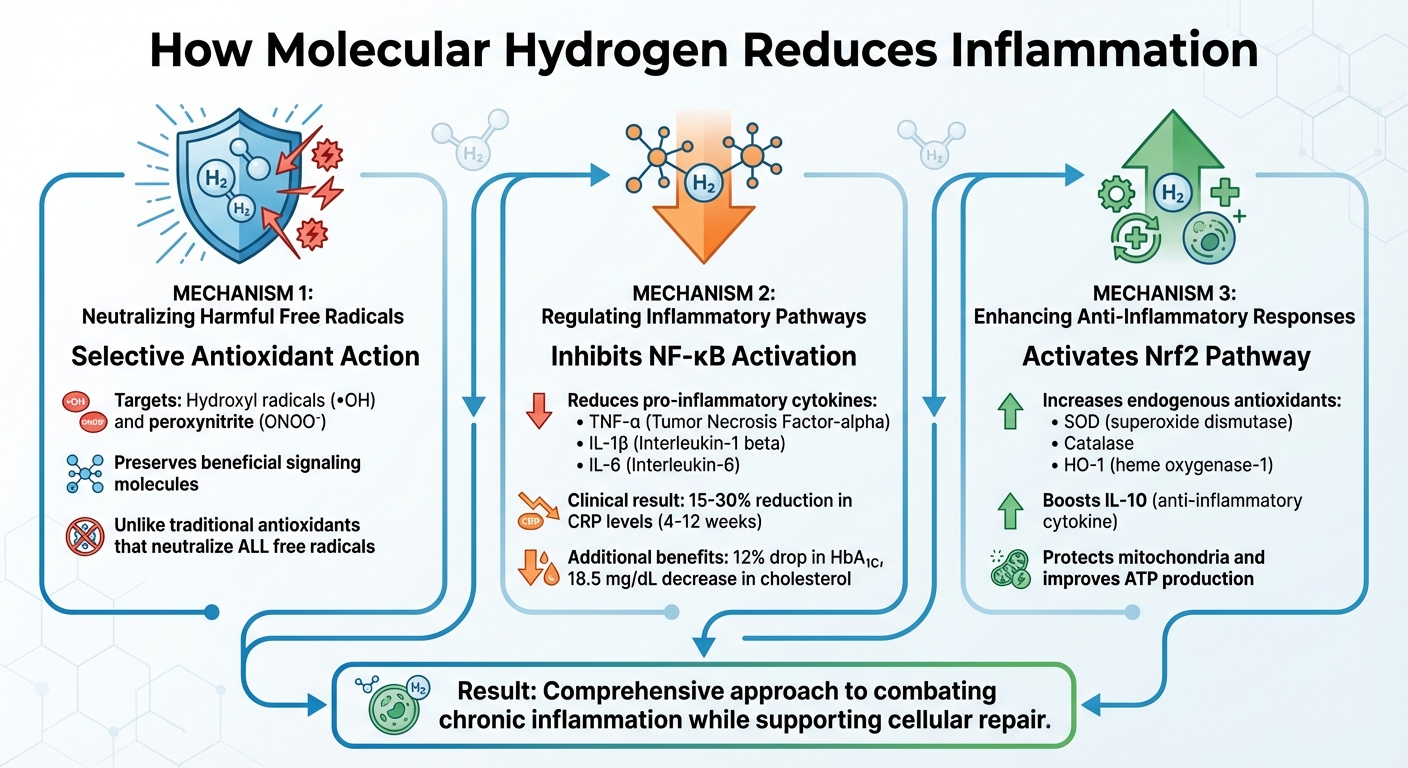
How Molecular Hydrogen Reduces Inflammation: 3 Key Mechanisms
Molecular hydrogen helps reduce inflammation by addressing its root causes rather than just masking symptoms. It works by targeting oxidative stress, regulating inflammatory signaling, and enhancing the body’s natural defenses. These actions provide a strong foundation for understanding the scientific evidence behind hydrogen’s role in fighting inflammation.
Neutralizing Harmful Free Radicals
Hydrogen acts as a selective antioxidant, focusing on neutralizing harmful free radicals like hydroxyl radicals and peroxynitrite without affecting beneficial molecules needed for cell signaling. This sets it apart from traditional antioxidants, which often neutralize all free radicals indiscriminately, potentially disrupting normal cellular functions. By being selective, hydrogen minimizes oxidative damage while preserving critical processes in the body.
Regulating Inflammatory Pathways
Hydrogen plays a role in controlling inflammation by inhibiting Nuclear Factor kappa-B (NF-κB), a transcription factor that triggers the expression of pro-inflammatory genes. By reducing oxidative stress, hydrogen limits NF-κB activation, which in turn decreases the production of inflammatory cytokines such as Tumor Necrosis Factor-alpha (TNF-α), Interleukin-1 beta (IL-1β), and Interleukin-6 (IL-6).
In a randomized controlled trial conducted in March 2020, Jan Slezak and his team at the Slovak Academy of Sciences observed significant results. Over 24 weeks, 60 participants with metabolic syndrome consumed hydrogen-rich water with high concentrations. The results showed a marked reduction in TNF-α, IL-6, and C-reactive protein (CRP) levels. Additionally, participants experienced a 12% drop in HbA₁C and an 18.5 mg/dL decrease in total cholesterol. These findings highlight how hydrogen’s ability to regulate inflammatory pathways translates into measurable health benefits.
Enhancing Anti-Inflammatory Responses
Hydrogen also supports the body’s anti-inflammatory defenses by activating Nrf2, a regulator of antioxidant production. Through Nrf2 activation, hydrogen increases levels of endogenous antioxidants like SOD (superoxide dismutase), catalase, and HO-1 (heme oxygenase-1). It further boosts levels of Interleukin-10 (IL-10), a cytokine known for its anti-inflammatory and tissue-repair properties.
Beyond this, hydrogen protects mitochondrial membranes and enhances the activity of mitochondrial complexes I and II, which are critical for energy production. This results in improved ATP generation, ensuring cells have the energy needed for repair and optimal function.
Together, these mechanisms create a comprehensive approach to combating chronic inflammation, supporting both cellular repair and overall health.
Scientific Evidence for H2's Anti-Inflammatory Effects
Research over the years has provided solid evidence of molecular hydrogen's ability to combat inflammation. Both clinical and laboratory studies have shown that hydrogen can lower inflammatory markers and improve various health outcomes. These findings build on earlier theoretical work by showcasing measurable benefits in practice.
Human Clinical Studies
One standout study was a double-blind, randomized, placebo-controlled trial conducted in April 2022 at the University of Novi Sad. This trial included 24 COVID-19 patients who drank 1.5 liters of hydrogen-rich water (8 ppm) daily for 14 days. The results were striking: IL-6 levels dropped by 5.8% in the hydrogen group, while the placebo group saw a 16.2% increase (p = 0.04). Interestingly, all female participants in the hydrogen group experienced reduced IL-6 levels. Other benefits included reduced fatigue (p = 0.01) and better blood coagulation, as evidenced by an increase in prothrombin time from 12.9 to 13.4 seconds (p = 0.01).
"Interleukin-6 dropped significantly after HRW intake which perhaps indicates an anti-inflammatory potential of the intervention." - Aleksandra Milovancev, Faculty of Medicine, University of Novi Sad
In addition to these findings, the study noted improvements in oxygen saturation and overall disease management. Another trial involving a 3-day hydrogen inhalation protocol with 44 participants showed a reduction in disease severity. Patients reported less difficulty breathing and reduced chest pain, thanks to decreased inspiratory effort.
Animal and Laboratory Research
Animal studies have reinforced these clinical observations. Preclinical research highlights hydrogen's ability to reduce oxidative stress and prevent tissue damage in inflammation-related conditions. In models of sepsis, arthritis, and organ injury, molecular hydrogen was shown to protect tissues from inflammatory harm while maintaining normal cellular function. By targeting key inflammatory pathways, these findings demonstrate hydrogen's potential to deliver meaningful results in managing inflammation.
Using Edenvia Molecular Hydrogen Tablets

How Edenvia Tablets Function
Edenvia Molecular Hydrogen Tablets are designed to deliver a powerful dose of hydrogen - 10–21.5 ppm in 500 mL of water, far surpassing the typical range of 1–3 ppm. To use, simply drop a tablet into 500 mL of room-temperature still water, wait 1–2 minutes for it to dissolve, and drink within 10 minutes to ensure maximum effectiveness.
Hydrogen, being the smallest molecule, can easily pass through cell membranes and even cross the blood-brain barrier. This allows it to target mitochondria and the cell nucleus, where oxidative stress tends to cause the most harm. Each tablet also contains approximately 80 mg of magnesium, an essential mineral that supports over 300 enzymatic processes in the body.
Benefits for Inflammation and Joint Health
The high hydrogen concentration enhances its targeted antioxidant properties. These tablets focus on neutralizing harmful free radicals, such as hydroxyl radicals (•OH) and peroxynitrite (ONOO⁻), while preserving beneficial signaling molecules.
"H2 enhances the healing mechanisms of every single joint, muscle, tendon, and ligament in your body to help protect against overuse-related injuries, such as stress fractures, sprains, strains and tears." – Drink HRW Team
By reducing pro-inflammatory cytokines like TNF-α, IL-6, and IL-1β, the tablets help improve joint comfort and mobility. This makes them a reliable option for managing inflammation and aiding recovery. For best results, take one tablet daily - ideally in the morning on an empty stomach or after physical activity.
Pricing Options
Edenvia offers flexible pricing plans to fit different needs and budgets:
| Plan | Price (per tablet) | Key Benefits |
|---|---|---|
| Buy One | $33.95 | Single purchase option with no extras |
| Buy 1 Get 1 Free | $16.98 | Comes with a free Cellular Recovery Protocol |
| Buy 2 Get 2 Free | $12.76 | Includes free Cellular Recovery Protocol and express shipping |
The Buy 2 Get 2 Free plan offers the best value, reducing the cost to $12.76 per tablet - a 62% savings compared to the single-purchase price. Multi-tablet plans also include the Cellular Recovery Protocol, which provides tips for maximizing the benefits of hydrogen water for inflammation and cellular health. These options make advanced hydrogen therapy an accessible addition to your daily wellness routine.
Current Limitations and Future Research
While the results from clinical and preclinical studies on molecular hydrogen (H₂) are encouraging, there are still significant gaps in the research that need to be addressed.
Research on H₂ is still in its infancy. Of the more than 2,000 scientific publications on the topic, only about 81 clinical trials and 64 human studies have been completed as of late 2023. Much of the current evidence comes from animal models, making large-scale human trials essential to confirm potential benefits and to establish standardized protocols.
One of the challenges lies in how quickly H₂ is absorbed and eliminated from the body. Depending on the method of administration, H₂ reaches tissues at different speeds - around 1 minute via intravenous administration, 5 minutes when consumed as hydrogen water, and 30 minutes through inhalation. However, the hydrogen levels drop back to baseline within an hour. This variability complicates direct comparisons between studies and highlights the need for further research into dosing frequency and timing. These dynamics also tie into the previously discussed cellular mechanisms, emphasizing the complexity of delivery methods and their impact on outcomes.
Another limitation is the inconsistency in study results. For instance, a 2013 Japanese trial involving 178 Parkinson's disease patients showed initial motor improvements when participants consumed 1 liter of hydrogen-rich water daily for 48 weeks. However, a subsequent larger trial confirmed the safety of the treatment but did not replicate the clinical benefits.
Despite these challenges, H₂ has consistently demonstrated an excellent safety record. The FDA has classified hydrogen-enriched water as "Generally Regarded as Safe" (GRAS), and even deep-sea divers exposed to gas mixtures with over 75% hydrogen for extended periods have reported no adverse effects. As Dinesh Ramanathan and colleagues noted in Medical Gas Research, "Remarkably, no adverse effects have been reported in the human studies related to administration of hydrogen therapy".
This strong safety profile supports the use of H₂ as a complementary therapy while researchers work to refine treatment protocols. Additionally, H₂'s ability to effectively reach target tissues, including the brain, through various administration methods underscores its potential as a therapeutic option. This versatility continues to make it a promising area for further exploration.
Conclusion
Molecular hydrogen's ability to combat inflammation lies in its selective antioxidant properties. It specifically targets harmful free radicals while leaving essential cellular functions intact. By influencing key inflammatory pathways like NF-κB and enhancing antioxidant defenses through mechanisms such as Nrf2 activation, molecular hydrogen addresses inflammation at its core.
Clinical research highlights its potential: regular intake of hydrogen-rich water has been shown to lower C-Reactive Protein levels by 15–30% within 4–12 weeks. It has also demonstrated benefits for conditions like rheumatoid arthritis and metabolic syndrome. Unlike common anti-inflammatory drugs, which can come with risks like gastrointestinal bleeding or kidney complications, molecular hydrogen has no reported side effects in human trials and is recognized as safe (FDA GRAS status).
For effective results, consistent dosing is key. Edenvia Molecular Hydrogen tablets are designed to deliver higher doses than standard water ionizers, making it easier to include molecular hydrogen in your routine. Starting at $12.76 per tablet and backed by a 30-day money-back guarantee, these tablets provide a low-risk way to explore this natural approach to managing inflammation.
Although larger studies are needed to expand our understanding, the wealth of existing research - spanning over 2,000 studies - supports molecular hydrogen as a safe and effective option for reducing inflammation and supporting cellular health. With its ability to work in harmony with the body's natural defenses, Edenvia tablets offer a practical and science-backed method for addressing chronic inflammation.
FAQs
How fast does H₂O₁₀ work for inflammation?
H₂O₁₀ has been shown to help reduce inflammation when used consistently over about 24 weeks. Research on hydrogen-rich water with high concentrations supports this timeline, noting visible effects after sustained use. The key to seeing results lies in regular, ongoing use.
What is the best time to take a hydrogen tablet?
The ideal time to use a hydrogen tablet is either before or during your wellness routine. This timing helps you get the most out of its anti-inflammatory and antioxidant properties. Simply dissolve the tablet in water and drink it right away to allow for quick absorption. Regular use or taking it prior to activities that might lead to oxidative stress can further amplify its effects.
Who should ask a doctor before using H10?
If you have any existing health conditions or are currently taking medications, it’s important to consult a doctor before using H10. This step helps ensure it’s safe and appropriate for your specific situation.