

Can't Move Like You Used To? Try These 6 Solutions
Struggling with stiffness or joint pain? Here are six practical ways to regain mobility and reduce discomfort:
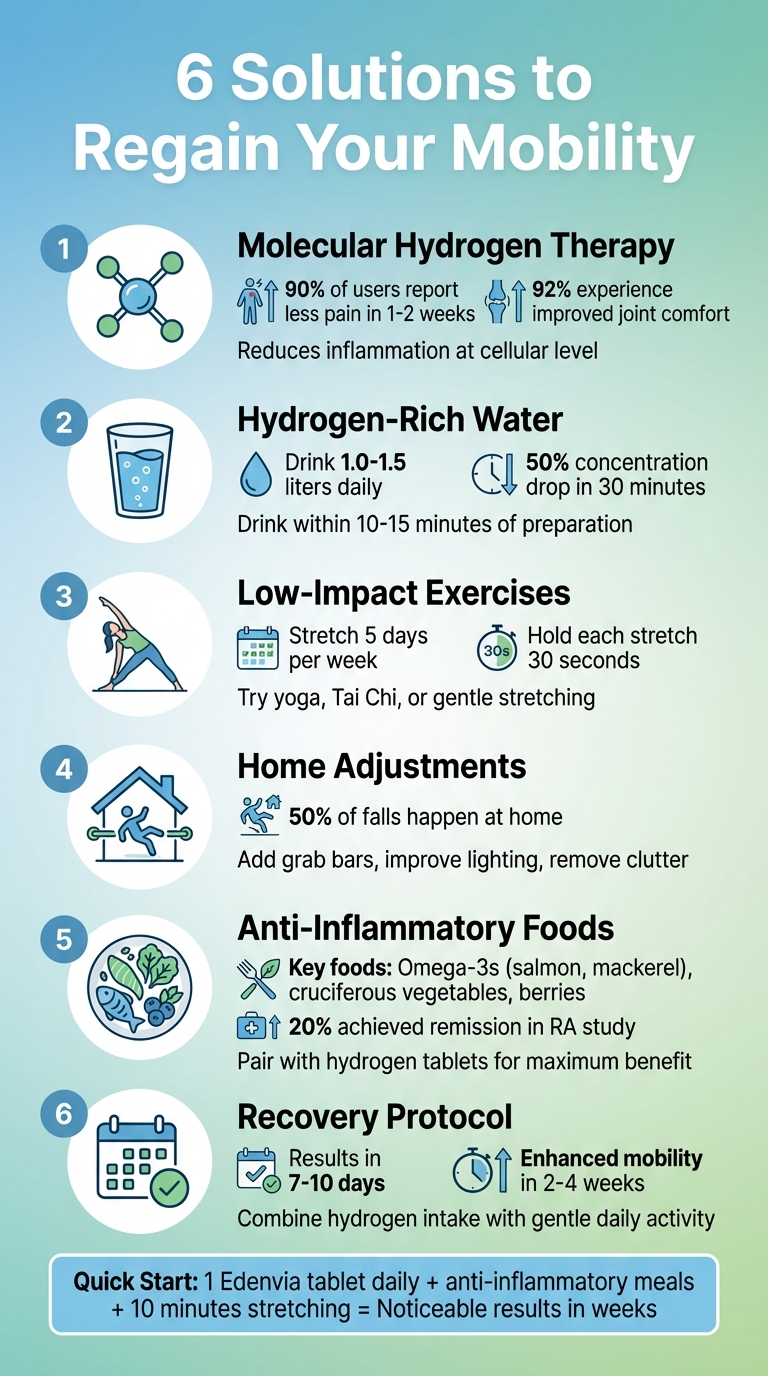
- Molecular Hydrogen Therapy: Reduces inflammation at the cellular level, with 90% of users reporting less pain within 1–2 weeks.
- Hydrogen-Rich Water: Boosts recovery and antioxidant levels; drink it daily for noticeable improvements in joint health.
- Low-Impact Exercises: Stretching, yoga, or Tai Chi can improve flexibility and ease joint stiffness.
- Home Adjustments: Simple changes, like adding grab bars or decluttering, can make daily life safer and more manageable.
- Anti-Inflammatory Foods: Incorporate omega-3s, cruciferous veggies, and berries to support joint health.
- Recovery Protocol: Combine hydrogen intake with gentle activity to repair cells and enhance mobility.
Quick Tip: Start with one Edenvia tablet daily, pair it with anti-inflammatory meals, and dedicate 10 minutes to stretching. Small changes can lead to noticeable results within weeks.
6 Solutions to Improve Joint Mobility and Reduce Stiffness
8-Min Gentle Mobility Routine for Stiff Joints (Full Body Relief!)
sbb-itb-6860cc4
Solution 1: Use Molecular Hydrogen for Joint Support
Molecular hydrogen takes a different approach compared to traditional pain relievers. Instead of simply covering up symptoms, it addresses inflammation right at the cellular level. Being the smallest molecule, hydrogen can easily penetrate deep into tissues, mitochondria, and even cell nuclei - areas where oxidative damage starts.
What sets hydrogen apart is its role as a selective antioxidant. It specifically neutralizes harmful free radicals, like hydroxyl radicals, while leaving beneficial oxidative molecules intact. When hydrogen reacts with these damaging radicals, it forms water, reducing oxidative stress without introducing toxic byproducts. This means your body can still maintain the "good" inflammation necessary for healing while minimizing chronic inflammation that leads to cartilage damage and joint stiffness.
User feedback highlights its effectiveness. 90% of users reported reduced inflammation and less pain within 1–2 weeks of regular use, and 92% experienced improved joint comfort and easier mobility. Unlike NSAIDs, which can harm your gut or kidneys over time, molecular hydrogen has no known side effects and is FDA GRAS-certified.
How to Use Edenvia Molecular Hydrogen Tablets
To get the most out of Edenvia tablets, proper usage is key. Simply drop one tablet into 8–16 oz of room-temperature or chilled water. Avoid using hot water, as heat will cause the hydrogen gas to escape. Allow the tablet to fully dissolve, which takes about three minutes, and watch as it fizzes, releasing hydrogen into the water.
Drink the solution within 30 minutes to maximize its potency, as hydrogen gas quickly escapes into the air. Take one tablet daily, and many users report noticeable improvements in stiffness within 7–10 days, with enhanced mobility becoming evident in 2–4 weeks.
Benefits of Molecular Hydrogen for Movement
When used consistently, molecular hydrogen does more than just alleviate pain - it also strengthens your body's natural defenses. It activates the Nrf2 pathway, which boosts your body's antioxidant responses. Additionally, it downregulates inflammatory pathways like NF-κB and suppresses the JNK signaling pathway, both of which are linked to cartilage breakdown. This means it not only relieves symptoms but also helps protect cartilage from further harm.
Users frequently report greater ease of movement. 89% noticed less stiffness and faster recovery after physical activity, while 87% felt stronger and more resilient after four weeks of use. Alex R., a verified user, shared his experience:
"Within just a week, my joint pain eased noticeably and my body felt less inflamed. Walking feels smoother, mornings are easier, and I'm finally moving without reaching for painkillers".
The science behind molecular hydrogen is extensive, with over 1,500 studies covering its effects on 170 disease models and 200 human trials. Edenvia tablets deliver hydrogen concentrations of up to 8–10 parts per million, far exceeding the 0.8–1.5 ppm typically produced by standard electrolysis machines.
Solution 2: Drink Hydrogen-Rich Water Daily
Drinking hydrogen-rich water every day can help maintain your body's antioxidant balance, which is essential for supporting your joints, muscles, and connective tissues. This daily habit promotes better movement and aids recovery after physical activities.
But here’s the catch - hydrogen dissipates quickly. At room temperature, its concentration can drop by 50% in just 30 minutes. To get the most out of it, drink the water within 10–15 minutes of preparation.
Your body absorbs hydrogen more efficiently on an empty stomach. In fact, plasma hydrogen levels peak about 15 minutes after drinking it without food, compared to 30–45 minutes when consumed with a meal. This leads to an absorption rate that’s nearly twice as high.
Timing is also key for recovery. Drinking hydrogen water within 30 minutes after exercise helps neutralize hydroxyl radicals, which are produced during intense activity. This can reduce recovery time by up to 24 hours. Studies even show that athletes who drank hydrogen water 30 minutes before working out improved their endurance by 12%. Those who consumed 500 ml afterward experienced less muscle damage and soreness.
How to Build Your Daily Routine
Start your day with 250–500 ml (8–16 oz) of hydrogen-rich water. Drop one Edenvia tablet into cold or room-temperature water - cold water retains hydrogen about 30% better than warm water. Drink it immediately after preparation, ideally before breakfast or coffee, and wait 15–20 minutes before eating to maximize absorption.
For those who exercise, timing your hydrogen water intake can make a big difference. Drink a second serving 20–30 minutes before working out to boost antioxidant levels. This can help delay fatigue and reduce how hard the workout feels. After exercise, drink 500 ml within 30 minutes to reduce muscle fatigue and soreness.
A daily intake of 1.0 to 1.5 liters, split into three or four servings, is recommended for the best results. You can also drink 250 ml 15–20 minutes before a large meal to help manage oxidative stress caused by eating or have a serving 1–2 hours before bed to support overnight cellular repair, which benefits joint health.
The key is consistency. Clinical studies show that noticeable benefits for metabolic and joint health often appear after 8–78 weeks of regular use. To make this habit stick, pair it with something you already do - like taking your vitamins, brushing your teeth, or planning your day. Over time, this routine can enhance your recovery and work alongside other strategies to improve mobility.
Solution 3: Add Low-Impact Flexibility Exercises
Improving flexibility allows your muscles and joints to move more freely and without discomfort, which can significantly enhance mobility. If you’re finding it harder to move like you used to, low-impact exercises such as gentle stretching, yoga, or Tai Chi can help. These activities lengthen muscles and improve elasticity, all while being easy on your joints.
"Flexibility is like oil for your joints - it helps everything move smoothly and prevents you from feeling stiff or stuck." - Karla Arevalo-Alas, PT, DPT, Hinge Health
Pairing these exercises with molecular hydrogen may also help reduce inflammation caused by exercise, aiding recovery and minimizing muscle damage.
The trick to seeing results is sticking with it. Stretching at least five days a week is more effective than doing it sporadically. Start with a short warm-up, like 2–3 minutes of light activity, and then hold each stretch for at least 30 seconds while focusing on deep, steady breaths. If you feel sharp pain or discomfort above a 5 on a 10-point pain scale, stop or ease up immediately.
Recommended Flexibility Exercises
Here are a few beginner-friendly stretches to help improve flexibility and support joint health. Perform these near a sturdy chair or wall for added stability:
- Seated Hamstring Stretch: Sit on the edge of a chair, extend one leg with your heel on the ground, and lean forward toward your toes while keeping your back straight. Hold for 20–30 seconds on each leg, repeating twice.
- Shoulder Pendulum: Use a stable surface for support with one hand, letting the other arm hang freely. Swing it in small circles, then move it forward and backward (10–15 circles per arm).
- Neck Half Circles: Gently tilt your head to one side, slowly roll your chin to your chest, and then to the other side. Avoid full circles to protect your spine. Perform 3–5 slow half-circles.
- Seated Spinal Twist: Sit upright with your feet flat on the floor. Rotate your torso to one side, looking over your shoulder, while keeping your hips forward. Hold for 5 seconds and repeat 2–3 times per side.
- Heel Lifts: Stand tall, using a chair for balance. Slowly rise onto your toes, hold for two seconds, and then lower back down. Perform 10 repetitions.
Try to dedicate 10 minutes a day to stretching, or aim for at least 2–4 sessions per week if daily practice feels overwhelming. Drinking hydrogen-rich water before or after stretching can also help ease post-exercise stiffness, especially for those dealing with joint issues. With time, this routine can improve recovery and make movement feel easier.
Solution 4: Make Your Home Easier to Navigate
Creating a home environment that supports safe and independent living is a key step in addressing mobility challenges. Small changes can make a big difference, reducing the risk of falls and making everyday tasks more manageable. Did you know that around 50% of falls among older adults happen inside the home? The bathroom, in particular, is a high-risk area due to slippery surfaces.
Start by tackling common tripping hazards. Clear walkways and stairs of clutter, remove or secure throw rugs, and make sure furniture placement allows for easy movement. If you have wall-to-wall carpeting, ensure it’s tightly secured to avoid wrinkles or loose edges that could cause a fall. Beyond decluttering, proper lighting is another essential element.
Brighten up your home by using LED bulbs, which provide clear illumination. Adding motion-activated or voice-controlled smart lighting can be a game changer, especially in areas where you’d otherwise have to fumble for a switch in the dark.
The bathroom deserves special attention since it’s a common spot for falls. Install grab bars inside the shower and next to the toilet, and use non-slip mats both in and around the shower area. If standing up from the toilet is difficult, consider upgrading to a raised-height model (17–19 inches tall) for added ease and comfort.
"Grab bars are relatively easy to have installed and are indispensable when you or someone you care for is alone and is unsteady or about to fall."
– Claire Jacobson, Master's student in Community Health and Prevention Research, Stanford Medicine
Comparing Grab Bar Options for Your Home
When choosing grab bars, it’s important to weigh the pros and cons of different types. Wall-mounted grab bars are highly stable, supporting up to 250–300 pounds, but they require professional installation and proper wall bracing. Freestanding grab bars are easier to set up and portable, though they offer less security during a fall.
| Grab Bar Type | Ease of Installation | Stability | Cost (USD) |
|---|---|---|---|
| Wall-Mounted | Complex (requires professional installation) | High (supports 250–300 lbs) | $100–$500 installed |
| Freestanding | Simple (no drilling, portable) | Moderate (depends on floor grip) | $50–$200 |
For additional safety, install handrails on both sides of stairways and repair any uneven steps. If stairs remain a challenge, a motorized stair lift might be worth considering, with costs ranging from $1,500 to $5,000. Lastly, widening doorways to 32 inches and hallways to at least 36 inches can accommodate wheelchairs and walkers. These modifications typically cost between $700 and $2,500 per door.
Solution 5: Combine Anti-Inflammatory Foods with Hydrogen
What you eat plays a big role in how your joints feel and function. Pairing anti-inflammatory foods with Edenvia Molecular Hydrogen tablets creates a powerful combo to tackle inflammation and oxidative stress. Molecular hydrogen works at the cellular level to neutralize harmful free radicals, while the nutrients from food help repair tissues and ease joint discomfort.
Omega-3 fatty acids, found in salmon, mackerel, and sardines, are especially helpful for reducing inflammation and preserving joint health. For instance, mackerel provides about 2.6 grams of EPA and DHA per serving, making it an excellent choice. Cruciferous vegetables like broccoli and Brussels sprouts are another great option, as they contain sulforaphane, a compound known to block inflammatory processes that can damage cartilage. Additionally, berries and tomatoes are rich in antioxidants that protect against cellular damage.
Staying hydrated is just as important as eating the right foods. Drinking hydrogen-rich water not only helps flush out toxins but also supports the production of synovial fluid, which keeps your joints lubricated and reduces friction. A good rule of thumb is to drink half your body weight in ounces of water daily - so, for a 150-pound person, that’s about 75 ounces. In one pilot study, patients with rheumatoid arthritis who drank hydrogen-rich water for four weeks experienced less joint pain, with 20% even achieving remission.
"Among the many stressors in our life that generate inflammation, the food we consume is a very tangible thing over which we have control."
– Carissa Lane, PT, DPT, Hinge Health
For maximum benefit, take your Edenvia tablet with meals. This approach allows molecular hydrogen to enhance cellular repair and energy production while the nutrients from your food strengthen tissues and promote recovery. When cooking, swap refined vegetable oils for avocado oil, which is better for high-heat cooking, or use extra-virgin olive oil for salads and dressings. Extra-virgin olive oil contains oleocanthal, a compound that works similarly to ibuprofen in reducing inflammation.
Meal Ideas for Joint Health
Incorporating these dietary recommendations into your daily meals doesn’t have to be complicated. Here are some easy ideas:
- Breakfast: Start your day with golden turmeric oatmeal - a mix of rolled oats, blueberries, ground flaxseed, turmeric, and black pepper. Adding black pepper boosts curcumin absorption (the active compound in turmeric) by up to 2,000%. Pair it with a glass of hydrogen-rich water for a complete anti-inflammatory breakfast.
- Lunch: Try a Mediterranean chickpea salad made with cucumbers, olives, extra-virgin olive oil, and fresh lemon juice. Chickpeas are a great source of protein, which helps build strong connective tissues.
- Dinner: Enjoy baked salmon with broccoli and sweet potato. The salmon offers omega-3s, while broccoli provides sulforaphane. Roast the salmon with garlic and dill, bake the sweet potato, and drizzle the broccoli with avocado oil for added flavor.
- Snack: For a quick and easy snack, pair walnuts (rich in ALA omega-3s) with a sliced apple. This combo provides fiber, antioxidants, and healthy fats.
Here’s a quick reference table to help you plan your meals:
| Meal Category | Recipe Idea | Key Anti-Inflammatory Ingredients |
|---|---|---|
| Breakfast | Golden Turmeric Oatmeal | Rolled oats, turmeric, black pepper, blueberries, flaxseed |
| Lunch | Mediterranean Chickpea Salad | Chickpeas, cucumber, olives, extra-virgin olive oil, lemon |
| Dinner | Baked Salmon & Broccoli | Wild-caught salmon, garlic, dill, broccoli, sweet potato |
| Dinner | Ginger-Garlic Tofu Stir-Fry | Tofu, bok choy, fresh ginger, garlic, avocado oil |
| Snack | Anti-Inflammatory Power Pair | Walnuts and sliced apple |
To further support your joints, limit your sugar intake by avoiding hidden sugars like sucrose and dextrose, as they can trigger the release of inflammatory cytokines. Focus on eating a variety of colorful vegetables - green, orange, red, yellow, and purple - to get a mix of phytochemicals that fight inflammation from all angles. Research has shown that drinking hydrogen-rich water for eight weeks can reduce TBARS, a marker of oxidative stress, by 43%. Together, this food and hydrogen approach can help reduce inflammation and improve joint function as part of your overall mobility plan.
Solution 6: Follow a Recovery Protocol
A structured recovery protocol can play a key role in improving mobility. Edenvia's Cellular Recovery Protocol offers a targeted approach to repairing cells and reducing inflammation, which supports better movement. This protocol combines hydrogen intake with light, gentle activity, building on earlier mobility strategies. Unlike intense workouts, it focuses on cellular repair through manageable activity levels, making it easier to follow.
Hydrogen is effective because it penetrates deeply into cells, promoting recovery. It works by neutralizing harmful free radicals while leaving essential signaling molecules intact. This process activates your body's Nrf2 pathway, which increases the production of antioxidants like glutathione and catalase. Many users report noticeable improvements in joint comfort and mobility within just one or two weeks of starting a daily hydrogen routine.
To maximize results, take your daily tablet as instructed and follow the morning routine on an empty stomach for better absorption. Pairing this with 10–15 minutes of morning sunlight can also help regulate your circadian rhythm and boost energy levels. Stick to this routine for at least 30 days to experience significant improvements in mobility and cellular repair.
"I've tried supplements for years for my knee pain and nothing really made a difference. Hydrogen water has been the first thing where I actually noticed improvement."
– Macy W., Verified Customer
Research backs these results. In a randomized controlled trial, participants using hydrogen inhalation for 14 days increased their Six-Minute Walk Test distance by 64 meters, compared to just 9 meters in the placebo group. Another study showed a 34 U/L reduction in creatine kinase levels, a marker of muscle damage, among those using hydrogen support. Customers frequently share that activities like walking and climbing stairs feel easier and that morning stiffness is significantly reduced. Plus, the protocol is safe for everyday use, as molecular hydrogen is free from stimulants or artificial additives, with any excess naturally dissipating.
If you're ready to begin your recovery journey, Edenvia offers flexible pricing plans to suit your needs.
Edenvia Pricing and Plans
Edenvia's plans are designed to integrate seamlessly with the Cellular Recovery Protocol, ensuring quality and convenience. Each plan is third-party lab tested for reliability.
| Option | Price per Tablet | Total Price | Features |
|---|---|---|---|
| Buy One | $33.95 | $33.95 | Standard supply |
| Buy 1 Get 1 Free | $16.98 | $33.95 | 50% discount |
| Buy 2 Get 2 Free | $12.76 | $51.04 | Best value, free express shipping |
The Buy 2 Get 2 Free plan offers the best value, reducing the price per tablet to $12.76 and including free express shipping. All purchases come with a 30-day money-back guarantee, allowing you to try the protocol with peace of mind.
Conclusion
Bringing together these six strategies offers a straightforward path to improving mobility. By focusing on joint health at every level - from cellular support to everyday habits - you can make meaningful progress. This approach includes molecular hydrogen tablets to ease inflammation, hydrogen-rich water for recovery, low-impact flexibility exercises to enhance joint function, home adjustments to promote safety, anti-inflammatory foods for tissue health, and a structured recovery plan to maintain steady improvement. Together, these steps lay the groundwork for long-term physical well-being.
Research and user experiences back up these methods. Many report noticeable improvements in joint comfort and mobility within just a few weeks of consistent practice. These aren’t quick fixes - they’re steps toward lasting change.
A simple way to start? Take one Edenvia tablet on an empty stomach each morning and incorporate the strategies that fit your lifestyle. Subtle changes often appear within 7–10 days, with more noticeable mobility gains developing in 2–4 weeks. Plus, with Edenvia's 30-day money-back guarantee, you can try it without risk and see the results firsthand.
Your body is designed to move. Support it at the cellular level and reclaim the freedom to move with confidence.
FAQs
Is molecular hydrogen safe to use every day?
Molecular hydrogen is considered safe for daily use. Studies indicate it can be incorporated into a regular routine without causing negative side effects. It functions as a selective antioxidant, meaning it targets harmful free radicals specifically, helping to protect cellular health and promote overall well-being.
Can I take Edenvia if I’m on medications or have a health condition?
If you're on medications or managing a health condition, it's wise to consult a healthcare professional before using Edenvia Molecular Hydrogen. Since individual needs and situations differ, professional advice helps ensure safe and suitable use.
How do I tell if my joint stiffness is serious and needs a doctor?
If your joint stiffness lingers for more than 20–30 minutes after waking, gets worse, or is accompanied by symptoms like pain, swelling, redness, warmth, or difficulty moving, it’s time to see a doctor. Sudden or severe stiffness, or stiffness paired with fever, fatigue, or a history of arthritis, also calls for medical attention. You should also reach out to a healthcare provider if the stiffness interferes with your daily life or doesn’t improve with self-care.