

Joint Pain Relief: Natural Solutions vs Medications
Managing joint pain often comes down to choosing between natural remedies and medications. Here's the key takeaway: Medications like NSAIDs provide fast relief but come with risks like stomach issues and long-term joint damage. Natural options, such as molecular hydrogen, turmeric, and omega-3s, focus on reducing inflammation and supporting joint health over time, though they take longer to show results.
Quick Highlights:
- Medications: Fast-acting (hours), effective for flare-ups, but may cause side effects like gastrointestinal problems and kidney strain.
- Natural Remedies: Slower to work (weeks), but safer for long-term use and can repair joint tissue.
For the best results, many people combine both approaches: medications for immediate relief and natural remedies for sustained joint health. Always consult a healthcare provider before starting new treatments.
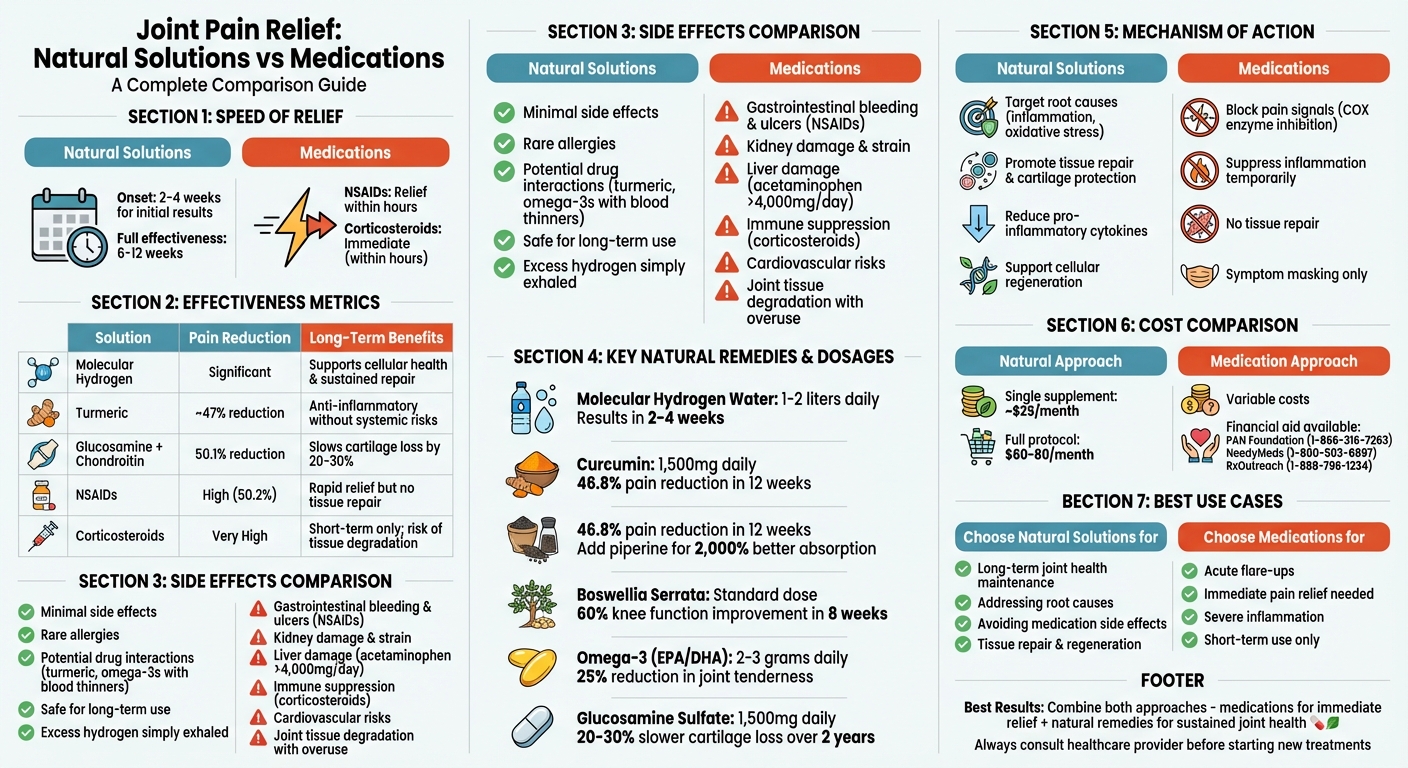
Natural Joint Pain Remedies vs Medications: Effectiveness, Benefits, and Side Effects Comparison
9 Powerful Herbs to Naturally Relieve Arthritis Pain at Home! 🌿💪
sbb-itb-6860cc4
Natural Solutions for Joint Pain Relief
Natural approaches tackle the underlying causes of joint pain, such as inflammation and oxidative stress. They aim to protect cartilage and minimize cellular damage, promoting long-term joint health without the side effects often linked to pharmaceuticals.
How Molecular Hydrogen Works
Molecular hydrogen works by targeting harmful hydroxyl radicals (•OH), neutralizing them while leaving beneficial reactive oxygen species intact. These reactive species are essential for normal cell signaling and function.
Thanks to its tiny molecular size, hydrogen can easily penetrate cell membranes. This allows it to promote mitophagy (the removal of damaged mitochondria) and address mitochondrial dysfunction, a major contributor to chronic joint inflammation.
"Hydrogen therapy emerges as a promising therapeutic strategy, harnessing molecular hydrogen (H2) as a safe antioxidant. It specifically consumes hydroxyl radicals in reactive oxygen species to exert anti-oxidative stress, anti-inflammatory, and anti-apoptotic effects." - Journal of Nanobiotechnology
A 2012 pilot study demonstrated the potential of hydrogen-rich water for joint pain relief. Over four weeks, 20 rheumatoid arthritis patients drinking hydrogen-infused water showed notable results. Twelve participants experienced symptom relief, including five early-stage patients who achieved full remission. The average Disease Activity Score (DAS28) dropped from 3.83 to 3.02, while oxidative stress markers decreased by 14.3%.
For joint health support, drinking 1–2 liters of hydrogen-rich water daily is recommended. To maximize its effectiveness, store the water in airtight containers and consume it shortly after preparation, as hydrogen gas dissipates quickly. Many users report reduced joint stiffness and pain within 2–4 weeks of regular use.
Next, let’s look at other natural remedies that can work alongside hydrogen therapy.
Other Natural Remedies
Several natural compounds complement hydrogen's benefits, each offering unique ways to relieve joint pain:
- Curcumin (from turmeric): Known for its anti-inflammatory properties, curcumin has been shown to rival NSAIDs in reducing knee pain, but without the gastrointestinal and cardiovascular risks. Adding piperine (from black pepper) enhances curcumin absorption by up to 2,000%.
- Boswellia serrata: This extract inhibits the 5-LOX enzyme, which plays a role in inflammation. Studies show it can improve knee function by about 60% after eight weeks.
- Omega-3 fatty acids: Taking 2–3 grams of EPA/DHA daily can reduce joint tenderness scores by roughly 25%.
- Glucosamine sulfate: A daily dose of 1,500 mg has been shown to slow knee cartilage loss by 20–30% over two years.
Using these remedies in combination can amplify their effectiveness. For example, molecular hydrogen reduces oxidative stress that damages connective tissue, while MSM (methylsulfonylmethane) provides sulfur needed for tissue repair. This approach, often referred to as "intelligent stacking", focuses on combining therapies rather than relying on high doses of a single supplement.
It’s important to note that most natural remedies require consistent use for 6–12 weeks to achieve noticeable improvements in symptoms or joint structure.
Conventional Medications for Joint Pain Relief
Conventional medications are designed to either block pain signals or suppress inflammation, providing relief that can last anywhere from a few hours to several months. While these treatments work quickly, they come with potential risks that differ from those associated with natural remedies.
Non-Steroidal Anti-Inflammatory Drugs (NSAIDs)
NSAIDs, including ibuprofen and naproxen, work by inhibiting COX enzymes responsible for producing prostaglandins - compounds that trigger inflammation and pain.
"Nonsteroidal anti-inflammatory drugs (NSAIDs) are the most-frequently used drugs to ease the pain, inflammation and stiffness that come with arthritis, bursitis and tendinitis." – Arthritis Foundation
These medications typically begin relieving pain within hours, though their full anti-inflammatory benefits might take up to two weeks. However, they come with serious risks, such as cardiovascular events, gastrointestinal bleeding, and kidney issues like cloudy urine or swelling in the ankles. To highlight these dangers, the FDA mandates "black box" warnings on NSAID packaging.
"NSAIDs cause an increased risk of serious gastrointestinal (GI) adverse events, including bleeding, ulceration, and perforation of the stomach or intestines, which can be fatal." – FDA Black Box Warning
To minimize stomach irritation, always take NSAIDs with a full meal or an antacid. Avoid combining different NSAIDs, such as ibuprofen and naproxen, as this increases side effects without added benefits.
Selective COX-2 inhibitors, like celecoxib (Celebrex), offer a more targeted approach by reducing inflammation while sparing the COX-1 enzyme that protects the stomach lining. For older adults or those with cardiovascular concerns, topical NSAIDs like diclofenac gel provide localized pain relief with fewer systemic side effects, though their effectiveness rate is approximately 10%.
In cases where NSAIDs are not suitable, options like acetaminophen or corticosteroids may be recommended.
Acetaminophen and Corticosteroids
Acetaminophen is often the first choice for pain relief due to its lower risk of side effects. It works by blocking COX-3 activity, reducing pain signals, but it is less effective at addressing inflammation. To avoid liver damage, the maximum daily dose should not exceed 4,000 mg (4 grams).
"Most providers recommend acetaminophen (such as Tylenol) first. It has fewer side effects than other medicines." – MedlinePlus
Corticosteroids, on the other hand, are powerful anti-inflammatory drugs reserved for severe inflammation or when other treatments fail. Administered directly into the joint, they can provide months of relief but come with risks such as elevated blood sugar, mood changes, and increased infection risk.
Doctors generally limit corticosteroid injections to 2–4 per year per joint, as overuse can harm joint tissue. A significant concern is that corticosteroids can mask symptoms of a joint infection (septic arthritis), potentially delaying critical treatment. Additionally, stopping corticosteroids abruptly after prolonged use can cause adrenal insufficiency, a serious condition.
For those struggling with the cost of these treatments, financial aid is available through organizations like the PAN Foundation (1-866-316-7263), NeedyMeds (1-800-503-6897), and RxOutreach (1-888-796-1234).
These medications offer a faster path to relief compared to natural alternatives but come with notable differences in side effects and risks, paving the way for a deeper comparison.
Effectiveness: Natural Solutions vs Medications
When comparing pain relief options, conventional medications often deliver faster results, while natural solutions focus on safer, long-term benefits. For instance, NSAIDs can provide relief within hours, whereas natural remedies like molecular hydrogen may take 2–4 weeks to show noticeable improvements in joint pain and inflammation. Over time, natural approaches aim to address the root causes of joint issues rather than just masking symptoms. This difference sets the stage for evaluating their effectiveness through clinical studies.
Clinical evidence highlights the potential of natural remedies to match the efficacy of medications. In a 2016 randomized trial with 606 participants, a combination of glucosamine and chondroitin reduced pain by 50.1% over six months, nearly identical to the 50.2% reduction achieved by celecoxib. Similarly, turmeric extract reduced pain scores by 46.8% over 12 weeks, while Boswellia serrata extracts improved knee function by about 60% after just eight weeks.
"Curcumin rivals NSAIDs for knee pain reduction while avoiding the gastrointestinal and cardiovascular risks that come with long-term NSAID use." – Joint Ease Lab
The primary distinction lies in how these treatments work. NSAIDs block pain signals by inhibiting specific enzymes but do not address tissue damage. On the other hand, molecular hydrogen acts as a selective antioxidant, targeting harmful free radicals and reducing pro-inflammatory cytokines, which are linked to joint swelling.
Natural solutions not only alleviate pain but also promote tissue repair. For example, glucosamine sulfate has been shown to slow knee cartilage loss by approximately 20–30% over two years. Similarly, omega-3 supplementation (2–3 grams daily) can reduce joint tenderness by about 25%. In contrast, corticosteroids, while highly effective for immediate relief, can degrade joint tissue over time, emphasizing the restorative advantage of natural approaches.
Comparison Table: Effectiveness Metrics
| Solution | Pain Reduction | Onset of Relief | Long-Term Benefits |
|---|---|---|---|
| Molecular Hydrogen | Significant | 2–4 weeks | Supports cellular health and sustained joint repair |
| Turmeric | ~47% | 4–8 weeks | Anti-inflammatory benefits without systemic risks |
| NSAIDs | High | Immediate (within hours) | Rapid symptom relief with potential gastrointestinal and kidney risks |
| Corticosteroids | Very High | Immediate (within hours) | Short-term relief with risk of joint tissue degradation |
Benefits and Side Effects: Natural Solutions vs Medications
Choosing between natural solutions and medications often comes down to weighing immediate relief against long-term safety. Medications like NSAIDs are known for their quick pain-relieving effects, but they come with risks such as gastrointestinal issues, kidney problems, and liver damage. On the other hand, natural solutions aim to address the root causes of joint problems, like inflammation and oxidative stress, offering a more holistic approach.
Take molecular hydrogen, for example. It neutralizes harmful radicals while leaving essential cellular functions untouched. Any excess hydrogen is simply exhaled, making it a safer option compared to corticosteroids, which can suppress the immune system and increase infection risk.
"Natural supplements don't just mask pain - they actually help your body heal and reduce inflammation at its source." – Andrew D. Huberman, Professor, Stanford University
Natural solutions go beyond just pain relief - they can improve overall quality of life. For instance, therapies like hydrogen treatment not only reduce inflammation and oxidative stress but also encourage tissue repair, preventing cartilage loss and chondrocyte death. In contrast, while NSAIDs offer quick symptomatic relief, they don’t repair tissue damage and may even speed up joint deterioration over time. The downside? Natural remedies often take longer - typically 6 to 12 weeks of consistent use - to show noticeable results. However, their safety and broader health benefits make them a compelling option for long-term joint health.
That said, not all natural remedies are without risks. Supplements like high-dose turmeric or omega-3s may increase bleeding risks, especially when combined with blood thinners. It’s always wise to consult a healthcare provider before starting any supplement, particularly if you’re on medications for conditions like diabetes, high blood pressure, or blood clotting issues. Understanding these differences can help you make informed decisions tailored to your health needs.
Comparison Table: Benefits and Risks
| Aspect | Natural Solutions | Medications |
|---|---|---|
| Inflammation Reduction | Effective and safe; targets root causes without systemic toxicity | Highly effective but with risks like GI ulcers, kidney damage, and cardiovascular issues |
| Joint Mobility Improvement | Gradual improvement with cartilage repair and cellular regeneration | Immediate relief but temporary; no tissue repair |
| Side Effects | Minimal (rare allergies, potential drug interactions) | Common (stomach upset, liver/kidney damage, immune suppression) |
| Long-Term Use | Supports sustained joint health | Increased risk of organ damage and joint tissue degradation |
| Quality of Life Impact | Holistic improvement in mobility, mood, and overall well-being | High for acute pain relief; risky for long-term daily function |
How to Use Hydrogen-Rich Water and Medications
If you're considering hydrogen-rich water as part of your joint health routine, here's how to make it work effectively. Experts generally suggest drinking 1 to 2 liters daily, spaced out over the day, to help alleviate joint pain. Timing is key since hydrogen dissipates quickly.
Once a container is opened, hydrogen escapes at about 500 PPB per hour, so you’ll want to consume the water within 15–30 minutes to maximize its benefits.
"Hydrogen gas is a very small molecule, so it can easily escape through plastic or an open container. It's best to store it in a pouch and drink within 15 to 30 minutes of opening or making." – Gill Tietz, Adjunct Chemistry Professor, Wentworth Institute of Technology
Most people notice improvements after 2–4 weeks of consistent use. To keep your hydrogen generator running efficiently, clean its electrodes every 1–2 weeks with citric acid. Use filtered tap, spring, or mineral water instead of distilled water for the best results.
When it comes to conventional medications, NSAIDs are typically taken for immediate relief, while corticosteroids are reserved for short-term use. Unlike these medications, hydrogen water supports long-term joint health. Its neutral pH ensures it doesn’t interfere with most medications or affect stomach absorption. Still, it’s important to check with your healthcare provider before introducing hydrogen water into your routine, especially if you're managing chronic conditions or taking multiple prescriptions.
Hydrogen water should complement - not replace - your existing joint health strategies. Start with your usual routine, monitor progress for 4–8 weeks, and then gradually incorporate hydrogen-rich water. By following these steps, you can find the balance that works best for your needs.
Choosing the Right Joint Pain Relief Approach
Deciding between natural remedies and medications for joint pain relief depends on several factors: the type of arthritis, inflammation levels, current health conditions, and any medications you’re already taking. There's no universal solution, but identifying your priorities can guide you toward the most suitable option. This balance between immediate and long-term strategies is key to effective pain management.
For quick relief during acute flare-ups, medications like NSAIDs are often the go-to choice. On the other hand, natural remedies - such as molecular hydrogen, turmeric, or omega-3s - take longer to show results, typically around 6–12 weeks. These options focus on reducing inflammation and supporting tissue repair rather than just masking symptoms. A 2016 study even found that taking 1,500 mg of curcumin daily was as effective as 1,200 mg of ibuprofen for managing knee osteoarthritis pain, with fewer gastrointestinal side effects.
Given the differences between these approaches, combining them can provide the most comprehensive relief. Medications can address immediate pain, while natural remedies and lifestyle adjustments build a foundation for long-term joint health. For instance, weight management plays a critical role - losing just one pound can reduce the load on your knees by about four pounds. Additionally, low-impact activities like swimming or Tai Chi can help keep your joints mobile and lubricated.
When incorporating natural supplements like turmeric or omega-3s, it’s important to consider potential interactions with medications. Starting with one high-quality supplement for 30 days allows you to monitor its effects before adding more. Over time, developing a comprehensive management plan can support sustained relief.
Natural supplement stacks typically cost around $25 per month, while more extensive protocols range from $60 to $80. The growing interest in preventive care is evident - Americans now spend over $30 billion annually on complementary health products, reflecting a shift toward addressing root causes rather than just managing symptoms.
Conclusion
Managing joint pain effectively often requires a mix of strategies. Among natural options, molecular hydrogen stands out for its ability to neutralize harmful free radicals and protect cartilage cells. Unlike many conventional medications that focus on symptom relief, hydrogen-rich water directly addresses oxidative stress - a feature not commonly found in traditional antioxidants. For those aiming to reduce dependency on synthetic drugs, drinking 1 to 2 liters of hydrogen-rich water daily can be a safe addition to other treatments.
While medications like NSAIDs and corticosteroids provide quick relief during flare-ups, their long-term use carries risks such as gastrointestinal issues, kidney strain, and weakened connective tissues. On the other hand, natural solutions aim to rebuild joint health rather than just masking the pain.
"Natural supplements don't just mask pain - they actually help your body heal and reduce inflammation at its source".
A balanced approach combining immediate relief from medications with long-term natural therapies can offer the best outcomes. Integrating options like molecular hydrogen, omega-3 fatty acids, and lifestyle changes - including regular exercise, weight management, and anti-inflammatory diets - creates a foundation that medications alone cannot achieve. It's also important to recognize that chronic pain is not just a tissue issue - it involves the nervous system and benefits from a comprehensive, multi-faceted approach.
Lastly, always consult healthcare providers to ensure there are no interactions between supplements and medications. Whether you lean toward natural remedies, conventional treatments, or a combination, the ultimate goal is the same: improving mobility and reclaiming your quality of life without letting pain dictate your daily routine.
FAQs
Which joint conditions respond best to natural options vs medications?
Degenerative joint issues, such as osteoarthritis, can often improve with natural methods like maintaining a healthy weight, making lifestyle adjustments, and using anti-inflammatory supplements - particularly when addressed early. On the other hand, autoimmune conditions like rheumatoid arthritis typically call for medications, including NSAIDs or DMARDs, to help control inflammation and protect against joint damage. Always consult a healthcare professional to figure out the most effective treatment approach for your specific needs.
How can I safely combine hydrogen-rich water with NSAIDs or injections?
Hydrogen-rich water is generally safe to use alongside NSAIDs or injections, as it usually doesn’t conflict with medications and might even help with anti-inflammatory effects. That said, it’s always wise to check with a healthcare professional before combining treatments to make sure they’re suitable for your specific health situation.
What are the warning signs that joint pain needs urgent medical care?
If you notice severe joint pain, swelling, redness, warmth, a sudden onset of discomfort, or find it impossible to move the joint, it's crucial to seek medical care right away. Similarly, if the pain occurs after an injury or trauma, don't delay. These symptoms might point to serious issues like infections or fractures that need immediate treatment.