

How to Improve Joint Mobility After 50
Improving joint mobility after 50 is about staying active, reducing inflammation, and protecting cartilage. Aging leads to muscle loss, stiffer joints, and less flexibility, but simple changes can help. Key strategies include:
- Low-impact exercises: Try sit-to-stands, single-leg stands, or heel slides for balance and strength.
- Stretching: Neck rotations, cat-cow stretches, and hip abductions can reduce stiffness.
- Hydration: Drink plenty of water to support joint lubrication.
- Diet: Add anti-inflammatory foods like fatty fish, nuts, and cruciferous vegetables while avoiding processed carbs, sugars, and fried foods.
- Molecular hydrogen: Drinking hydrogen-rich water can reduce oxidative stress and inflammation, improving mobility over time.
Start with small, consistent steps like daily exercises, better hydration, and dietary adjustments. Pair these with hydrogen water for added support, and track your progress to see improvements in flexibility and pain relief.
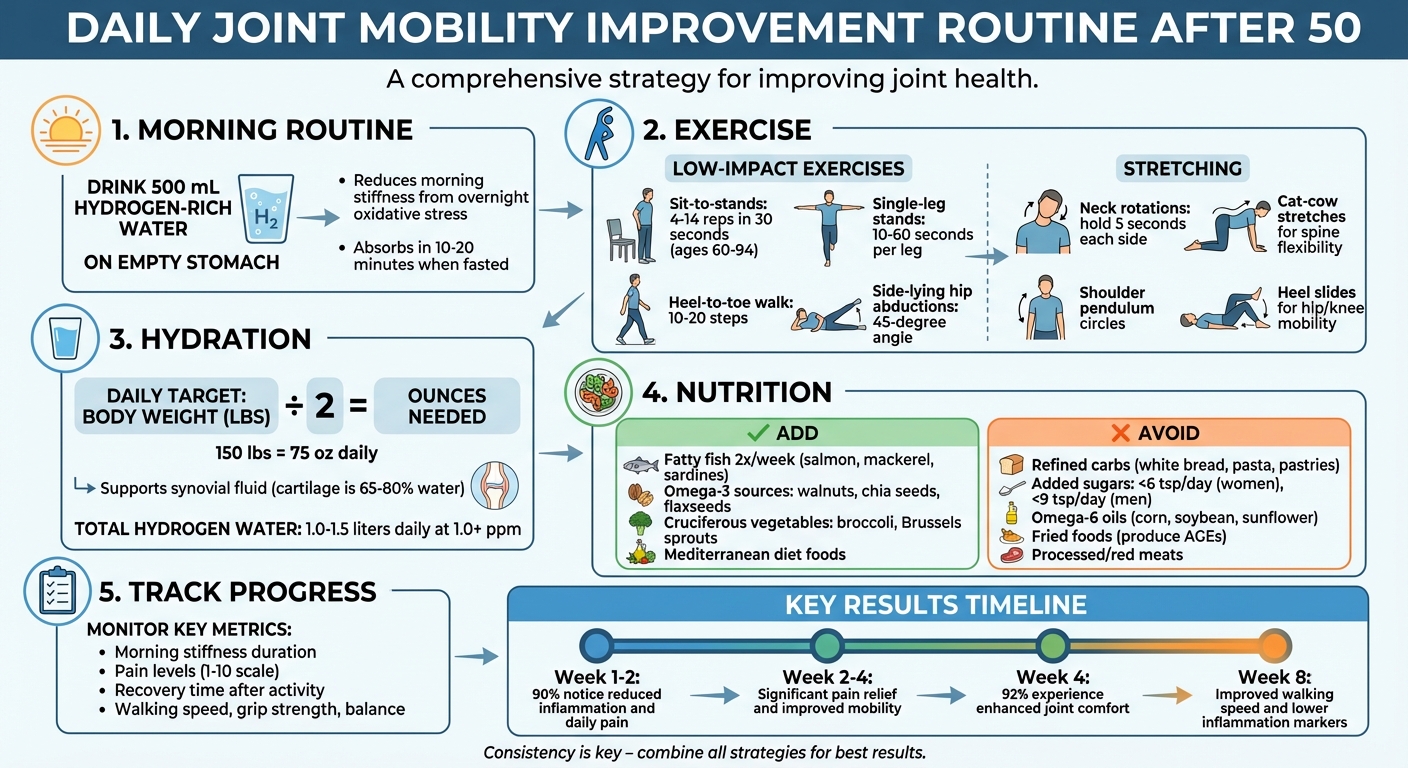
Daily Joint Mobility Improvement Routine for Adults Over 50
Inflammation and Oxidative Stress in Joints
What Causes Joint Inflammation?
Joint inflammation happens when the immune system mistakenly attacks joint tissues, leading to swelling, stiffness, and discomfort. When this inflammation becomes chronic, it continuously damages joint tissues, making even simple movements difficult.
There are several triggers for this prolonged inflammation. Repetitive motions from daily activities, hobbies, or intense exercise can cause small injuries that keep inflammation active. Autoimmune conditions like Rheumatoid Arthritis or Lupus cause the body to attack its own joints, while infections can lead to septic arthritis, marked by red, swollen joints. Chronic inflammation also disrupts the mitochondria - your cells' energy producers - which slows the healing process in joint tissues. This ongoing inflammatory response creates the perfect environment for oxidative stress, which worsens joint mobility.
How Oxidative Stress Affects Mobility
Oxidative stress occurs when reactive oxygen species (ROS) and free radicals, like hydroxyl radicals, build up faster than the body can neutralize them. These harmful molecules target cartilage, breaking down its extracellular matrix and reducing the production of Type II collagen and aggrecan - two key components that keep cartilage strong and flexible.
Aging and joint injuries increase ROS levels, which damage mitochondria. Damaged mitochondria then produce even more ROS, fueling chronic inflammation. This vicious cycle speeds up the aging and death of cartilage cells (chondrocytes), reducing the cushioning and lubrication within joints. As we get older, the body's ability to clean up damaged mitochondria (a process called autophagy) slows down, making oxidative stress an even bigger issue after age 50. Over time, this leads to ongoing swelling and tissue damage, which stiffen the joints and limit movement.
sbb-itb-6860cc4
Molecular Hydrogen for Joint Health
How Molecular Hydrogen Reduces Inflammation
Molecular hydrogen (H₂) stands out from traditional antioxidants because it targets and neutralizes harmful hydroxyl radicals while leaving beneficial reactive oxygen species intact. This balance is crucial since the body relies on some oxidative activity for normal healing and repair processes.
For joint health, H₂ plays a key role by interrupting the inflammation cycle. It regulates pro-inflammatory cytokines, supporting repair without the risks often associated with NSAIDs. Unlike NSAIDs, which can completely suppress inflammation and lead to potential side effects like kidney damage or stomach ulcers, H₂ helps maintain balance and encourages natural repair mechanisms.
At a deeper level, H₂ supports joint health by promoting mitochondrial biogenesis through the PGC-1α pathway. This is significant because damaged mitochondria often generate excess free radicals, contributing to chronic inflammation. By encouraging the production of healthy mitochondria, H₂ addresses one of the root causes of age-related joint issues. This is especially relevant for individuals over 50, as muscle mass tends to decline by 3% to 8% per decade, with an even sharper decrease after age 60.
Benefits of Hydrogen-Rich Water for Joints
Hydrogen-rich water builds on H₂'s anti-inflammatory properties to improve joint function. Clinical research backs this up. For instance, a study involving 60 adults aged 60 to 80 found that drinking 1.5 liters of hydrogen water daily (at 1.0 ppm) for 8 weeks improved walking speed and reduced markers of inflammation. Another study with 68 elderly participants (ages 65–85) showed that consuming 1.0 liter per day of hydrogen water (at 1.2 ppm) for 4 weeks enhanced balance and grip strength.
One standout benefit of hydrogen-rich water is its ability to alleviate morning stiffness by counteracting oxidative stress that builds up overnight. Many users report experiencing relief from joint pain within 2 to 4 weeks of consistent daily use. A compelling example comes from a case in September 2024, where researchers at Tri-Service General Hospital in Taiwan treated a 66-year-old woman with rheumatoid arthritis using daily molecular hydrogen therapy. She took one capsule containing 170 mg of hydrogen-rich coral calcium. After just one month, her fatigue score dropped from 8.1 to 3.0 on the Brief Fatigue Inventory-Taiwanese scale, and her lab results returned to normal.
Molecular hydrogen is also known for its excellent safety profile. It has no documented interactions with medications, making it a suitable option for seniors managing conditions like high blood pressure or diabetes. Since 2007, more than 2,000 peer-reviewed studies have explored its benefits. The therapy is non-toxic, has no major reported side effects, and is even naturally produced in the gut.
Daily Exercises for Joint Flexibility
Low-Impact Exercises for Joints
As you age, especially after 50, your body undergoes changes like reduced muscle mass and less elastic connective tissues. This makes it essential to focus on functional, low-impact movements that prioritize smarter, safer ways to stay active.
Balance and stability are key during this stage of life. A simple exercise like a single-leg stand can help. Stand on one leg for 10 to 60 seconds, keeping a wall or sturdy chair nearby for support. For improved gait and ankle mobility, try a heel-to-toe walk: take 10 to 20 steps in a straight line, ensuring the heel of your front foot touches the toes of your back foot.
Your lower body benefits greatly from targeted movements. A great example is the sit-to-stand exercise, which mimics everyday actions like getting out of a chair or bed. Physical therapist Leah Verebes, PT, DPT, GCS, highlights its importance:
Standing up and lowering down on a chair mimics other movements, like getting into and out of bed or a vehicle, and using the toilet.
For adults between 60 and 94 years old, a good goal is 4 to 14 repetitions in 30 seconds. You can adjust the difficulty by using a higher chair for support or a lower one for more of a challenge.
Don’t forget about your hips. Side-lying hip abductions - where you lie on your side and lift your top leg to a 45-degree angle - are excellent for strengthening the gluteus medius, a muscle vital for stability. Orthopedic surgeon Pamela Mehta, MD, explains:
Working those large muscles [gluteus medius] is one of the best ways to prevent falls.
Pair these exercises with stretches to keep your joints flexible and fully supported.
Stretching Techniques for Stiffness Relief
Stretching is crucial for joint health because it helps maintain their range of motion and reduces the risk of cartilage breakdown. The key is to move slowly and stop when you feel a gentle pull - never push into pain.
For neck and shoulder stiffness, neck rotations are a great start. Sit upright and turn your head to look over each shoulder, holding the position for about 5 seconds. Dr. Mehta advises:
Gently rotating the neck from side to side several times throughout the day can help with pain and stiffness.
Another effective technique is the shoulder pendulum. Lean forward and let your arm swing gently in small circles, as well as forward/backward and side-to-side motions, to improve shoulder mobility.
Your spine also benefits from stretches like the cat-cow. This movement, performed on all fours or while seated, alternates between rounding your back and dropping your belly. Shannon Murphy, M.Ed, ATC, explains its benefits:
It [Cat-Cow] improves spine flexibility, core strength and posture, and helps relieve tension in the back.
Adding a seated spinal twist - where you rotate your torso while keeping your hips steady - can further release tension in your lower back.
For better hip and knee flexibility, heel slides are simple and effective. Lie on your back and slowly slide your heel toward your buttocks. This movement strengthens hip flexors and keeps your knees mobile. The focus should always be on smooth, controlled motions rather than speed.
Using Edenvia Molecular Hydrogen Tablets Daily

How to Use Edenvia for Best Results
To get started, fill a glass or bottle with 8–16 oz of clean water. Stick with room-temperature or cool water - hot water isn’t ideal because it allows the hydrogen gas to escape too quickly [14,16,18,20]. Drop a single tablet into the water and let it dissolve completely, which usually takes 90 seconds to 3 minutes [14,16]. Once dissolved, drink the water immediately. Since molecular hydrogen is highly volatile, it starts dissipating within minutes, so aim to consume it within 15–30 minutes for maximum effectiveness [14,16,19]. Avoid swallowing the tablet directly - always let it dissolve fully before drinking.
Timing matters, especially for joint support. Drinking hydrogen water first thing in the morning on an empty stomach can enhance absorption. When fasted, liquids move from the stomach to the small intestine in just 10–20 minutes, compared to 60–90 minutes after a meal. If you’re active, drinking the water 30–60 minutes before exercise or right afterward may help combat oxidative stress and support quicker recovery [15,19]. For best results, use purified, filtered, or distilled water, as chlorine and other additives in tap water can interfere with the hydrogen release. Also, avoid shaking or stirring the water too vigorously, as this can cause the gas to escape prematurely. Making this a daily habit can set the stage for long-term benefits.
Consistency and Long-Term Results
Once you’ve nailed the proper usage routine, staying consistent is crucial for noticeable improvements. Many users report feeling subtle relief from joint stiffness and minor aches within 7–10 days of daily use, as inflammation begins to subside. More pronounced benefits, like reduced pain, better mobility, and a decreased need for pain relievers, typically emerge within 2 to 4 weeks. In fact, 90% of users noticed reduced inflammation and less daily pain within the first 1–2 weeks, while 92% experienced enhanced joint comfort and mobility.
To make consistency easier, pair your tablet routine with an existing daily habit, like brushing your teeth or taking morning supplements. Setting reminders can also help you stay on track. For the best results, aim to use the tablets daily for at least 4–6 weeks to fully experience the cumulative effects [15,21].
The ONLY Morning Routine You Need to Fix Joint Stiffness (60+)
Dietary Changes to Support Joint Health
Making thoughtful dietary adjustments can enhance your joint care routine by helping to manage inflammation.
Anti-Inflammatory Foods to Add
What you eat plays a big role in controlling joint inflammation. The Mediterranean diet, which emphasizes fruits, vegetables, legumes, fatty fish, and healthy unsaturated fats, is packed with antioxidants that help neutralize free radicals and reduce inflammation in your joints.
Omega-3 fatty acids are key players here. These fats actively counteract inflammatory compounds in your body. Try to include fatty fish like salmon, mackerel, trout, or sardines in your meals at least twice a week. If fish isn’t your thing, plant-based options like walnuts, chia seeds, flaxseeds, and hemp seeds are great alternatives. Additionally, cruciferous vegetables such as broccoli and Brussels sprouts contain sulforaphane, which may help slow cartilage changes in osteoarthritis by targeting inflammation.
"Among the many stressors in our life that generate inflammation, the food we consume is a very tangible thing over which we have control." - Carissa Lane, Physical Therapist, Hinge Health
Staying hydrated is another simple yet effective way to support joint health. Proper hydration helps maintain synovial fluid, which cushions your joints and reduces friction. To calculate your daily water intake, divide your weight (in pounds) by two to determine how many ounces you need. For example, if you weigh 150 pounds, aim for 75 ounces of water daily. Products like Edenvia’s hydrogen-rich water tablets can enhance hydration while addressing oxidative stress. For an extra anti-inflammatory boost, use turmeric in your cooking, paired with black pepper and olive oil to increase its absorption.
These dietary tweaks, when combined with regular exercise and supplements, create a well-rounded approach to joint health.
Foods to Avoid for Healthier Joints
Certain foods can worsen inflammation and should be avoided to protect your joints. Refined carbohydrates - like white bread, white rice, pasta, and pastries - cause spikes in blood sugar, which can trigger inflammation throughout your body. Similarly, added sugars are problematic. High-fructose corn syrup and cane sugar, commonly found in sodas and processed snacks, promote the release of pro-inflammatory cytokines. Women should limit added sugar to 6 teaspoons per day, while men should stay under 9 teaspoons. Drinking just one 12-ounce soda daily has been linked to a 63% higher risk of rheumatoid arthritis.
Pro-inflammatory fats are another concern. Oils high in omega-6 fatty acids, such as corn, soybean, sunflower, and safflower oils, can irritate tissues when consumed in excess compared to omega-3s. Pay attention to product labels - mayonnaise and salad dressings often contain these oils. Instead, choose options like extra virgin olive oil or avocado oil. Processed and red meats, including bacon, sausage, and marbled steaks, are associated with increased levels of inflammatory markers like C-reactive protein (CRP) and interleukin-6 (IL-6).
"People with arthritis are often prescribed an overwhelming amount of pain medications, but the first line of defense should be changing your diet." - Julia Diamond, RDN
Cooking methods also make a difference. Frying produces advanced glycation end products (AGEs), compounds that can stiffen joints and accelerate osteoarthritis progression. Instead of frying, opt for grilling, baking, steaming, or stir-frying. By removing foods that trigger inflammation and addressing oxidative stress, you can tackle joint issues from multiple angles at once.
Tracking Progress and Combining Strategies
How to Track Joint Mobility Improvements
Keeping a joint health journal can be a practical way to monitor your progress and spot patterns over time. Record daily observations about flexibility, pain levels (on a 1–10 scale), and how easily you complete everyday tasks like climbing stairs or bending down. Another key metric is morning stiffness - note how long it takes for your joints to loosen up after waking, as this can reveal signs of inflammation or hydration issues.
Recovery time after physical activity is another important factor to track. Pay attention to how quickly you bounce back and whether you’re relying less on pain relievers. Research shows that consistent use of molecular hydrogen can lead to noticeable improvements. For example, studies report significant reductions in inflammation and pain within two weeks, with 92% of participants experiencing better joint comfort and easier walking after four weeks. Another study involving adults aged 60–80 found improved walking speeds and lower inflammatory markers after eight weeks of drinking 1.5 liters of hydrogen water daily.
To back up your journal entries, add objective measurements like walking speed, grip strength, and balance tests. These metrics provide concrete evidence of progress. You can also monitor hydration by checking urine color - it should be a pale yellow - since proper hydration supports synovial fluid, which helps cushion your joints. Aim for about 75 ounces of water daily (roughly half your body weight in pounds). This combination of detailed journaling and measurable data gives you a clear picture of what’s working and helps you tweak your routine as needed.
Combining Multiple Strategies for Better Results
For the best results, combine exercise, molecular hydrogen, and anti-inflammatory nutrition into a well-rounded plan. Exercise acts as the physical stimulus your joints need, while molecular hydrogen works to lower levels of pro-inflammatory cytokines like IL-6 and TNF-α, which can make movement more uncomfortable. Adding anti-inflammatory foods to your diet provides the nutrients your body needs for repair, and staying hydrated ensures your cartilage - made up of 65% to 80% water - remains elastic and protective. Use the data from your journal to adjust the balance between these strategies for optimal recovery and comfort.
"Hydrogen water should be viewed as a complement to, not a replacement for, regular physical exercise. Exercise remains the single most effective intervention for preserving muscle mass... However, hydrogen water can enhance the benefits of exercise by reducing exercise-induced oxidative damage." – PurePebriX
Timing matters when combining these strategies. Drinking 500 mL of hydrogen-rich water first thing in the morning can help counteract oxidative stress and stiffness from overnight. For exercise recovery, taking Edenvia tablets before and after workouts may reduce delayed-onset muscle soreness. In studies with adults aged 65–85, participants showed improved grip strength and better balance test results after just four weeks of hydrogen water use. This multi-pronged approach is especially helpful for addressing challenges that often arise after age 55, like reduced thirst signals and less efficient kidney function.
Conclusion
Improving joint mobility after 50 involves a thoughtful mix of movement, hydration, and specific interventions. Regular exercise helps maintain function, staying hydrated supports the cartilage's water content (which ranges from 65-80%), and targeted options like molecular hydrogen address inflammation and oxidative stress. Low-impact activities such as sit-to-stands or single-leg stands are excellent for building balance and stability, which are essential for staying independent.
Research highlights that drinking 1.0–1.5 liters of hydrogen-rich water daily for 4–8 weeks can improve walking speed, grip strength, and balance in older adults. This combined approach can significantly enhance mobility, making daily tasks easier and promoting confidence in movement.
Start your day with 500 mL of hydrogen-rich water to ease morning stiffness, and aim for at least 1.0 liter daily with concentrations above 1.0 ppm. Pair this with functional exercises and track your progress using a joint health journal. Record factors like morning stiffness, pain levels, and recovery times - many notice improvements within just a few weeks when staying consistent.
Edenvia Molecular Hydrogen tablets offer a simple way to incorporate hydrogen-rich water into your routine. Starting at $12.76 per tablet in bulk, they provide a convenient option to support hydration, reduce inflammation, and promote better mobility over time. Consistency is key!
FAQs
How do I know if my joint stiffness is inflammation or just aging?
Joint stiffness can show up in different ways, depending on the cause. When it's due to inflammation, you might notice pain, swelling, warmth, or redness. These symptoms often point to conditions like arthritis. On the other hand, stiffness tied to aging tends to develop slowly over time. It usually doesn't involve swelling or warmth and is often linked to natural changes, like reduced muscle mass or less joint lubrication.
The main difference? Inflammatory stiffness brings more intense, noticeable symptoms, while age-related stiffness is generally milder. If your symptoms are severe or don’t go away, it’s a good idea to check in with a healthcare professional to get to the root of the problem.
Is hydrogen-rich water safe with my medications?
Hydrogen-rich water is typically regarded as safe to use alongside medications and has been classified as "Generally Recognized as Safe" (GRAS) by the U.S. Food and Drug Administration. That said, it's always a good idea to check with your healthcare provider before adding it to your routine, especially if you're taking medications or managing specific health conditions.
What’s the simplest daily routine to improve mobility fast?
To see fast results in improving mobility, try adding some low-impact exercises to your daily routine. Simple moves like single-leg stands, heel-to-toe walks, and sit-to-stands can make a big difference. These exercises are great for building balance, strength, and flexibility, while also helping to ease stiffness and lower the risk of falls.
Another helpful tip? Stay hydrated - especially with hydrogen-rich water, which may support joint health by reducing inflammation. Pairing these functional exercises with proper hydration is a straightforward and effective way to help your joints move more freely.