

Hydrogen Water vs. Traditional Recovery Drinks
Hydrogen water and sports drinks serve different purposes in workout recovery. Hydrogen water focuses on reducing oxidative stress and inflammation at the cellular level, while sports drinks help with hydration and energy replenishment.
Key differences include:
- Hydrogen Water: Calorie-free, sugar-free, and works as a selective antioxidant. It may lower muscle damage markers (18% drop in CK) and reduce peak blood lactate levels by 40%.
- Sports Drinks: Contain 21–34g of sugar per serving and electrolytes like sodium and potassium to restore fluids and glycogen quickly but don't address oxidative stress or inflammation.
Quick Comparison:
| Factor | Hydrogen Water | Sports Drinks |
|---|---|---|
| Hydration | Similar to plain water | Superior fluid retention (~50%) |
| Oxidative Stress | Targets harmful free radicals | No antioxidant properties |
| Inflammation | Reduces muscle damage and inflammation | No cellular-level effects |
| Nutritional Content | Zero calories, no sugar | High sugar (21–34g) and electrolytes |
| Taste & Convenience | Neutral, requires tablet dissolution | Sweet, ready-to-drink |
Hydrogen water offers deeper recovery benefits over time, while sports drinks are ideal for quick hydration and energy. Together, they can complement your recovery routine.
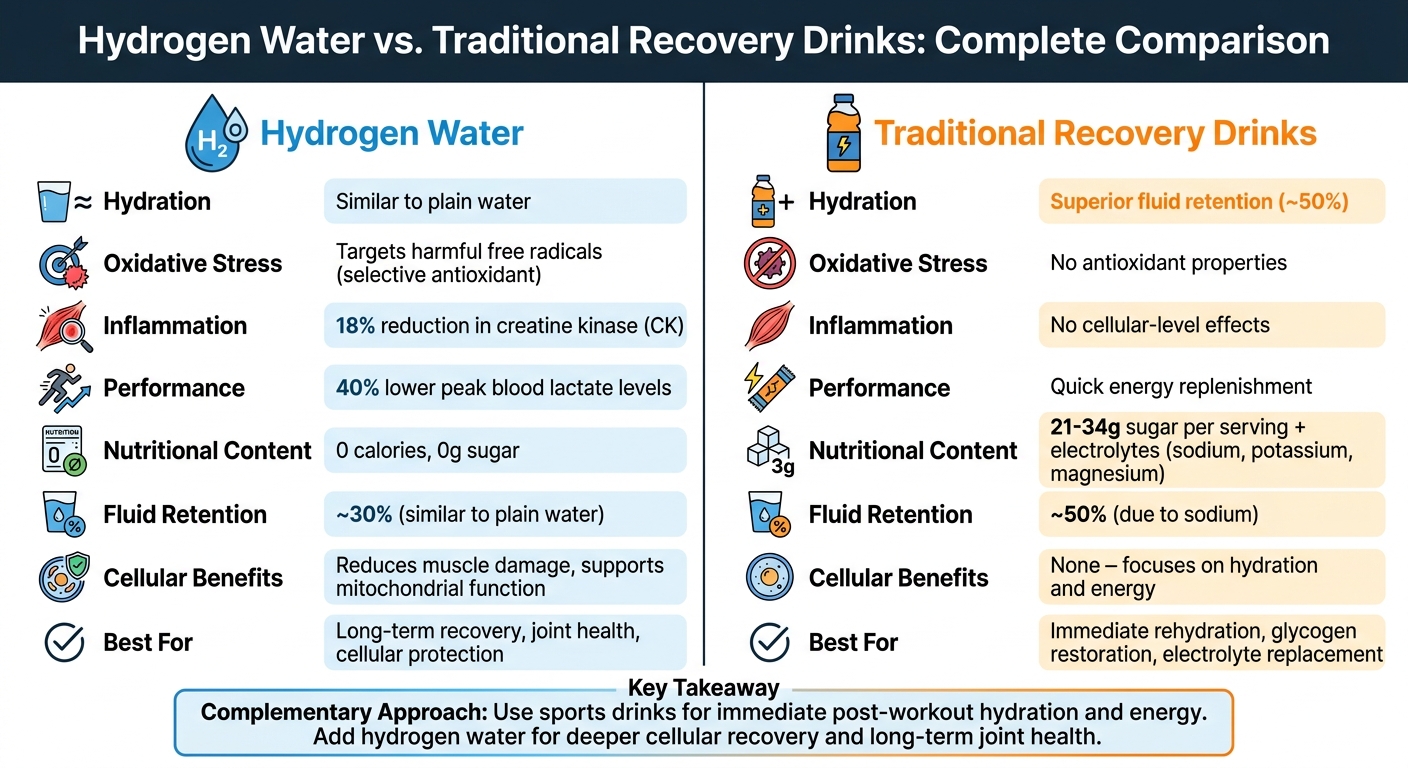
Hydrogen Water vs Sports Drinks: Recovery Benefits Comparison
How Each Type Works
Hydrogen Water: Molecular Hydrogen as a Selective Antioxidant
Molecular hydrogen (H₂) is the smallest molecule, which allows it to easily penetrate cell membranes and reach critical areas like mitochondria and the nucleus. Once inside, H₂ acts as a selective antioxidant, targeting the most harmful free radicals, such as hydroxyl radicals (•OH) and peroxynitrite (ONOO⁻). Unlike broad-spectrum antioxidants like vitamins C or E - which can reduce training adaptations by 15–20% - hydrogen water avoids interfering with beneficial molecules necessary for cellular signaling.
"Molecular hydrogen can selectively neutralize highly reactive ROS, such as hydroxyl radicals (•OH) and peroxynitrite (ONOO⁻), without affecting less reactive species essential for cellular signaling." – Mkrtych Ogannisyan, Federal Research and Clinical Center of Sports Medicine and Rehabilitation
Hydrogen water also helps regulate inflammatory signaling by reducing the activation of the NF-κB pathway. This, in turn, decreases pro-inflammatory markers while boosting anti-inflammatory responses. The result? Lower oxidative stress and enhanced joint comfort, which can be especially helpful for post-exercise recovery.
In comparison, traditional recovery drinks rely on entirely different physiological processes.
Traditional Recovery Drinks: Electrolytes and Carbohydrates
The primary purpose of traditional sports drinks is to restore hydration and energy levels. These drinks are packed with essential minerals - sodium, potassium, magnesium, calcium, and chloride - that are lost through sweat during physical activity. Sodium, in particular, helps drive fluid retention, with electrolyte drinks achieving about 50% fluid retention compared to roughly 30% for plain water.
Carbohydrates, typically present at a 4–8% concentration, play a key role in replenishing muscle glycogen and slowing gastric emptying, which further aids hydration.
"Electrolytes (sodium, potassium, magnesium, chloride) help with fluid balance, nerve signaling, and muscle contraction." – Pulse Labs
Unlike hydrogen water, traditional recovery drinks don’t engage directly with oxidative stress or inflammation at the cellular level. Instead, they focus on rehydration, energy restoration, and maintaining nerve and muscle function. These distinct mechanisms highlight the differences in how each type of drink supports recovery.
sbb-itb-6860cc4
Benefits for Recovery and Joint Health
Hydrogen Water: Reducing Inflammation and Supporting Joints
Hydrogen water can ease post-exercise discomfort by tackling oxidative stress and inflammation at a cellular level. After intense workouts, your body generates harmful free radicals that damage muscle fibers and trigger inflammation. Molecular hydrogen steps in by neutralizing these harmful molecules while leaving the beneficial ones intact - those your body needs for recovery and growth.
A study published in February 2025, led by Mkrtych Ogannisyan and Tyler W. LeBaron, revealed some impressive results. Participants in the randomized, double-blinded trial showed an 18% drop in creatine kinase (a key muscle damage marker) and a 12.6% boost in maximum torque after warming up. The research, which involved 22 elite female athletes (handball and skeleton players), also noted reduced body fat and increased muscle mass after 28 days of consuming hydrogen-rich water.
"The HRW-generating tablets... improved exercise performance by reducing body fat percentage, increasing muscle mass percentage, improving maximal torque, decreasing muscle damage, and positively modulating the exercise-induced inflammatory and antioxidant responses to exercise." – Mkrtych Ogannisyan, Federal Research and Clinical Center of Sports Medicine and Rehabilitation
When it comes to joint health, hydrogen water works by lowering inflammation markers like IL-6 and TNF-alpha while increasing levels of the anti-inflammatory IL-10. This dual action not only helps reduce joint discomfort but also improves flexibility and range of motion, making it particularly useful for those with chronic joint issues or post-exercise stiffness. Additionally, athletes drinking hydrogen water experienced 40% lower peak blood lactate levels during maximum effort, which means less metabolic acidosis and reduced muscle fatigue.
While hydrogen water focuses on reducing oxidative stress and inflammation at the cellular level, traditional recovery drinks are more about quick hydration and energy replenishment.
Traditional Recovery Drinks: Quick Rehydration and Energy
Traditional sports drinks are great for meeting your body’s immediate needs after exercise. Their main advantage lies in fast rehydration, thanks to sodium, which helps your body retain fluids effectively. This makes them especially useful after activities that involve heavy sweating or prolonged endurance training.
The carbohydrates in these drinks serve two key purposes: restoring depleted glycogen levels in your muscles and improving fluid absorption. Electrolytes like potassium and magnesium also play a critical role by supporting muscle contractions and nerve function, which helps ward off cramps and keeps performance steady during long sessions.
However, these drinks don’t target oxidative stress or inflammation at a cellular level. Unlike hydrogen water, they don’t actively support joint health or help reduce markers of muscle damage. Instead, they’re designed to replace what’s lost - fluids, electrolytes, and energy - without addressing the deeper inflammatory or oxidative processes that can affect recovery and performance.
Hydrogen Water for Bodybuilders: Benefits & Science Explained
Direct Comparison: Hydrogen Water vs. Traditional Recovery Drinks
Hydrogen water and traditional recovery drinks serve different purposes when it comes to post-exercise recovery. Hydrogen water is known for neutralizing oxidative stress, while traditional recovery drinks focus on replenishing fluids, electrolytes, and energy. Thanks to their sodium content, traditional recovery drinks are especially effective at retaining fluids. On the other hand, hydrogen water offers an additional perk: it targets harmful free radicals without disrupting the beneficial ones that aid muscle adaptation.
Traditional recovery drinks often contain 21–34g of sugar per serving, which helps with energy replenishment and hydration through sodium-induced fluid retention. In contrast, hydrogen water provides a calorie-free, sugar-free option that emphasizes cellular recovery.
Hydrogen water also stands out for its cellular recovery benefits. Athletes who consume hydrogen-rich water have reported an 18% reduction in creatine kinase (a marker of muscle damage) and about 40% lower peak blood lactate levels during intense exercise. These effects not only support muscle recovery but also improve joint comfort and mobility. Traditional recovery drinks, while effective for hydration and energy, don't address oxidative stress or cellular-level recovery.
Comparison Table
| Factor | Hydrogen Water | Traditional Recovery Drinks |
|---|---|---|
| Hydration Effectiveness | Similar to plain water; aids in cell-level hydration | Superior fluid retention (~50% retention) |
| Oxidative Stress Reduction | Selective antioxidant action targets harmful radicals | No direct antioxidant properties |
| Inflammation & Joint Support | Reduces muscle damage markers (18% drop in CK) and boosts IL-10 | Focused mainly on fluid and electrolyte balance |
| Nutritional Content | Zero calories, zero sugar, no electrolytes | Contains 21–34g sugar and essential electrolytes |
| Flavor & Convenience | Neutral taste; may require tablet dissolution (~10–20 minutes) | Ready-to-drink with a sweet flavor |
| Long-term Health Benefits | Supports mitochondrial function and cellular protection | High sugar content may negatively impact metabolic health |
Hydrogen water's targeted recovery benefits make it a compelling option for athletes looking to reduce oxidative stress and muscle damage. Meanwhile, traditional recovery drinks remain a reliable choice for quick hydration and energy replenishment, though their high sugar content may raise concerns for long-term use.
Research on Hydrogen Water for Joint Health
Antioxidant and Anti-Inflammatory Effects
Recent studies continue to highlight hydrogen water's role in supporting joint recovery, particularly through its selective antioxidant properties. Clinical trials reveal its ability to reduce muscle damage and inflammation markers, both of which are closely tied to joint health.
For instance, in February 2025, a randomized, double-blinded, placebo-controlled trial conducted at the Federal Research and Clinical Center of Sports Medicine in Moscow involved 22 female elite athletes. Participants consumed 8 mg of H₂ daily through tablets for 28 days. The results were notable: creatine kinase (CK) levels dropped, IL-10 levels increased, and maximal torque after intense exercise improved by 12.6% - all indicators of reduced muscle damage and better recovery.
Another trial from October 2024 at Beijing Sport University examined 18 trained men who consumed 1,920 mL of hydrogen-rich water daily over 8 days during resistance training. Compared to the placebo group, these participants achieved higher power output (50,866.7W vs. 46,431.0W) and completed more repetitions (78.2 vs. 70.3), showcasing improved performance and endurance.
In April 2024, a crossover study at Palacký University Olomouc focused on 12 elite fin swimmers. After consuming hydrogen-rich water for three days, participants experienced reduced creatine kinase levels (156 vs. 190 U.L⁻¹), less muscle soreness (34 vs. 42 mm on the VAS scale), and improved countermovement jump height (30.7 vs. 29.8 cm) 12 hours after intense training. These findings suggest better neuromuscular recovery, which directly supports joint stability and mobility.
Hydrogen water's unique ability to target hydroxyl radicals (•OH) and peroxynitrite (ONOO⁻) while preserving beneficial signals like hydrogen peroxide (important for muscle growth and mitochondrial function) makes it especially effective. This selective action minimizes oxidative stress at a cellular level without interfering with the body's natural recovery processes.
These studies provide compelling evidence that hydrogen water can play an important role in enhancing joint comfort and recovery after exercise. Its targeted effects on oxidative stress and inflammation offer practical applications for improving both joint health and athletic performance.
How to Use Hydrogen Water for Recovery
Using Edenvia Molecular Hydrogen Tablets

Edenvia Molecular Hydrogen tablets make it easy to prepare hydrogen-rich water, whether you're at home or on the go. Simply drop one tablet into 12–17 oz (300–500 mL) of clean, filtered water and let it dissolve completely. This reaction generates a high concentration of molecular hydrogen, often surpassing levels found in pre-packaged options.
For the best results, drink the water within 10–15 minutes since hydrogen escapes quickly when exposed to air. In fact, a glass of hydrogen water can lose 50% of its hydrogen content in just 20–30 minutes. Use cold water, as it retains dissolved gases better. Each tablet also provides magnesium, which supports muscle function and helps reduce cramping. Avoid stirring or shaking the water after the tablet dissolves, as this can cause the hydrogen to dissipate faster.
Timing and Dosage Recommendations
To maximize recovery, timing your hydrogen water intake is key. After a workout, drink 16–20 oz (about 500 mL) within 30 minutes to help reduce inflammation and lower creatine kinase levels. For pre-exercise benefits, consume 12–17 oz (300–500 mL) about 15–30 minutes before starting your workout. This can help protect your cells and reduce fatigue.
For daily use, aim for 0.5–1.5 L of hydrogen water, split into 2–3 sessions. Drinking on an empty stomach - such as first thing in the morning or between meals - can double absorption compared to drinking after eating. Stick with this routine for 4–6 weeks to notice improvements in muscle soreness and workout performance.
| Timing Window | Recommended Dosage | Primary Recovery Benefit |
|---|---|---|
| Pre-Workout | 12–17 oz (15–30 min before) | Reduces fatigue; primes antioxidant defenses |
| Post-Workout | 16–20 oz (within 30 min) | Speeds recovery; reduces lactate and muscle damage |
| Morning Fasted | 12–17 oz (upon waking) | Boosts absorption; combats morning oxidative stress |
| Evening | 7–10 oz (before bed) | Aids overnight repair and anti-inflammatory processes |
Following these timing strategies ensures you get the most out of hydrogen water's anti-inflammatory and antioxidant properties, supporting better muscle and joint recovery.
Conclusion
These comparisons highlight the distinct roles that hydrogen water and traditional recovery drinks play in post-exercise recovery. Traditional sports drinks are great for immediate needs - rehydration and replenishing glycogen. They provide essential electrolytes like sodium and potassium to help restore fluid balance after intense workouts. Meanwhile, hydrogen water works differently, targeting cellular processes to reduce oxidative stress and inflammation. Its benefits build over time rather than delivering a quick energy fix.
What sets hydrogen water apart is its selective antioxidant action. Molecular hydrogen neutralizes harmful free radicals, such as hydroxyl radicals and peroxynitrite, while preserving beneficial reactive oxygen species that support muscle adaptation. This unique action aids muscle recovery and helps protect joint cartilage by reducing inflammation through pathways like NF-κB.
For those managing chronic inflammation or joint discomfort, hydrogen water offers a clean, additive-free recovery option. It contains no sugar, calories, or artificial ingredients. Research shows it can reduce exercise-induced oxidative stress by up to 39% and lower peak blood lactate levels by around 40%.
"Hydrogen water is not magic, and it is not pure snake oil either... As a strength and recovery coach, I treat it as a small potential edge, never a replacement for sleep, smart programming, and solid nutrition." - Vladimir Kotlov, MD, Urologist and CEO, Veedma
This expert insight emphasizes that hydrogen water is best seen as a complementary tool, not a substitute for foundational recovery practices like proper rest, nutrition, and training.
Edenvia Molecular Hydrogen tablets offer a simple way to integrate hydrogen-rich water into your routine, targeting inflammation and supporting joint comfort. While traditional recovery drinks remain essential for quick post-workout hydration, hydrogen water provides deeper, long-term cellular benefits. Together, they can enhance your recovery strategy and promote lasting joint health.
FAQs
Can I use hydrogen water and sports drinks together?
Yes, you can combine hydrogen water and sports drinks because they serve distinct yet complementary functions. Hydrogen water offers antioxidant benefits, helping to combat oxidative stress and reduce inflammation. On the other hand, sports drinks are designed to replace electrolytes, carbohydrates, and fluids lost during exercise. To maximize recovery, use hydrogen water for its antioxidant properties and sports drinks to rehydrate and refuel, particularly after intense physical activity.
Who should choose a sports drink instead of hydrogen water?
Sports drinks are a go-to option for anyone needing to quickly replenish electrolytes, carbohydrates, and fluids lost during intense or extended physical activity. They play a key role in maintaining muscle function and preventing dehydration, particularly in hot or humid environments. While hydrogen water offers antioxidant properties, it doesn't contain the electrolytes or carbohydrates necessary for immediate recovery. This makes sports drinks a more effective choice for demanding workouts that require fast energy and hydration recovery.
How do I store hydrogen water so it doesn’t lose hydrogen?
To preserve the hydrogen content in hydrogen water, it’s best to store it in an airtight, opaque container - for example, a sealed dark-colored bottle. This helps minimize exposure to heat, light, and air, all of which can cause the hydrogen to dissipate. Keeping the water in a cool environment also helps maintain its antioxidant properties and therapeutic hydrogen levels. Proper storage is key to ensuring the water retains its potential benefits, such as supporting joint health and reducing inflammation.