

Hydrogen Water vs Regular Water: What's the Difference
Hydrogen water and regular water both hydrate your body, but they differ in their composition and potential effects. Regular water (H₂O) is essential for hydration and basic bodily functions. Hydrogen water, however, is regular water infused with molecular hydrogen gas (H₂), which may help reduce oxidative stress and inflammation. This is due to its ability to target harmful free radicals while leaving beneficial molecules intact. Hydrogen water has been studied for its potential benefits in areas like recovery, metabolism, and overall wellness.
Key Points:
- Regular Water: Hydrates, regulates body temperature, transports nutrients, and eliminates waste.
- Hydrogen Water: Adds dissolved hydrogen gas, which may reduce oxidative stress, support recovery, and improve glucose regulation.
Quick Comparison:
| Feature | Regular Water | Hydrogen Water |
|---|---|---|
| Hydration | Yes | Yes |
| Antioxidant Effect | None | Targets harmful free radicals |
| Inflammation Relief | No | May reduce inflammatory markers |
| Exercise Benefits | Basic hydration | May improve recovery and endurance |
| Cost | Low (tap or bottled) | Higher ($1–$2 per dose for tablets) |
Hydrogen water offers added potential benefits, but whether it’s worth the investment depends on your health goals.
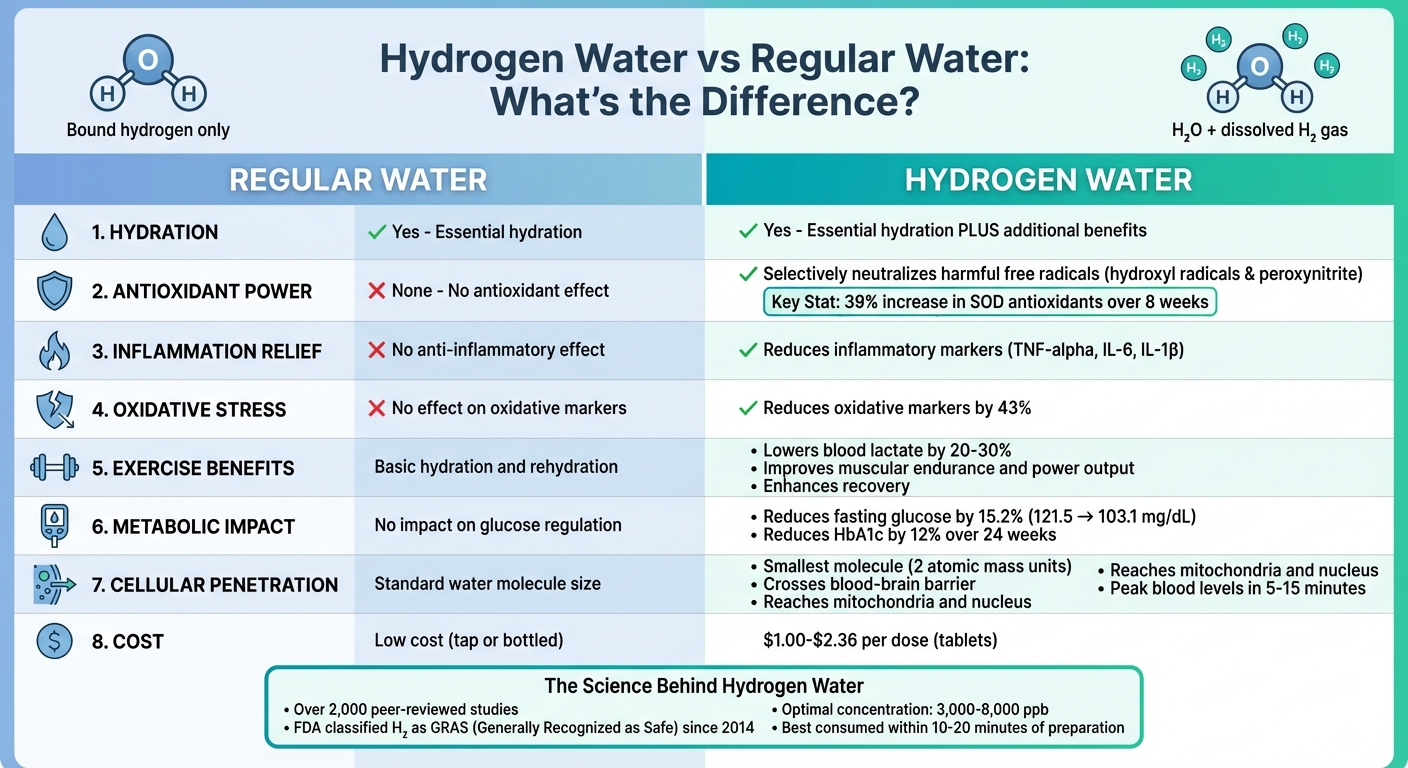
Hydrogen Water vs Regular Water: Complete Comparison of Benefits and Properties
Hydrogen Water vs. Plain Water: What’s the Difference?
sbb-itb-6860cc4
What Is Regular Water?
Regular water, simply put, is H₂O - your go-to source for hydration, whether it comes from the tap, a bottle, or a filter.
"Plain water is the healthiest choice to keep your body hydrated." - Jillian Kubala, MS, RD, Healthline
This type of water plays a vital role in keeping your body functioning properly. It helps maintain fluid balance, supports digestion, transports nutrients, eliminates waste, and regulates body temperature, all thanks to its neutral pH of around 7.0.
That said, while regular water is essential for hydration, it has its limits. The hydrogen atoms in its molecular structure are chemically bound, which means they don’t work as antioxidants. As a result, regular water doesn’t address oxidative stress, a factor linked to various health concerns.
"As of now, there's no better hydration for your body [than regular water]." - Stephanie Schiff, Registered Dietitian, Northwell Health
Affordable and readily available, regular water meets your basic hydration needs. However, it doesn’t actively counteract oxidative stress, which opens the door to exploring the potential of hydrogen water and its unique properties.
Up next, we’ll dive into hydrogen water and how its infusion of molecular hydrogen might offer something extra.
What Is Hydrogen Water?
Hydrogen water is ordinary drinking water (H₂O) infused with additional molecular hydrogen gas (H₂). In this case, the extra hydrogen isn't chemically bound within the water molecules like in standard H₂O. Instead, it exists as free-floating diatomic hydrogen molecules dissolved in the water.
"Hydrogen water is just regular water with added molecular hydrogen gas, or H2. This gas dissolves into the water, creating a drink that stays clear and tasteless but packs potential health perks." - H2Medical
There are several ways to produce hydrogen water. One common method is electrolysis, which splits water molecules and reintroduces H₂ gas into the liquid. Another involves hydrogen-generating tablets, such as Edenvia Molecular Hydrogen, which release H₂ gas through a reaction between metallic magnesium and organic acids. Alternatively, pressure infusion dissolves hydrogen gas into water under high pressure. These methods not only define how hydrogen water is made but also contribute to its unique properties.
The added hydrogen in hydrogen water works by selectively targeting harmful radicals, like hydroxyl radicals, while leaving beneficial reactive oxygen species untouched. Thanks to its tiny molecular size, H₂ can pass through cell membranes, reach the mitochondria and nucleus, and even cross the blood-brain barrier. This allows it to access areas that larger antioxidants cannot.
High-quality hydrogen water typically contains dissolved hydrogen concentrations ranging from 3,000 to 8,000 parts per billion (ppb). Since 2014, the FDA has classified hydrogen gas as "Generally Recognized as Safe" (GRAS) for use in drinks, provided it does not exceed 2.14% by volume.
Molecular Structure and Differences
Understanding the molecular structure of hydrogen water sheds light on why it offers more than just hydration.
At first glance, hydrogen water and regular water might seem identical. However, the key difference lies in their composition. Regular water consists only of H₂O molecules, which hydrate the body but lack antioxidant properties. Hydrogen water, on the other hand, includes free-floating diatomic hydrogen gas (H₂) alongside H₂O molecules. This added H₂ allows for unique biological effects .
"Molecular hydrogen, at only 2 atomic mass units, is the smallest molecule, which gives it a unique biological advantage: it can rapidly cross cell membranes and penetrate into subcellular compartments, including mitochondria and the nucleus, where larger antioxidant molecules cannot reach." - PUREPEBRIX
This structural advantage enables hydrogen water to combat oxidative stress more effectively. Thanks to its tiny molecular size (2 g/mol), H₂ quickly passes through cell membranes and even the blood-brain barrier. It targets harmful radicals like hydroxyl radicals (•OH) and peroxynitrite (ONOO⁻) while leaving beneficial molecules, such as hydrogen peroxide and nitric oxide, untouched. Remarkably, peak blood levels of H₂ are reached within just 5–15 minutes. A 2010 study found that daily hydrogen water consumption increased superoxide dismutase activity by 39% and reduced oxidative markers by 43%.
This unique molecular profile is what sets hydrogen water apart, offering benefits that go beyond simple hydration.
Health Benefits: Hydrogen Water vs Regular Water
Hydrogen water, thanks to its molecular makeup, offers benefits that go beyond the basic hydration provided by regular water.
While regular water is essential for hydration and nutrient transport, hydrogen water takes things a step further. It contains dissolved molecular hydrogen (H₂), which helps shield cells from oxidative damage. This is due to its ability to selectively target harmful free radicals, such as hydroxyl radicals and peroxynitrite, without interfering with beneficial molecules. Additionally, hydrogen water stimulates the Nrf2 pathway, leading to an increase in antioxidant enzyme production - like a 39% boost in superoxide dismutase (SOD) over eight weeks. Regular water lacks this antioxidant capability.
Hydrogen water also helps reduce inflammation. It achieves this by lowering pro-inflammatory cytokines (such as TNF-alpha, IL-6, and IL-1β) through modulation of the NF‑κB pathway. For instance, a 24-week study on individuals with metabolic syndrome showed that drinking high-concentration hydrogen water decreased fasting glucose by 15.2% (from 121.5 mg/dL to 103.1 mg/dL) and reduced HbA1c by 12%. Regular water does not directly influence these markers of inflammation or metabolism.
When it comes to exercise, hydrogen water has been shown to improve performance and recovery. A 2024 study published in Frontiers in Physiology found that consuming hydrogen-rich water (1,600 ppb) for eight days significantly boosted muscular endurance and power output in 18 trained men (average age 19.7) compared to a placebo group. Additionally, drinking hydrogen water before exercise can lower blood lactate levels by 20–30%, which helps reduce muscle fatigue.
Comparison Table: Health Benefits
| Benefit Category | Regular Water | Hydrogen Water |
|---|---|---|
| Antioxidant Power | None | Selectively neutralizes hydroxyl radicals and peroxynitrite |
| Inflammation Relief | No anti-inflammatory effect | Reduces TNF-alpha, IL-6, and IL-1β by modulating the NF‑κB pathway |
| Oxidative Stress Management | No effect on oxidative markers | Activates the Nrf2 pathway, increasing antioxidants like SOD by 39% over 8 weeks |
| Energy Support | Basic hydration for nutrient transport | Enhances mitochondrial function and ATP efficiency |
| Exercise Recovery | Rehydrates but doesn’t reduce fatigue | Lowers blood lactate by 20–30%, aiding muscle recovery |
| Metabolic Impact | No impact on glucose regulation | Improves glucose control, reducing fasting glucose by 15.2% and HbA1c by 12% over 24 weeks |
How to Use Each Type of Water
Here’s how to make the most of different types of water in your daily life.
For everyday needs like hydration, cooking, and supporting essential bodily functions, stick with regular tap or filtered water. It’s accessible, cost-effective, and plays a key role in maintaining fluid balance, regulating body temperature, and transporting nutrients.
Hydrogen water, on the other hand, can serve as a targeted addition to your routine. By dissolving Edenvia Molecular Hydrogen tablets in regular water, you can create hydrogen-rich water with concentrations of up to 8–12 PPM. Aim to drink 1–3 cups (300–500 mL) of hydrogen water once or twice a day.
Timing matters when it comes to hydrogen water. Consume it within 10–20 minutes of preparation, especially before or after physical activity, to support recovery. If you’re managing joint stiffness or inflammation, drinking it in the morning or after exercise can be particularly helpful.
If you have leftover hydrogen water, store it properly in a sealed glass or stainless steel container - plastic is a no-go since hydrogen gas can escape through it. For the best results, prepare hydrogen water using filtered or mineral water instead of distilled or reverse osmosis water.
While regular water is perfect for basic hydration, hydrogen water offers additional perks like reducing oxidative stress and inflammation. Tablets typically cost between $1.00 and $2.36 per dose. By following these tips, you can seamlessly incorporate both types of water into your wellness routine.
Choosing the Right Water for Your Health
Regular water keeps you hydrated, but hydrogen water takes it a step further by addressing oxidative stress in a targeted way.
Hydrogen water stands out because of its selective antioxidant properties. It contains dissolved H₂ gas, which specifically targets harmful hydroxyl radicals while leaving beneficial reactive oxygen species untouched. This unique feature has been backed by over 2,000 peer-reviewed studies exploring its effects on metabolic health, inflammation, and exercise performance. Research highlights show that consistent use can lead to better glucose regulation and reduced inflammatory markers.
If you’re dealing with joint stiffness, muscle fatigue, or chronic inflammation, hydrogen water might offer some relief. To maximize its effects, it’s best to consume it within 10–20 minutes of preparation.
For a convenient option, Edenvia Molecular Hydrogen tablets provide an easy way to enjoy these benefits. These tablets are portable, deliver up to 12 ppm of hydrogen, and cost about $1–$2 per dose. Using them is simple: drop a tablet into filtered water, wait a few minutes for it to dissolve completely, and drink it right away.
"Hydrogen water is not magic, and it is not pure snake oil either... I treat it as a small potential edge, never a replacement for sleep, smart programming, and solid nutrition."
– Bruno Rodriguez, DPT, CSCS
While regular water fulfills basic hydration needs, hydrogen water offers an added boost with its targeted wellness benefits. It complements your daily hydration routine, providing an extra layer of support backed by scientific research.
FAQs
Is hydrogen water safe to drink every day?
Hydrogen water is safe to drink daily. For the best results, consume it soon after it's prepared to preserve its properties and freshness. Be sure to stick to any recommended usage guidelines.
How long does hydrogen stay in hydrogen water after making it?
Hydrogen in hydrogen water doesn't stick around for long - it typically lasts only 10 to 20 minutes after being prepared. It dissipates quickly when exposed to air or kept in open containers. For the best results, it's ideal to drink it right away.
Who is most likely to benefit from hydrogen water?
Hydrogen water could be a helpful addition for those aiming to manage oxidative stress and inflammation. This includes athletes, people with active lifestyles, or anyone recovering from physical exertion. It might also attract individuals interested in its possible antioxidant and anti-inflammatory properties. While its effects are generally mild, hydrogen water can serve as a supportive element alongside other healthy habits for improved recovery and overall wellness.