

Best Practices for Recovery with Hydrogen Water
Hydrogen water can help speed up recovery after exercise by reducing muscle damage, soreness, and oxidative stress. It works as a selective antioxidant, targeting harmful free radicals without interfering with essential cellular processes. Here's how to use it effectively:
- Timing: Drink 14–17 fl oz within 30 minutes post-workout to counteract oxidative stress.
- Daily Intake: On training days, consume 32–42 fl oz, split across 2–3 servings. Increase to 50–68 fl oz during intense training periods.
- Preparation: Use room-temperature or chilled water, dissolve one molecular hydrogen tablet in 8–12 fl oz, and consume immediately for maximum effectiveness.
- Consistency: Regular use over 30 days can improve recovery and support endurance.
Hydrogen water is most effective when paired with other recovery strategies like proper hydration, protein intake, and stretching. Always prepare it fresh for optimal results.
Hydrogen Water For Workouts
sbb-itb-6860cc4
Recovery Checklist: How to Use Hydrogen Water After Exercise
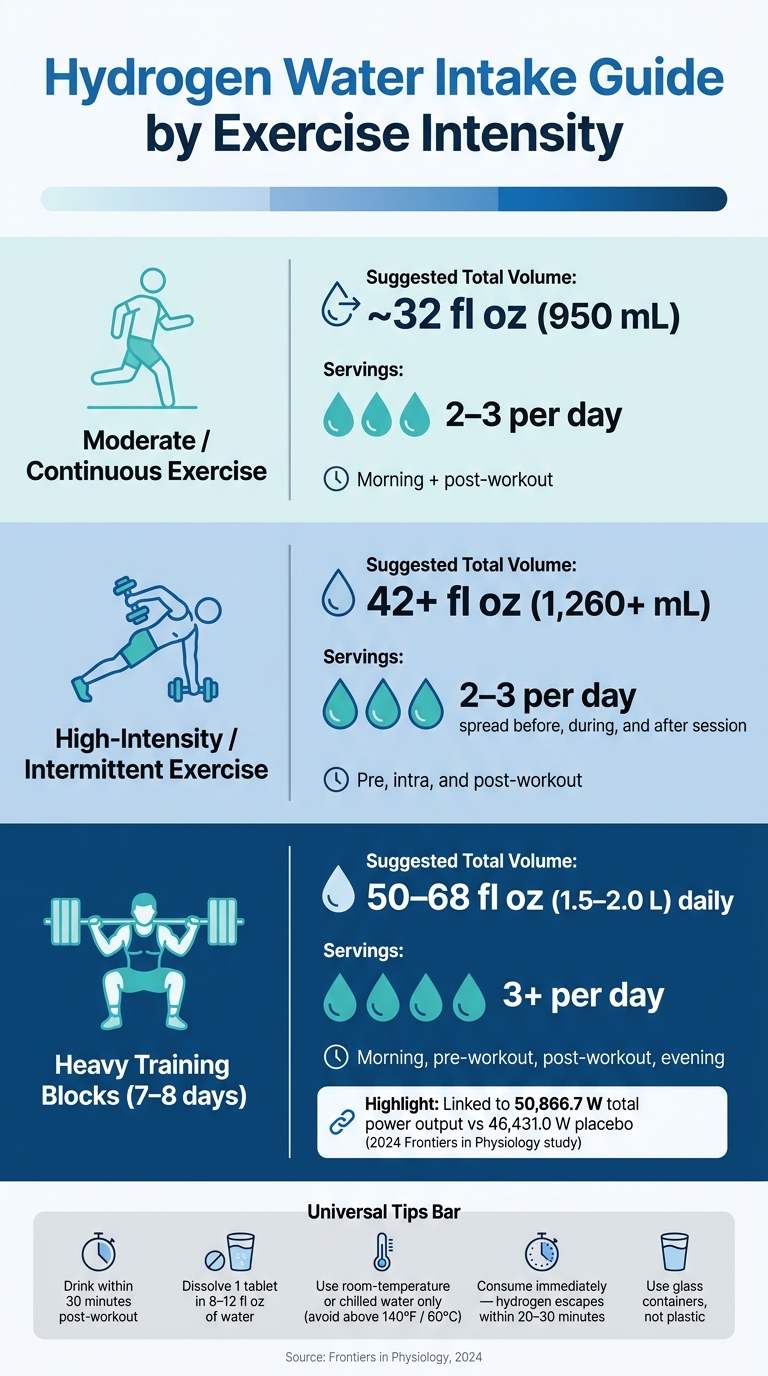
Hydrogen Water Intake Guide by Exercise Intensity
After a workout, using hydrogen water strategically can make a big difference in how quickly your body recovers. Timing, the amount you drink, and consistency all play a role in getting the most out of it. Here's a guide to help you incorporate hydrogen water into your post-workout routine.
Drink Hydrogen Water Within 30 Minutes After Your Workout
"The post-exercise oxidative stress peak begins within minutes and escalates for 2 to 6 hours." – PUREPEBRIX
To get the best results, drink 14–17 fl oz (420–500 mL) of freshly prepared hydrogen water right after your workout. If you're using Edenvia Molecular Hydrogen tablets, dissolve one in water and consume it immediately. This quick action helps counteract oxidative stress and supports recovery. For ongoing benefits, make hydrogen water a part of your daily routine.
Keep a Daily Intake on Training Days
One post-workout serving is a great start, but spreading your intake throughout the day ensures steady antioxidant support. On moderate training days, aim for a total of 32 fl oz (950 mL) divided into 2–3 servings. For example, you can have one in the morning, another around your workout, and a smaller serving in the evening to assist with overnight recovery.
Adjust Your Intake Based on Exercise Intensity
Your recovery needs vary depending on how intense your workout is. For moderate, steady-state exercise, about 32 fl oz (950 mL) is typically enough. However, for high-intensity or longer workouts, increase your intake to at least 42 fl oz (1,260 mL), spread out before, during, and after your session. A 2024 study published in Frontiers in Physiology found that trained men who followed this higher-volume approach performed better, with increased power output and more completed repetitions compared to those using a placebo.
| Exercise Intensity | Suggested Total Volume (Around Workout) |
|---|---|
| Moderate/Continuous | ~32 fl oz (950 mL) |
| High-Intensity/Intermittent | 42+ fl oz (1,260+ mL) |
| Heavy Training Blocks | 64+ fl oz (1,920 mL) daily |
Pair Hydrogen Water with Other Recovery Habits
To maximize recovery, combine hydrogen water with other beneficial practices. For sessions lasting over 90 minutes, pair it with 20–40 grams of protein and electrolytes to help repair muscles and restore hydration. Incorporating other recovery tools like stretching, foam rolling, or adequate sleep can further enhance the effects.
Use Hydrogen Water Consistently During Heavy Training Blocks
When you're in the middle of a demanding training cycle, oxidative stress can build up faster than your body can handle. To combat this, increase your intake to 50–68 fl oz (1.5–2.0 liters) daily for 7–8 days. This approach helps prevent overtraining syndrome and supports noticeable improvements in endurance and power output over time.
How to Prepare Hydrogen Water the Right Way
Getting the preparation right is key because hydrogen doesn't stick around in water for long. To get the full benefits, you need to make your hydrogen water just before drinking it.
Always Prepare Fresh Hydrogen Water
Hydrogen starts escaping from water pretty quickly. In an open glass at room temperature, it's mostly gone within 20–30 minutes. That means making a big batch to drink throughout the day just won’t work. If you want to keep the hydrogen in your water as long as possible, go for a glass container instead of plastic. Those tiny hydrogen molecules can slip right through plastic walls.
Use the Right Amount of Water Per Tablet
For the best results, dissolve one tablet in 8–12 fl oz (250–500 mL) of water. This amount usually gives you a hydrogen concentration between 6 and 12 ppm. If you use more than 12 fl oz, the concentration might drop below the therapeutic level of 1.0 ppm. Let the tablet dissolve for about 3 minutes before drinking.
Do Not Use Hot Water
Steer clear of hot water above 140°F (60°C). High temperatures make the hydrogen escape much faster. Stick with room-temperature or chilled water - cooler water holds onto the hydrogen better.
Once you’ve got the temperature right, think about when to drink it for the best results.
Time Your Doses Around Exercise
The timing of your hydrogen water can make a difference, especially if you’re using it for recovery after workouts. Try drinking it right after you finish exercising, ideally within 30 minutes. Research shows that blood hydrogen levels peak about 10–15 minutes after drinking and drop back to normal after around an hour. So, drinking it close to your workout is your best bet.
Track Your Recovery Over Time
Keep track of how you feel after each session using a 1–10 scale for things like soreness, energy, and heart rate variability (HRV). Over a few weeks, you might notice patterns that can help you tweak your hydrogen water routine. For example, Edenvia Molecular Hydrogen tablets are designed for daily use, but adjusting the timing based on your personal recovery needs can help you get even better results.
When you prepare hydrogen water the right way, every sip can play a role in helping you recover faster and feel better post-workout.
Making Hydrogen Water Part of Your Daily Routine
Plan Hydrogen Water Around Your Training Schedule
Timing your hydrogen water intake around your workouts can make a big difference. On intense training days, aim for 1–2 liters throughout the day. Start with one serving in the morning on an empty stomach, another before your session, and one more immediately after. On rest days, stick to about 10–17 fl oz (300–500 mL) in the morning to maintain antioxidant support. This approach ensures you’re aligning your intake with your recovery needs.
Combine with Other Recovery Methods
Pairing hydrogen water with other recovery techniques can amplify its effects. Foam rolling, stretching, and contrast therapy can help ease muscle tension and improve circulation. Hydrogen water complements these methods by addressing biochemical stress at the cellular level.
"Hydrogen's tiny molecular size allows it to reach this microvasculature where inflammation is most damaging and hardest to treat." - Gary Brecka, Human Biologist
Prioritize Hydrogen Water After High-Impact Activities
High-impact exercises like running, HIIT, CrossFit, and plyometric training generate more oxidative stress compared to lighter activities such as walking or yoga. These workouts increase the production of reactive oxygen species (ROS), which can overwhelm your body’s antioxidant defenses. Hydrogen water acts as a selective antioxidant, targeting harmful free radicals without disrupting beneficial cellular signals.
Maintain Your Usual Hydration
Hydrogen water is meant to enhance - not replace - your regular hydration routine. Stick to drinking about half your body weight in ounces of water daily to stay properly hydrated, especially during long or intense workouts. This ensures your body gets the fluids it needs while reaping the added benefits of hydrogen water.
Use Multi-Day Blocks During Intense Training Periods
Consistency is crucial during heavy training or competition prep. Regular hydrogen water use can help sustain recovery over time. For example, a 2024 study in Frontiers in Physiology had 18 trained men consume about 1,920 mL of hydrogen-rich water (1,600 ppb) daily for 8 days. The results showed a noticeable boost in performance, with the hydrogen group achieving a total power output of 50,866.7 W compared to 46,431.0 W in the placebo group. They also completed more repetitions overall.
Edenvia Molecular Hydrogen tablets make it easy to stick to a consistent routine, even during your toughest training weeks. By incorporating hydrogen water into your daily regimen, you’ll ensure steady support for both recovery and performance.
Key Takeaways: Using Hydrogen Water for Recovery
Adding hydrogen water to your recovery routine can bring a range of benefits. It works as a selective antioxidant, targeting harmful radicals while leaving essential cellular functions intact.
Studies show that hydrogen water helps lower creatine kinase levels and boosts power output consistently.
For best results, drink it within 30–60 minutes after your workout. Always prepare fresh water for each use, and stick to a daily routine - especially during intense training periods. Using it consistently for at least 30 days can aid in joint comfort and support cellular recovery.
"HRW consumption alleviates oxidative stress and inflammation in skeletal muscle and improves exercise endurance." - Frontiers in Nutrition
Hydrogen water can easily become a part of your recovery strategy. For example, Edenvia Molecular Hydrogen tablets dissolve quickly in cold or room-temperature water, providing a convenient recovery option. With over 12,674 reviews and a 4.9/5-star rating, it’s a practical solution worth considering.
FAQs
Can I drink hydrogen water before or during a workout, too?
Yes, you can drink hydrogen-rich water both before and during your workouts. Studies indicate that drinking it about 20–60 minutes before exercise can help your body get ready, while sipping it during longer workout sessions may support endurance. Edenvia Molecular Hydrogen tablets offer a simple way to make hydrogen-rich water, which helps fight oxidative stress, supports cellular health, and might even lower exercise-induced lactate, potentially improving performance.
How can I tell if hydrogen water is helping my recovery?
Hydrogen-rich water (HRW) might help you recover faster after exercise. Within 12–48 hours post-workout, you could notice less muscle soreness, reduced tissue damage, and improved performance. Research suggests HRW can lower creatine kinase levels (a marker of muscle damage), decrease perceived soreness, and boost endurance during short recovery phases. To keep tabs on your progress, consider tracking soreness with tools like a Visual Analog Scale (VAS) and, if available, check markers like creatine kinase for a more objective measure.
Is hydrogen water safe to use every day long-term?
Hydrogen water is considered safe for daily and long-term use by healthy adults. Clinical studies and FDA evaluations indicate that molecular hydrogen is well-tolerated and shows no signs of toxicity. To get started, try drinking 4 to 9 ounces of hydrogen-rich water daily, gradually increasing your intake over time. Products like Edenvia Molecular Hydrogen tablets provide an easy way to add this antioxidant to your routine, promoting recovery and supporting cellular health.