

Hydrogen Water for Mood and Anxiety: What Studies Show
Hydrogen-rich water (HRW) is water infused with molecular hydrogen (H₂), known for its potential to reduce oxidative stress and inflammation - two factors often linked to mood and anxiety disorders. Early research suggests it may help improve emotional well-being, complementing existing treatments without the side effects of traditional medications.
Key findings:
- Mood and Anxiety Improvement: A 4-week trial in healthy adults showed reduced anxiety and better nervous system function.
- Panic Disorder Benefits: Women with panic disorder experienced reduced inflammation and physical discomfort when HRW was combined with therapy.
- Cancer Patients: HRW helped alleviate mood disturbances during radiotherapy by addressing oxidative stress.
While initial results are promising, the studies are small and short-term. Larger, long-term trials are needed to confirm its effectiveness and establish optimal dosages. For now, HRW may serve as a supportive option alongside established care.
Hydrogen Water Testing for ME/CFS: A New Clinical Trial
sbb-itb-6860cc4
What Studies Show About Hydrogen Water for Mood and Anxiety
Research suggests that hydrogen-rich water may have a positive impact on mood and anxiety. From studies involving healthy individuals to those with specific conditions, the findings point to its potential in supporting mental well-being.
4-Week Trial in Healthy Adults
In 2017, Mizuno and colleagues conducted a study to explore the effects of hydrogen-rich water on healthy adults. Over a four-week period, participants consumed it daily, leading to noticeable improvements in mood, reduced anxiety levels, and better autonomic nervous system function. This study highlights its possible role in maintaining emotional balance and overall mental health.
Research on Women with Panic Disorder
A study published in May 2022, led by Ana Belén Fernández-Serrano and her team, focused on women diagnosed with panic disorder. Participants were divided into two groups: one consumed 1.5 liters of hydrogen-rich water daily for three months alongside standard psychological treatment, while the other group received only the standard therapy. Both groups showed improvements, but those drinking hydrogen-rich water experienced additional benefits, including lower pro-inflammatory cytokine levels and reduced physical discomfort. These results suggest that hydrogen-rich water could complement traditional treatments for anxiety-related conditions.
Effects on Anxiety and Mood in Cancer Patients
Kang and colleagues investigated the effects of hydrogen-rich water on cancer patients undergoing radiotherapy. Over six weeks, participants who consumed the water reported better quality of life scores and lower levels of reactive oxygen metabolites compared to those given a placebo. The findings indicate that hydrogen-rich water may help alleviate anxiety and mood disturbances linked to cancer treatment by addressing oxidative stress at the cellular level.
How Hydrogen Water May Affect Mental Health
Hydrogen water's impact on mental health becomes clearer when considering its cellular actions. Studies involving both healthy adults and cancer patients reveal its potential benefits for mood and anxiety.
Reducing Oxidative Stress and Inflammation
Molecular hydrogen acts as a selective antioxidant, targeting harmful free radicals like hydroxyl radicals that damage brain cells, while sparing beneficial reactive oxygen species. This balance is important because oxidative stress in brain regions such as the hippocampus and prefrontal cortex is linked to mood disorders like anxiety and depression.
What makes hydrogen particularly effective is its ability to cross the blood-brain barrier, allowing it to directly influence the central nervous system. A 2016 study published in Scientific Reports demonstrated this effect in mice. Researchers from the Second Military Medical University in Shanghai provided hydrogen-rich water (0.8 ppm) to mice under chronic stress for 4 weeks. The treatment reduced depressive-like behaviors by suppressing ROS (reactive oxygen species) production in key brain areas.
Impact on Inflammatory Markers and Cytokines
Hydrogen water also interacts with inflammatory pathways associated with mood disorders. It inhibits the NLRP3 inflammasome, a protein complex that triggers the release of pro-inflammatory cytokines in the brain. By blocking caspase-1, an enzyme responsible for activating interleukin-1β (IL-1β), hydrogen water reduces inflammation in regions critical for emotional regulation. It also modulates pathways like p38 and NF-κB, which are involved in producing inflammatory mediators.
For context, major depressive disorder - which affects roughly 350 million people globally - is often linked to elevated levels of IL-1, IL-6, and TNF-α. In the Shanghai study, stressed mice treated with hydrogen-rich water for 4 weeks showed lower IL-1β protein levels.
"Our data suggest that the beneficial effects of hydrogen-rich water on depressive-like behavior may be mediated by suppression of the inflammasome activation resulting in attenuated protein IL-1β and ROS production." - Y. Zhang et al., Researchers
These anti-inflammatory effects complement hydrogen water's direct antioxidant benefits, creating a multi-faceted approach to supporting mental health.
Effects on the Central Nervous System
Hydrogen water also affects the autonomic nervous system, which plays a key role in stress regulation. A 2017 double-blind study led by Kei Mizuno tested the effects of hydrogen-rich water on 26 adult volunteers (mean age 34.4 years) who consumed 600 mL daily for 4 weeks. The findings revealed a significant reduction in resting-state sympathetic nerve activity in those drinking hydrogen water compared to the placebo group. A calmer sympathetic nervous system can help lower stress levels, improving overall mood.
"HRW may improve quality of life by increasing the effects of central nervous system function, including mood, anxiety, and autonomic function." - Kei Mizuno et al.
Additionally, participants consuming hydrogen water experienced a smaller change in K6 scores, a common measure of psychological distress. Hydrogen may also stimulate the release of ghrelin, a hormone with neuroprotective properties that supports mood and cognitive function. By reducing oxidative stress daily, hydrogen water helps preserve neural pathways essential for emotional stability and well-being.
Study Limitations and Future Research Needs
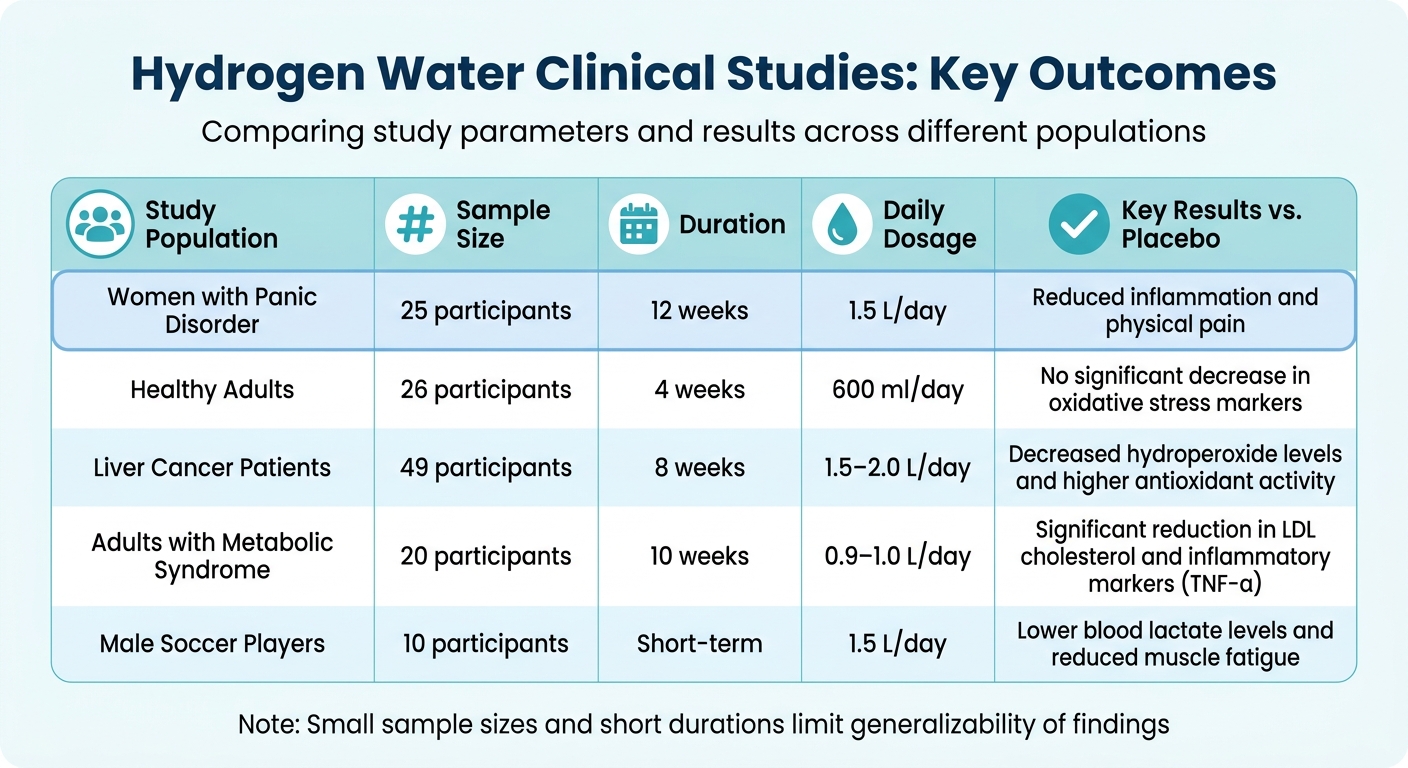
Clinical Studies on Hydrogen Water Effects on Mood and Anxiety
Research into hydrogen water and its effects on mental health shows potential, but several challenges remain. Recognizing these limitations is important for setting realistic expectations and identifying areas that need further exploration.
Study Outcomes Comparison
One major hurdle in this field is the variability in study designs, which makes it difficult to compare results directly. Here's a quick look at some key studies:
| Study Population | Sample Size | Duration | Dosage | Key Results vs. Placebo |
|---|---|---|---|---|
| Women with Panic Disorder | 25 | 12 weeks | 1.5 L/day | Reduced inflammation and physical pain |
| Healthy Adults | 26 | 4 weeks | 600 ml/day | No significant decrease in oxidative stress markers |
| Liver Cancer Patients | 49 | 8 weeks | 1.5–2.0 L/day | Decreased hydroperoxide levels and higher antioxidant activity |
| Adults with Metabolic Syndrome | 20 | 10 weeks | 0.9–1.0 L/day | Significant reduction in LDL cholesterol and inflammatory markers (TNF-α) |
| Male Soccer Players | 10 | Short-term | 1.5 L/day | Lower blood lactate levels and reduced muscle fatigue |
The small sample sizes and short durations - most under 12 weeks - limit the reliability of these findings and leave questions about long-term effects unanswered.
"Sample sizes have been small, and varying hydrogen concentrations make results hard to compare across experiments."
– Audrey Barattiero, Author, Echo Water
This inconsistency in study designs highlights the need for more rigorous and standardized research.
Areas for Further Research
To better understand the role of hydrogen water in mental health, future studies must address several key gaps. Larger clinical trials with hundreds of participants, rather than the small groups currently studied, are essential for drawing meaningful conclusions about its effectiveness in treating conditions like anxiety and depression. Additionally, researchers must determine the optimal dosage, as current studies vary widely in the amounts used, making it unclear what the ideal therapeutic level might be.
Another priority is focusing on individuals diagnosed with mental health conditions, such as depression or anxiety, rather than relying heavily on healthy volunteers or animal models. While the study involving 25 women with panic disorder was a step in the right direction, much larger and longer trials are needed to confirm the findings. Researchers also need to explore whether the benefits of hydrogen water persist over time and establish its safety for extended use.
"These findings suggest that hydrogen water may work alongside established therapies like CBT, not as a replacement, but as a supportive tool for holistic health... longer-term trials are needed."
– Sarah Taylor, Lead Researcher for Echo
Standardizing research protocols will play a crucial role in determining whether hydrogen water can serve as a complementary tool to traditional therapies. Addressing these gaps is critical for establishing clear and reliable therapeutic guidelines.
Conclusion
Research suggests that hydrogen-rich water could help improve mood and reduce anxiety by addressing oxidative stress and inflammation - two factors closely tied to mental health challenges. This approach presents a gentler alternative, especially since traditional antidepressants often fall short, benefiting fewer than half of patients while frequently causing side effects. A 2016 study highlighted that four weeks of drinking hydrogen-rich water alleviated stress-induced depressive behaviors in mice by targeting inflammatory pathways.
"Hydrogen-rich water has emerged as a promising therapeutic strategy to prevent and intervene in stress-related disorders, due to its antioxidant and anti-inflammatory properties."
– Fernández Serrano, Ana Belén et al., Health Psychology Research
Despite these encouraging findings, more extensive, long-term human studies are necessary to confirm its benefits. With around 350 million people globally affected by Major Depressive Disorder, there’s a clear demand for safer and more effective complementary treatments. Future research should focus on determining optimal dosages, assessing long-term safety, and evaluating its effectiveness across various populations. For now, hydrogen-rich water should be seen as a supplementary option, not a substitute for established medical or psychological care.
For those interested in trying this approach, Edenvia Molecular Hydrogen tablets offer a simple way to prepare hydrogen-rich water.
FAQs
How long does it take to feel mood or anxiety benefits from hydrogen water?
Some individuals report feeling improvements in mood or reduced anxiety shortly after consuming hydrogen water - sometimes within minutes or hours. For others, the effects might take longer, with noticeable changes developing over weeks or even months. The timeline often depends on personal factors like health, lifestyle, and individual body chemistry.
What daily amount of hydrogen-rich water is most studied for anxiety support?
Studies indicate that drinking about 600 mL of hydrogen-rich water daily, with a hydrogen concentration of 0.8–1.2 ppm, for a period of one month is the most commonly researched amount when it comes to supporting anxiety. Researchers have focused on this dosage to evaluate its potential effects on improving mood and reducing stress.
Is hydrogen water safe to use with anxiety therapy or medications?
Hydrogen water is considered safe for use alongside anxiety therapy or medications. It has a well-established safety record and isn't associated with harmful side effects. That said, it's important to remember that hydrogen water is not FDA-approved for any specific medical treatments. Before making any adjustments to your treatment plan, it's always a good idea to consult your healthcare provider.