

Hydrogen Water for Skin: Anti-Aging Science
Hydrogen water, infused with molecular hydrogen gas (H₂), is gaining attention for its potential anti-aging effects on skin. Its unique properties allow it to neutralize harmful reactive oxygen species (ROS) while preserving beneficial ones. Research suggests it may reduce wrinkles, improve skin hydration, and combat inflammation and UV damage.
Key takeaways:
- Reduces oxidative stress: Targets damaging ROS like hydroxyl radicals.
- Anti-inflammatory effects: Suppresses pathways that trigger chronic skin inflammation.
- Promotes collagen: Helps maintain skin structure and reduces UV-induced damage.
- Improves hydration: Minimizes water loss and strengthens the skin barrier.
Hydrogen water can be consumed or applied topically through baths or compresses, but consistent use over 4–12 weeks is necessary for visible results. While early studies are promising, more research is needed to establish long-term effects and optimal dosages.
How Hydrogen Water Affects Skin Biology
Antioxidant Properties of Molecular Hydrogen
Molecular hydrogen (H₂) stands out for its selective action against harmful reactive oxygen species (ROS). Instead of neutralizing all ROS, it specifically targets the most damaging ones - hydroxyl radicals (•OH) and peroxynitrite (ONOO⁻) - transforming them into harmless water. Beyond this direct neutralization, H₂ activates the Nrf2 signaling pathway, which encourages the body to produce its own antioxidant enzymes, such as superoxide dismutase (SOD), catalase, and glutathione peroxidase.
"Hydrogen selectively scavenges harmful ROS, such as hydroxyl radicals and peroxynitrite, while activating the Nrf2 pathway to enhance antioxidant defense." - Nan Guo, Department of Beauty Industry, Sungshin Women's University
This dual action - direct scavenging and triggering the body's natural defenses - lays the foundation for hydrogen's broader benefits, including its impact on inflammation in the skin.
Anti-Inflammatory Effects on Skin
Hydrogen's antioxidant properties are complemented by its ability to reduce skin inflammation. Chronic inflammation is a well-known contributor to skin aging, and H₂ addresses this by suppressing the NF-κB pathway. This pathway is responsible for releasing pro-inflammatory cytokines like IL-1β, IL-6, IL-8, and TNF-α. For example, a 12-week hydrogen gas therapy study showed a dramatic reduction in IL-6 levels, from 50 pg/mL to just 6 pg/mL, in inflammatory skin conditions.
Additionally, H₂ stabilizes mast cells, preventing the release of histamine. This action helps alleviate allergic reactions, reducing redness, itching, and other skin irritations.
Effects on Skin Cells and Collagen
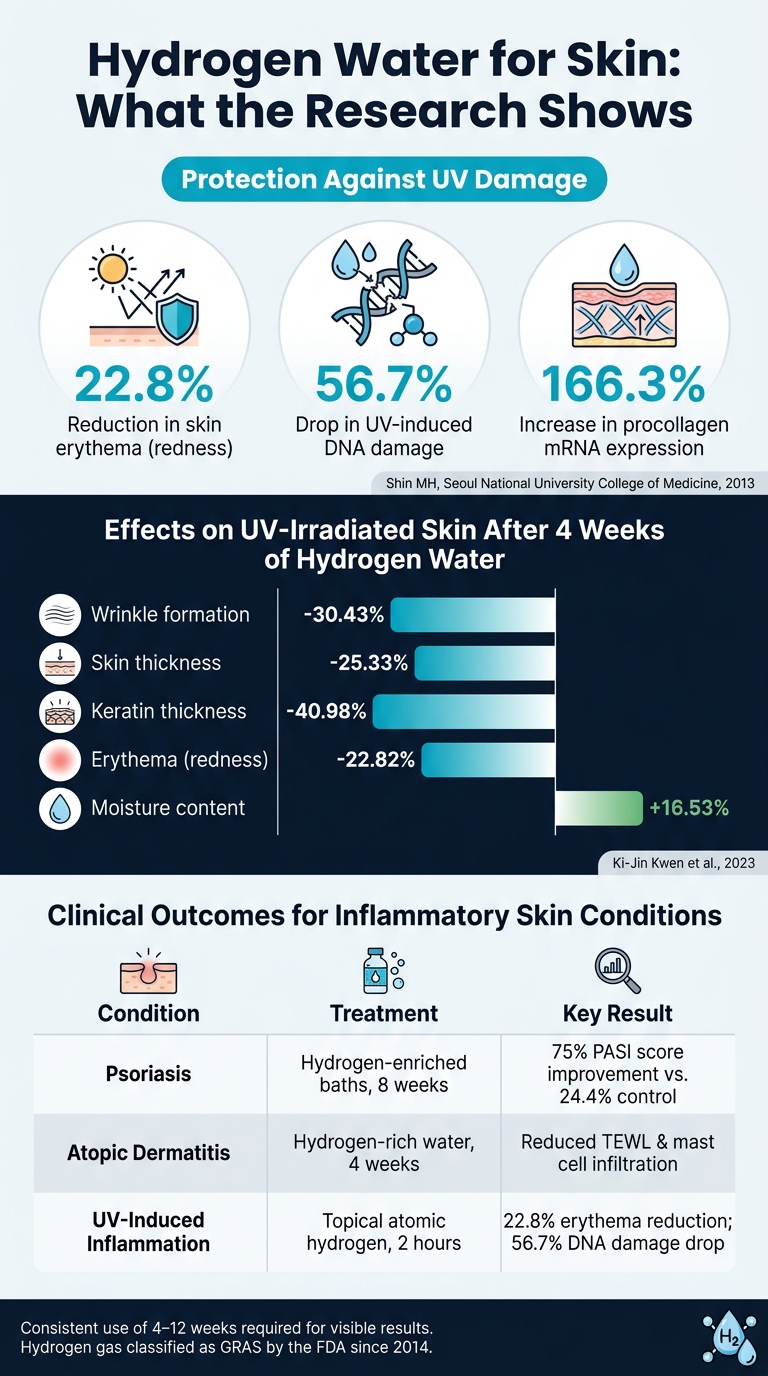
Research continues to highlight hydrogen water's potential in combating skin aging. In a 2023 study led by Ki-Jin Kwen, hairless mice were given 200 mL of hydrogen water daily (with dissolved hydrogen levels above 0.2 ppm) over a four-week period while being exposed to UV radiation. Compared to a control group treated with saline, the hydrogen water group showed measurable improvements in several skin health markers:
| Skin Parameter (UV-Irradiated) | Effect of Hydrogen Water |
|---|---|
| Wrinkle formation | Decreased by 30.43% |
| Skin thickness | Decreased by 25.33% |
| Keratin thickness | Decreased by 40.98% |
| Erythema (redness) | Decreased by 22.82% |
| Moisture content | Increased by 16.53% |
These findings highlight hydrogen water's ability to counteract UV-induced skin damage. H₂ achieves this by inhibiting MMP-1, an enzyme responsible for breaking down dermal collagen. By reducing MMP-1 activity and promoting the synthesis of Type I collagen, H₂ helps maintain skin structure and resilience, even under oxidative stress and UV exposure.
Further research from the Prefectural University of Hiroshima supports these results, showing that H₂ protects skin cells by reducing intracellular peroxide levels and preventing lipid peroxidation.
"H2 can exert protective effects against oxidative stress-, lipid peroxidation-, and carbonyl stress-induced cellular injuries in human keratinocytes, partly mediated via suppression of intracellular oxidative stress." - Yasukazu Saitoh, Faculty of Life and Environmental Sciences, Prefectural University of Hiroshima
sbb-itb-6860cc4
What Research Says About Hydrogen Water and Skin Aging
Hydrogen Water for Skin: Key Research Stats & Benefits
Protection Against UV Damage
Studies highlight hydrogen water's ability to counteract UV damage significantly. One notable experiment, conducted in April 2013 by researchers at Seoul National University College of Medicine under M.H. Shin, examined the effects of applying atomic hydrogen - H(H₂O)m - to the skin of young volunteers after UV exposure. The results were impressive: erythema decreased by 22.8±5.8%, UV-induced DNA damage dropped by 56.7±11.8%, and procollagen mRNA expression in photoaged skin increased by 166.3±28.1%.
"These results demonstrated that local application of H(H2O)m may prevent UV-induced skin inflammation and can modulate intrinsic skin aging and photoaging processes." - Shin MH, Seoul National University College of Medicine
Interestingly, research suggests hydrogen is more effective when used as a pretreatment before UV exposure, rather than as a remedy afterward. This insight could influence how hydrogen-based skincare products are incorporated into daily routines, extending their role beyond UV protection to enhancing overall skin resilience.
Skin Hydration and Barrier Function
Hydrogen water's impact on skin hydration goes far beyond just surface-level moisture. By suppressing free radical–induced lipid peroxidation, it helps restore calcium signaling, regulate gene expression, and minimize transepidermal water loss (TEWL).
"H2 suppressed free radical-induced lipid peroxidation, leading to the recovery of Ca2+ levels. This restoration of Ca2+ signaling subsequently regulated Ca2+-dependent gene expression." - Nan Guo and Yating Zhang
Reducing TEWL is particularly important because it strengthens the skin's barrier function. In one study, daily use of hydrogen-rich electrolyzed warm water (0.2–0.4 mg/L) over three months led to noticeable reductions in neck and back wrinkles in six participants.
Additionally, hydrogen water's anti-inflammatory properties further contribute to maintaining skin health and integrity.
Relief for Inflammatory Skin Conditions
Hydrogen water's ability to combat oxidative stress and inflammation makes it a valuable ally for managing inflammatory skin conditions. For example, in a clinical trial involving 41 psoriasis patients, those who used hydrogen-enriched baths for eight weeks experienced a 75% improvement in their Psoriasis Area and Severity Index (PASI) scores, compared to only 24.4% in the control group.
Animal studies also support its benefits. In models of atopic dermatitis, hydrogen-rich water significantly reduced mast cell infiltration and lowered inflammatory cytokine levels (IL-1β and IL-33), while also decreasing transcutaneous water loss. This is especially relevant to skin aging, as chronic inflammation accelerates collagen breakdown and weakens the skin barrier, making hydrogen water's anti-inflammatory effects doubly beneficial.
| Condition | Method | Key Outcome |
|---|---|---|
| Psoriasis | Hydrogen-enriched baths, 8 weeks | 75% of patients showed PASI score improvement |
| Atopic Dermatitis | Hydrogen-rich water, 4 weeks | Reduced TEWL and mast cell infiltration |
| UV-Induced Inflammation | Topical atomic hydrogen, 2 hours | 22.8% reduction in erythema; 56.7% drop in DNA damage |
Limitations and Safety of Hydrogen Water Research
Gaps in the Evidence
Although early studies show promise, research on hydrogen water still has some clear shortcomings. Nan Guo from Sungshin Women's University points out:
"Research in skin cosmetology remains in its early stages, with unclear mechanisms, dosage, and long-term safety."
Many studies rely on small sample sizes, like a 3-month wrinkle study that involved only six participants. Additionally, the lack of control groups in some research makes it harder to interpret findings. For instance, a systematic review conducted in 2024 started with 590 articles, but only 25–30 met rigorous, high-quality standards focused on human subjects.
Another challenge is the lack of standardized protocols for administering hydrogen water. Effective hydrogen concentrations vary widely depending on the delivery method. For example, topical compresses and baths often need at least 1.6 mg/L of dissolved hydrogen, while intravenous treatments require concentrations above 0.6 mmol/L. In countries like China, clinical use of hydrogen therapies has progressed faster than the peer-reviewed evidence supporting their effectiveness.
Safety and Typical Usage
Despite these gaps, safety has been a central focus in hydrogen water research. Molecular hydrogen has been used in various health applications without any reported negative effects on the nervous, cardiovascular, or immune systems. Since 2014, the U.S. Food and Drug Administration (FDA) has classified hydrogen gas as Generally Recognized as Safe (GRAS) for use in beverages.
Preclinical studies back up this safety profile. For instance, a 2023 study observed hairless mice that drank hydrogen water for four weeks. The mice showed no mortality, behavioral changes, or abnormalities in organ weight or tissue histology. Similarly, human trials for skin conditions like psoriasis have reported no side effects during eight-week study periods.
Although there’s no official recommended dosage, some research suggests consuming 3 to 6 eight-ounce glasses of hydrogen water daily. When choosing a product, look for those with GRAS certification and confirmed dissolved hydrogen levels above 0.2 ppm (200 ppb) to ensure both safety and consistency. It’s important to see hydrogen water as a complement to your existing skincare or wellness routine rather than a substitute for proven treatments. Products that meet safety standards and maintain proper hydrogen concentrations are key to responsible use.
How to Use Hydrogen Water for Skin Health
Oral Intake vs. Topical and Bathing Methods
There are two main ways to incorporate hydrogen water into your skincare routine: drinking it or applying it directly to your skin. Each method offers distinct benefits, and when combined, they can deliver faster, more noticeable results.
Drinking hydrogen water works internally, boosting your body's antioxidant defenses. Consuming about 1.5 liters of hydrogen-rich water daily helps combat inflammation and oxidative stress throughout the body, including the skin. Clinical studies show improvements in skin texture in as little as 12 days, although significant changes in oxidative markers often take 30 days. For deeper benefits, such as reducing wrinkles or supporting collagen production, a consistent routine of 60 to 90 days is recommended.
Topical methods, like hydrogen-infused baths or wet compresses, work directly on the skin. Hydrogen-rich baths have been shown to alleviate inflammatory skin conditions, with measurable results after 12 weeks of daily use. Wet compresses are ideal for targeted concerns like acne or redness, often showing improvements within one to two weeks.
As noted by researchers Di Hu et al.:
"Hydrogen water was shown to promote type-1 collagen synthesis and decrease the destruction of keratin cells, as well as helping to reduce wrinkle formation."
For optimal results, combine hydrogen water with sunscreen and daily moisturizers to enhance its protective effects against sun damage.
| Method | Best For |
|---|---|
| Oral Intake (1.5L/day) | Systemic antioxidant support, anti-aging benefits |
| Hydrogen Bath (daily, ~105°F) | Wrinkle reduction, psoriasis, eczema |
| Wet Compress | Acne, redness, localized skin issues |
Edenvia Molecular Hydrogen as a Practical Option

If you're looking for an easy way to incorporate hydrogen water into your routine, Edenvia Molecular Hydrogen tablets offer a convenient solution. These tablets dissolve in water, producing hydrogen-rich water similar to what was used in clinical studies. This makes them perfect for both oral intake and topical applications.
Edenvia's tablets are third-party tested to ensure they meet the hydrogen concentrations referenced in research. They’re simple to use at home or on the go, making it easier to stick to a daily routine. Plus, they come with a 30-day money-back guarantee, giving you the chance to try them risk-free and start seeing initial improvements in oxidative markers.
Conclusion
The study of hydrogen water's effects on skin aging is still developing, but early research shows encouraging results. Molecular hydrogen operates at the cellular level, targeting harmful free radicals, boosting antioxidant defenses through the Nrf2 pathway, and easing chronic inflammation - key factors linked to skin aging. These processes are backed by both laboratory and clinical evidence.
In preclinical studies, noticeable improvements in skin health were observed, such as fewer wrinkles and better moisture retention. Clinical findings further highlight reductions in wrinkles on the neck and back after three months of daily use of hydrogen-rich warm water.
"Molecular hydrogen holds significant promise in skin cosmetology, and as research and technology evolve, it is expected to drive innovations and breakthroughs in skin care."
That said, hydrogen water isn't a magic solution. Consistency is crucial, as benefits typically become evident after 4 to 12 weeks of regular use - whether consumed, used in baths, or applied to the skin. More extensive human trials are needed to determine ideal dosages and understand long-term effects.
At present, hydrogen water offers a science-supported, low-risk option to enhance a skincare regimen - working from within to support healthier, more resilient skin.
FAQs
What’s the best way to use hydrogen water for skin - drink it, bathe in it, or apply it topically?
The best ways to incorporate hydrogen water into your skincare routine are bathing in it or applying it directly to your skin. Research indicates that soaking in hydrogen-rich water consistently may help diminish wrinkles and reduce skin discoloration. Similarly, applying it topically could help combat oxidative stress in skin cells, which may lead to healthier, more vibrant skin.
How can I tell if my hydrogen water has enough dissolved hydrogen to work?
To see if your hydrogen water is doing its job, measure its dissolved hydrogen concentration. Research points to effective levels being between 338 to 682 µg/mL. Hydrogen-rich water has been linked to improvements in skin issues like wrinkles and blotches. Regular testing can help confirm your water stays within this beneficial range.
Can hydrogen water be used with retinoids, vitamin C, and sunscreen without irritation?
Hydrogen water is thought to have antioxidant properties that could potentially help with reducing skin aging and damage. However, when it comes to combining it with products like retinoids, vitamin C, or sunscreen, there isn't much research available. Because of this, it's best to approach with care to avoid any possible skin irritation.