

Hydrogen Water Benefits for Cellular Membranes
Hydrogen water, infused with molecular hydrogen gas (H₂), supports cellular membrane health by reducing oxidative stress and inflammation. Its tiny molecular size allows it to penetrate cell membranes and mitochondria, targeting harmful free radicals like hydroxyl radicals without disrupting essential processes. Research shows that drinking hydrogen water can:
- Decrease oxidative DNA damage by 39%.
- Lower markers of lipid peroxidation, protecting membrane integrity.
- Improve mitochondrial function, boosting energy production (ATP).
- Reduce inflammation markers like TNF-alpha by up to 23%.
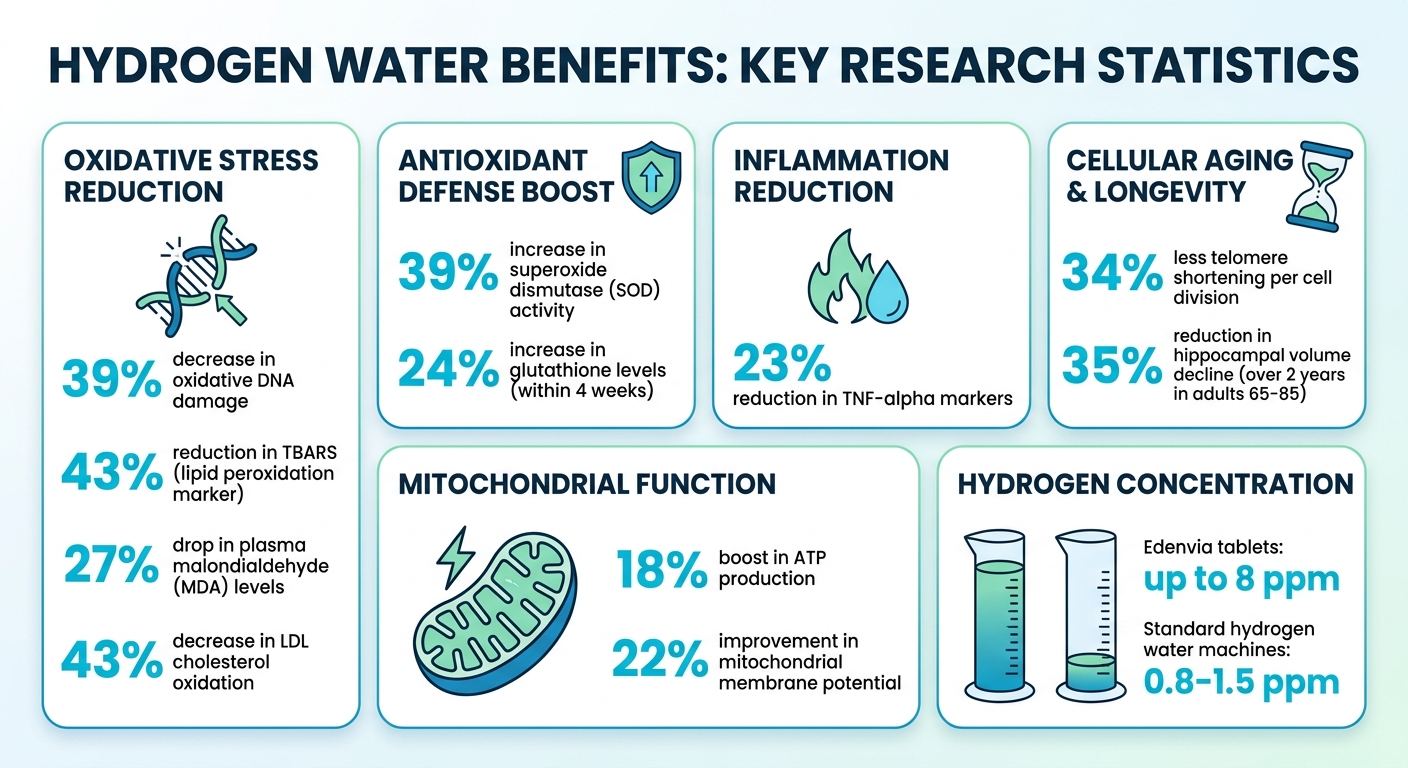
Hydrogen Water Benefits: Key Research Statistics for Cellular Health
How Hydrogen Water Acts as an Antioxidant
Molecular Hydrogen and Free Radical Neutralization
Molecular hydrogen (H₂) stands out from traditional antioxidants because of its targeted approach. Instead of neutralizing a wide range of reactive oxygen species (ROS), H₂ focuses on the most harmful ones - hydroxyl radicals (OH•) and peroxynitrite (ONOO⁻). These radicals are known for causing severe and irreversible damage to DNA, proteins, and cell membranes. Unlike other antioxidants, H₂ spares vital signaling molecules like hydrogen peroxide and nitric oxide, which are essential for proper cellular communication.
What makes H₂ particularly effective is its clean reaction process. When it neutralizes hydroxyl radicals, the only byproduct is water (H₂O), leaving no harmful intermediates or waste behind. This efficiency is partly due to H₂’s ability to diffuse quickly into cells.
Preventing Lipid Peroxidation in Cell Membranes
H₂’s selective neutralization of free radicals also helps protect cell membranes from damage. Lipid peroxidation, a process that compromises the cell membrane, starts when hydroxyl radicals attack fatty acids in the membrane. H₂ halts this process at its root by neutralizing these radicals before they can trigger a damaging chain reaction.
Clinical studies back up these protective effects. For instance, individuals with metabolic syndrome who consumed 1.5–2 liters of hydrogen water daily saw a 43% reduction in TBARS, a marker of lipid peroxidation. Another study found a 27% drop in plasma malondialdehyde (MDA) levels, a known indicator of membrane damage, alongside a 43% decrease in LDL cholesterol oxidation.
Beyond scavenging radicals, H₂ activates the Nrf2 pathway, which regulates over 200 protective genes. This activation boosts antioxidant defenses, increasing superoxide dismutase (SOD) activity by 39% and glutathione levels by 24% within just four weeks.
Effects on Cell Lifespan and Overall Health
H₂ doesn’t just protect membranes - it also supports overall cell health. By reducing oxidative stress in mitochondria, it helps maintain ATP production and lowers the risk of cell death. This protection extends to telomeres, the protective caps at the ends of chromosomes that naturally shorten as cells divide. Research from 2023 revealed that cells in hydrogen-rich environments experienced 34% less telomere shortening per division.
Studies in older adults (aged 65–85) have shown promising results as well. Daily consumption of hydrogen water reduced hippocampal volume decline by 35% over two years. Additionally, clinical trials reported an 18% boost in ATP production and a 22% improvement in mitochondrial membrane potential in this age group.
sbb-itb-6860cc4
How Hydrogen Water Supports Cellular Membrane Function
Better Hydration and Nutrient Delivery
The tiny size of molecular hydrogen (H₂) allows it to pass through cell membranes effortlessly via simple diffusion. This unique ability supports cellular membrane health by improving hydration and nutrient delivery. Unlike larger antioxidants that need specific transport proteins, H₂ moves freely across cellular barriers, bringing its protective benefits directly to the cells.
"Hydrogen water enhances the bioavailability of water by helping it absorb into cells more efficiently, making hydration more effective at the cellular level." – Perricone Hydrogen Water Company
This process promotes what is sometimes called "microhydration", which helps maintain cell shape and supports critical functions like protein synthesis and energy production. Over time, or with exposure to environmental toxins, cell membranes can become less flexible and sustain damage, making it harder for them to absorb water and nutrients. By reducing oxidative stress, hydrogen water helps restore the integrity of these membranes. This improved hydration also lays the groundwork for better mitochondrial function.
Supporting Mitochondrial Health
Mitochondria, responsible for generating about 90% of cellular energy through oxidative phosphorylation, are protected by a double membrane. Thanks to its small size, H₂ can easily cross these barriers. It even penetrates the inner mitochondrial membrane - just 5 nanometers thick - reaching the mitochondrial matrix to neutralize harmful radicals directly at their source.
This access helps maintain mitochondrial membrane potential, a crucial factor for efficient ATP production. In high-energy tissues like the heart and muscles, where mitochondria can take up 15–20% of a cell's volume, this protection is especially important. Additionally, hydrogen water may encourage the creation of new mitochondria by activating markers like PGC-1α and TFAM. Healthy mitochondrial function is critical for controlling inflammation and preventing cell death.
Reducing Inflammation and Cell Death
Chronic inflammation can damage cellular membranes and speed up cell death. Hydrogen water combats this by suppressing the NF-κB pathway and reducing the levels of pro-inflammatory cytokines such as TNF-alpha, IL-6, and IL-1beta. By stabilizing mitochondrial membrane potential, H₂ also helps prevent apoptosis, which is essential for maintaining cellular energy and viability. Its ability to diffuse quickly into cells means it can provide rapid protection, reducing inflammation before it compromises membrane stability.
Research on Hydrogen Water and Membrane Health
Studies on Hydrogen Water's Antioxidant Effects
Hydrogen-rich water has been shown to selectively target peroxyl radicals (ROO·), which are major contributors to lipid peroxidation in cellular membranes. It also enhances intracellular antioxidant capacity, reduces reactive oxygen species (ROS), and helps maintain cell viability by preserving glutathione (GSH). Studies using hydrogen concentrations close to the saturation level of 1,600 μg/L (approximately 1,460 μg/L) have highlighted these protective effects.
"HW was able to increase intracellular antioxidative capacity and to protect cells and tissue from oxidative damage." – Li Xiao and Nobuhiko Miwa, Department of Pharmacology, The Nippon Dental University
These results lay the groundwork for further exploration into how hydrogen water supports membrane health.
Clinical Studies on Membrane Protection
Building on its antioxidant properties, clinical research has confirmed hydrogen-rich water's role in safeguarding cellular membranes. In November 2016, Li Xiao and Nobuhiko Miwa demonstrated that hydrogen-rich water protected human gingival fibroblasts from oxidative damage. Using LIVE/DEAD staining and a cell viability assay, the study showed that hydrogen water reduced cell death caused by hydrogen peroxide and aided in wound healing by lowering ROS levels generated by physical injury. This highlights its importance in maintaining cellular membrane integrity.
Hydrogen water also influences pathways like Sirt1-FoxO3a, which helps reduce cytotoxicity. Professor John Hancock of UWE Bristol explained, "cellular effects of H₂ are often through the modulation of antioxidants and therefore there is an effect on reactive oxygen species (ROS) and nitric oxide (NO) metabolism". Additional research has shown that hydrogen-rich water can mitigate blood-brain barrier damage in animal studies, further emphasizing its potential to support specialized membrane functions.
Using Edenvia Molecular Hydrogen Tablets for Cellular Health

How to Use Edenvia Molecular Hydrogen Tablets
To prepare, dissolve one Edenvia tablet in cold or room-temperature non-carbonated water. Allow 2–3 minutes for the tablet to fully release hydrogen gas - it will fizz as it does so. Make sure to use non-carbonated water in an open cup, as carbonated water's acidity can disrupt the reaction. Avoid using boiling water, as it can reduce the hydrogen content.
Drink the hydrogen-infused water within 30 minutes of preparation. Since molecular hydrogen is a gas that naturally escapes over time, consuming it quickly helps you get the maximum benefit. Following these steps ensures the hydrogen concentration remains high, supporting your cellular health effectively.
Benefits of Edenvia Molecular Hydrogen for Cell Membranes
Edenvia tablets deliver hydrogen concentrations of up to 8 ppm - much higher than the 0.8–1.5 ppm typically produced by hydrogen water machines. This higher concentration provides enhanced antioxidant support, which is essential for maintaining the integrity of cellular membranes. Thanks to its small molecular size, hydrogen diffuses quickly through cell membranes for efficient antioxidant activity.
These tablets act as a selective antioxidant, targeting harmful hydroxyl radicals that can damage cell membranes while preserving beneficial reactive oxygen species that are vital for normal cellular functions. With feedback from over 12,674 reviews, users frequently mention benefits like reduced joint stiffness, better morning mobility, and faster recovery after physical activity.
"I've dealt with stiff knees and aching shoulders for years... After adding hydrogen water to my routine, I started noticing less discomfort within a couple weeks." – Robert K., verified customer
Recommended Usage Guidelines
For ongoing cellular support, drink hydrogen water once or twice daily as part of your wellness routine. It's especially effective when consumed in the morning on an empty stomach to improve absorption. Alternatively, drink it 30–60 minutes before exercise to help minimize oxidative stress and enhance recovery.
Consistency is key. Use the tablets every day for at least 30 days to fully assess their impact on inflammation and cellular health. Edenvia tablets are FDA-GRAS certified and free from stimulants or additives. They’re available with a 50% discount through an autoship subscription (which you can cancel anytime) and come with a 30-day money-back guarantee.
Why Hydrogen Is the Only Selective Antioxidant That Restores Cellular Balance
Cellular Membranes and the Role of Hydrogen Water
Our cellular membranes are under constant attack from oxidative stress and toxins. These structures are crucial for energy production, effective cell signaling, and overall health. One promising way to protect them? Hydrogen-rich water. This water delivers molecular hydrogen - a tiny bioactive molecule capable of effortlessly penetrating cells and mitochondria to combat harmful free radicals.
What makes molecular hydrogen stand out is its ability to diffuse freely across membranes, targeting only the harmful free radicals while leaving beneficial ones intact. This selective neutralization plays a key role in preventing lipid peroxidation, a process that can degrade membrane integrity and speed up aging and disease.
In fact, studies have shown that drinking hydrogen-rich water for eight weeks can reduce malondialdehyde levels by 27% and oxidative DNA damage by 39%. These numbers underscore its potential to safeguard cells, mitochondria, and overall well-being.
For those looking to incorporate this into their routine, Edenvia Molecular Hydrogen tablets offer a convenient solution. These tablets produce hydrogen-rich water with concentrations up to 8 ppm and come with a 30-day money-back guarantee. Consistent consumption, especially on an empty stomach, can help ensure your cells get the antioxidant support they need.
Protecting cellular membranes is a cornerstone of health, and hydrogen water provides a research-backed way to strengthen this defense.
FAQs
How is hydrogen water different from other antioxidants?
Hydrogen water is notable for how it works and how easily the body can use it. Unlike antioxidants like Vitamin E, which focus on specific areas and offer extended protection, hydrogen water acts quickly to neutralize harmful hydroxyl radicals throughout the body. This includes critical areas like the mitochondria and the brain. Thanks to its tiny molecular size, it can easily pass through cell membranes, providing fast antioxidant support and tackling oxidative stress right where it begins.
How much hydrogen water should I drink each day for cell membranes?
For promoting cellular health, it's often recommended to drink 300–600 ml of hydrogen water daily. To get the most out of it, aim for a hydrogen concentration between 0.5–1.6 ppm. It's best to consume it within 30 minutes of preparation, as this ensures you benefit from its ability to reduce oxidative stress and support cellular membranes effectively.
Who should avoid hydrogen water or ask a doctor first?
Individuals who are pregnant, nursing, or managing specific health conditions should talk to a healthcare provider before using hydrogen water. This step helps ensure it aligns with their health needs and is safe for their situation.