

Hydrogen Therapy for Aging Mitochondria
Hydrogen therapy offers a new way to support aging mitochondria, the energy producers in your cells. Unlike traditional antioxidants, molecular hydrogen (H₂) is small enough to reach deep into cells and selectively neutralize harmful free radicals without disrupting essential cellular functions. Research shows that H₂ can reduce oxidative stress, improve mitochondrial health, and even slow down cellular aging.
Here’s what you need to know:
- How it works: H₂ targets harmful radicals like hydroxyl radicals while sparing beneficial ones needed for normal cell activity.
- Benefits: Protects mitochondrial DNA, reduces inflammation, and enhances energy production.
- Delivery methods: Options include hydrogen-rich water, inhalation, or saline injections. Tablets that dissolve in water are the most practical for daily use.
- Safety: H₂ is non-toxic, FDA-recognized as safe, and has no harmful side effects.
Hydrogen therapy is a simple, research-backed approach to improving cellular health and combating signs of aging. Tablets like Edenvia offer an easy way to incorporate it into your routine.
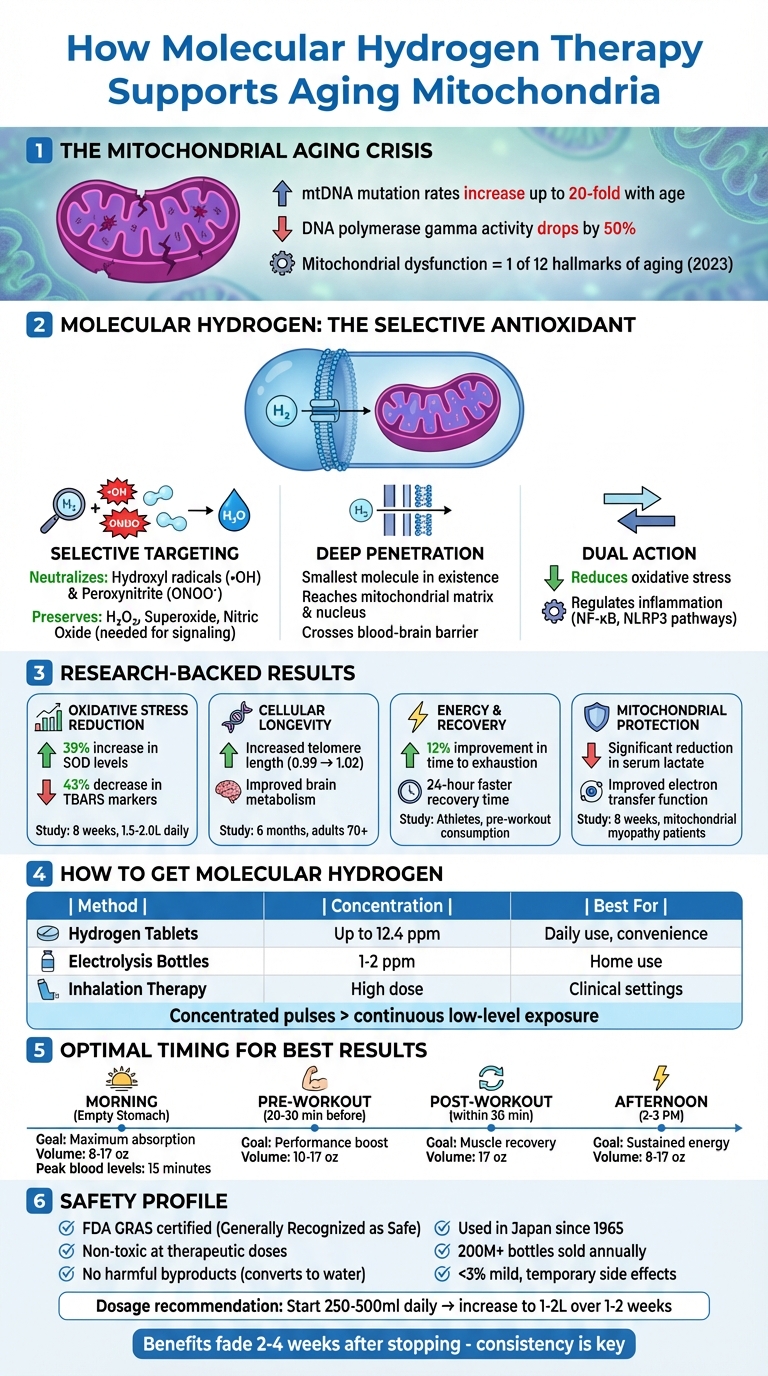
How Molecular Hydrogen Therapy Supports Aging Mitochondria
Molecular Hydrogen and Cellular Health
What Is Molecular Hydrogen?
Molecular hydrogen (H₂) is the smallest molecule in existence. Its tiny size gives it an incredible ability to penetrate cell membranes and access areas deep within your cells that larger antioxidants can't reach. While antioxidants like Vitamin C or Vitamin E often struggle to enter critical cellular structures, H₂ effortlessly diffuses into subcellular compartments, such as the mitochondrial matrix and nucleus. Once there, it influences key metabolic processes.
Dr. Lei Huang from Loma Linda University's Department of Anesthesiology highlights the unique benefits of H₂:
"The antioxidant advantages of H₂ gas included: 1) its high biomembrane penetration and intracellular diffusion capability which enable it to reach subcellular compartments like mitochondria; and 2) selectively scavenging the deleterious hydroxyl radical while preserving other important reactive oxygen and nitrogen species for normal signaling regulation."
One of the standout qualities of H₂ is its safety profile. Even at high concentrations, it remains non-toxic to cells. This remarkable ability to penetrate deeply and act selectively makes H₂ a powerful tool for protecting cellular health.
How Selective Antioxidants Work
Hydrogen therapy operates on a completely different principle compared to most traditional antioxidants. Standard antioxidants tend to neutralize all reactive oxygen species (ROS) indiscriminately, including those that are essential for signaling and immune system functions. H₂, however, is much more precise. It specifically targets and neutralizes harmful free radicals like hydroxyl radicals (•OH) and peroxynitrite (ONOO⁻), while sparing beneficial ROS such as hydrogen peroxide, superoxide, and nitric oxide.
Dr. Shigeo Ohta from Nippon Medical School's Department of Biochemistry and Cell Biology explains this distinction:
"H₂ selectively reduced the hydroxyl radical, the most cytotoxic of reactive oxygen species (ROS), and effectively protected cells; however, H₂ did not react with other ROS, which possess physiological roles."
This selective approach is crucial because your cells rely on certain ROS for vital functions like growth, repair, and communication. In contrast, strong antioxidants like high doses of Vitamin C or E can disrupt these processes, potentially increasing health risks. H₂ stands out as a targeted antioxidant, preserving the ROS that are essential for energy production and cellular repair while neutralizing only the most damaging radicals.
sbb-itb-6860cc4
Mitochondrial Aging and Oxidative Stress
The Mitochondrial Aging Process
To understand why targeted interventions like H₂ antioxidants matter, it’s important to grasp how mitochondria age. Mitochondria are the cell’s energy producers, but they also generate reactive oxygen species (ROS), primarily at Complex I and Complex III. Over time, the balance between ROS production and the body’s natural antioxidant defenses - like superoxide dismutase, catalase, and glutathione - starts to break down.
Mitochondrial DNA (mtDNA) is particularly vulnerable. Positioned near ROS production sites, it lacks the protective histone proteins that shield nuclear DNA. When ROS oxidizes DNA polymerase gamma (POLG), the enzyme responsible for mtDNA replication, its activity drops by 50%, and mutation rates can soar up to 20-fold. This damage creates a vicious cycle: impaired mitochondria produce even more ROS, amplifying oxidative stress. This stress also disrupts the balance of mitochondrial fission and fusion, leading to smaller, dysfunctional mitochondria that leak even more free radicals into the cell.
Oxidative Stress and Cellular Decline
The damage doesn’t stop at the mitochondria. Excessive oxidative stress spills over, triggering widespread cellular inflammation and dysfunction. When damaged mitochondria release their DNA into the cytoplasm, it activates inflammatory pathways like the NLRP3 inflammasome and releases damage-associated molecular patterns (DAMPs). This process connects mitochondrial decline to chronic inflammation, often referred to as "inflammaging."
"Mitochondria serve as central hubs regulating oxidative stress, inflammation, and aging, and their dysfunction contributes to various diseases, including cancers, cardiovascular diseases, neurodegenerative disorders, metabolic diseases, sepsis, ocular pathologies, liver diseases, and autoimmune conditions."
As mutations accumulate in the 13 protein-coding genes needed for cellular respiration, cells lose their ability to produce ATP efficiently. This energy shortfall contributes to reduced muscle strength, cognitive decline, slower recovery, and diminished resilience to stress. In fact, mitochondrial dysfunction was officially recognized as one of the twelve hallmarks of aging in 2023.
How Hydrogen Therapy Works in Aging Mitochondria
Molecular Pathways Affected by Hydrogen
Molecular hydrogen plays a dual role in cellular health - it neutralizes harmful free radicals and regulates inflammation, both of which are key to maintaining mitochondrial function. Once inside the cell, H₂ interacts with critical pathways like NF-κB and the NLRP3 inflammasome. These interactions help lower levels of pro-inflammatory cytokines, which are known to speed up cellular aging. At the same time, hydrogen helps protect mitochondria by inhibiting apoptotic signals, ensuring cells can continue to produce energy efficiently. Specifically, it influences the Akt/GSK3β pathway, reducing stress-induced cell death and preserving mitochondrial energy output, which often declines with age.
What makes hydrogen particularly interesting is its selective nature. It targets harmful reactive oxygen species (ROS) like hydroxyl radicals and peroxy-nitric radicals while sparing beneficial ones, such as hydrogen peroxide and nitric oxide, which are vital for normal cellular functions.
"Uniquely, molecular hydrogen selectively scavenges hydroxyl radicals and peroxy-nitric radicals that are responsible for oxidative stress and disease process, while sparing other reactive oxygen species such as hydrogen peroxide, superoxide and nitric oxide that are critical to normal cell physiology." - Dinesh Ramanathan et al., Department of Neurosurgery, Loma Linda University
Cellular Repair and Immune Function
Hydrogen therapy doesn’t stop at inflammation and oxidative stress - it also supports cellular repair and strengthens immune regulation. Thanks to its high permeability, H₂ can travel throughout the body, even reaching areas like the brain. This unique ability allows it to protect the blood-brain barrier and reduce cerebral edema, which can be critical in neurological health.
Hydrogen also has a calming effect on the immune system by suppressing mast cell activation and degranulation, which helps to control excessive inflammation. Clinical trials in ischemic stroke patients have shown promising results, with those treated with hydrogen gas experiencing faster recovery and improved functional independence. By activating repair mechanisms and bolstering immune function, hydrogen therapy offers a layered approach to addressing mitochondrial aging, making it a powerful tool in cellular health management.
Hydrogen Delivery Methods
Available Delivery Options
Molecular hydrogen can be delivered through three main methods: hydrogen-rich water, inhalation, or saline injections.
Among these, hydrogen-rich water is the easiest for daily use. You can make it using dissolving tablets or an electrolysis bottle. Tablets can produce concentrations as high as 12.4 ppm, far surpassing the 1–2 ppm typically achieved with portable hydrogen water bottles.
Inhalation therapy, on the other hand, delivers large amounts of hydrogen throughout the body and is commonly used in clinical settings, especially for respiratory or cardiovascular issues. While effective in acute scenarios, this method requires specialized equipment, making it less practical for everyday home use.
Each delivery method varies in terms of convenience and concentration. As Nick Urban, a functional health practitioner, aptly notes:
"Hydrogen for health optimization is only as good as its delivery system. Choose the wrong one, and you're getting expensive water".
Interestingly, research highlights that concentrated pulses of hydrogen are more effective for mitochondrial support than continuous low-level exposure. This approach enhances mitochondrial defense mechanisms, which were discussed earlier in detail.
For an affordable and effective daily solution, Edenvia Molecular Hydrogen tablets are a strong option.
Edenvia Molecular Hydrogen Tablets

Edenvia Molecular Hydrogen tablets provide a reliable way to support aging mitochondria with consistent, high-concentration hydrogen. When dissolved in water, these tablets generate up to 12.4 ppm of molecular hydrogen, ensuring you benefit from therapeutic levels.
Because hydrogen is highly volatile, the water should be consumed within minutes of the tablet dissolving. This ensures immediate delivery of hydrogen along with bioavailable magnesium, which aids over 300 enzymatic processes in the body.
The tablets are especially beneficial for aging mitochondria, as they release hydrogen in concentrated bursts. This pulsed delivery is better at activating the Keap1-Nrf2 antioxidant system compared to continuous low-level exposure. Additionally, with a cost of about $1.00 to $3.00 per serving, they offer an economical alternative to other delivery methods.
For best results, dissolve one tablet in 12–16 oz of water and drink it on an empty stomach, 20–30 minutes before a meal.
Research on Hydrogen Therapy
Studies on Hydrogen and Oxidative Stress
Clinical research highlights that molecular hydrogen acts as a selective antioxidant, targeting harmful radicals like hydroxyl radicals and peroxynitrite while sparing beneficial signaling molecules. This unique ability is believed to offer protection for mitochondria, the energy powerhouses of cells.
In October 2011, a randomized, double-blind, placebo-controlled trial conducted by Nagoya University and Aichi Medical University studied 12 patients with mitochondrial myopathies and 10 with dermatomyositis. Participants consumed 0.5 liters of hydrogen-rich water daily for 8 weeks. The results showed a significant reduction in serum lactate levels in the mitochondrial myopathy group, suggesting hydrogen's potential to improve electron transfer system function.
Another study explored hydrogen's effects on metabolic syndrome. Participants who drank 1.5–2.0 liters of hydrogen-enriched water daily for 8 weeks saw a 39% increase in urinary superoxide dismutase (SOD) levels and a 43% drop in thiobarbituric acid reactive substances (TBARS), both markers of oxidative stress. Similarly, type 2 diabetes patients consuming 900 ml of hydrogen-rich water daily for 8 weeks experienced marked reductions in urinary 8-isoprostanes, a key indicator of oxidative damage.
Dose-response trials further revealed that consuming 1.0 liter of hydrogen-enriched water daily for 12 weeks significantly lowered lactate-to-pyruvate ratios in patients with mitochondrial myopathies and progressive muscular dystrophy. However, lower doses (0.5 liters) showed more modest benefits. Dr. Tomoya Hasegawa from Nagoya University Graduate School of Medicine explained:
"Molecular hydrogen is thus likely to manage mitochondrial stress through activation of mtUPR, and exerts its effects on these oxidative stress-related diseases".
These findings point to hydrogen's broader role in combating oxidative stress and protecting cellular health.
Hydrogen Therapy and Cellular Longevity
Expanding on its antioxidant properties, hydrogen therapy shows promise in supporting cellular longevity. A 6-month randomized controlled trial conducted in November 2021 by the Applied Bioenergetics Lab at the University of Novi Sad studied 40 adults aged 70 and older. Participants consumed 0.5 liters of hydrogen-rich water (15 ppm) daily. The intervention group showed an increase in telomere length (from 0.99 ± 0.15 to 1.02 ± 0.26), while the control group experienced telomere shortening. Additionally, brain metabolism improved, with increased levels of choline and NAA in the left frontal gray matter.
As noted in Experimental Gerontology:
"This simple biomedical gas could be recognized as a possible anti-aging agent that tackles several hallmarks of aging, including loss of function and telomere length shortening."
A 2025 PLOS One study on chronically stressed mice further supported hydrogen's benefits. Hydrogen-rich water (0.5 mg/ml) normalized liver enzyme levels, boosted mitochondrial biogenesis markers (Nrf1, PGC-1α, Tfam), and significantly reduced lipid peroxidation levels (MDA, 4-HNE).
Beyond reducing oxidative stress, hydrogen activates the mitochondrial unfolded protein response (mtUPR), which helps maintain protein quality and promotes cell proliferation. This is particularly evident in cells with high mitochondrial activity and electron transport demands. Together, these studies suggest hydrogen therapy could play a key role in rejuvenating mitochondria and supporting overall cellular health.
How to Use Hydrogen Therapy
Using Edenvia Molecular Hydrogen Tablets
Starting with hydrogen therapy is simple. Dissolve 1–2 tablets in 8–17 oz (250–500 ml) of purified or distilled water at room temperature or cooler. This helps prevent hydrogen from escaping too quickly. Avoid using tap water, as chlorine and other additives can interfere with the reaction that releases hydrogen.
As the tablet dissolves, you'll see bubbles forming - this is molecular hydrogen being released into the water. Let the tablet dissolve completely without stirring or shaking to avoid losing hydrogen prematurely.
For the best results, drink the hydrogen water immediately on an empty stomach or about 15–20 minutes before eating. Because hydrogen dissipates quickly, consume the water right after the tablet dissolves - its concentration can drop by about 50% within 30 minutes if left in an open container at room temperature. When taken on an empty stomach, hydrogen levels in the blood peak within 15 minutes, compared to 30–45 minutes when consumed with food.
Here’s how to time your intake for specific goals:
| Goal | Best Timing | Water Volume |
|---|---|---|
| Maximum Absorption | Morning (Empty Stomach) | 8–17 oz |
| Exercise Performance | 20–30 min Pre-Workout | 10–17 oz |
| Muscle Recovery | Within 30 min Post-Workout | 17 oz |
| Sustained Energy | 2:00 PM – 3:00 PM | 8–17 oz |
Research shows that athletes who drank hydrogen water 30 minutes before exercise improved their time to exhaustion by an average of 12%.
Monitoring Your Progress
Once you start using hydrogen tablets, it’s important to track how your body responds. Pay attention to changes in energy levels, focus, and how your joints feel over a period of four to six weeks. Many people notice better focus and quicker recovery within just a few weeks of regular use.
For those who exercise, observe how quickly you recover and how sore your muscles feel after workouts. Drinking hydrogen water within 30 minutes of exercise has been shown to reduce recovery time by up to 24 hours.
If you're managing chronic health conditions, you might also monitor clinical markers like C-reactive protein (CRP) and erythrocyte sedimentation rate (ESR) to assess reductions in inflammation. One study found that taking a higher dose of hydrogen (6 capsules a day) significantly lowered ESR within a week.
To keep the tablets effective, store them in their original packaging in a cool, dry place. Consistency is key - making hydrogen water a regular part of your routine can help support cellular energy, mitochondrial function, and overall well-being.
Safety, Dosage, and Long-Term Use
Safety of Molecular Hydrogen
Molecular hydrogen is known for its impressive safety record. The U.S. FDA has classified it as GRAS (Generally Recognized as Safe), a category shared with everyday items like vinegar and baking soda. When taken in therapeutic doses, it poses no toxicity risk; any excess hydrogen is simply exhaled through the lungs.
What makes molecular hydrogen unique is how it interacts with harmful free radicals like hydroxyl radicals and peroxynitrite. Instead of creating harmful byproducts, it produces water - meaning there’s no strain on the liver or kidneys. Even better, it leaves beneficial signaling molecules like nitric oxide untouched.
Studies have also confirmed its safety over the long term. For instance, clinical trials involving individuals with metabolic syndrome showed no adverse effects after 24 weeks of daily hydrogen water consumption. Japan has been using hydrogen as a food additive since 1965, and with 200 million bottles of hydrogen water sold annually, no safety concerns have arisen over decades. In less than 3% of cases, users reported mild and temporary effects like bloating or increased urination, typically during the first few days of use.
For best results, start with 250–500 ml of hydrogen water daily and gradually increase to 1–2 liters over one to two weeks. If you’re undergoing chemotherapy or taking insulin or blood thinners, consult your doctor before starting. This strong safety profile makes molecular hydrogen a promising option for supporting aging mitochondria.
Edenvia Pricing Options
Edenvia builds on hydrogen's safety and effectiveness by offering flexible pricing plans that make it easy to incorporate into your routine. Here’s a breakdown of their options:
| Plan | Price per Tablet | What's Included |
|---|---|---|
| Buy One | $33.95 | Molecular hydrogen tablets |
| Buy 1 Get 1 Free | $16.98 | Free Cellular Recovery Protocol |
| Buy 2 Get 2 Free | $12.76 | Free Cellular Recovery Protocol + Free Express Shipping |
- Buy One: A single purchase at $33.95 per tablet.
- Buy 1 Get 1 Free: At $16.98 per tablet, this package includes a complimentary Cellular Recovery Protocol.
- Buy 2 Get 2 Free: The best deal at $12.76 per tablet, with free express shipping and the Cellular Recovery Protocol.
For optimal results, dissolve 1–2 tablets in 500–1,000 ml of water daily. Keep in mind, the benefits of hydrogen therapy tend to fade within two to four weeks after stopping. Plus, Edenvia offers a 30-day money-back guarantee, giving you peace of mind with your purchase.
Why Use Molecular Hydrogen (H2)? | Biohacking Your Mitochondria Part 7
Conclusion
Molecular hydrogen therapy plays a critical role in supporting aging mitochondria by penetrating deep into cells and targeting harmful free radicals selectively. This process helps protect mitochondrial membranes from lipid damage, encourages the formation of new mitochondria (biogenesis), and boosts ATP production efficiency. The result? Enhanced cellular energy and reduced fatigue. Additionally, it activates the Keap1-Nrf2 antioxidant pathway, which stimulates the body’s natural production of protective enzymes.
"By nourishing your mitochondria, the engines of your body, you lay the foundation for lasting energy, clearer thinking, faster recovery, and graceful aging." - Dafina Fondaj, PhDc in Pharmaceutical Technology
To maximize these benefits, consider incorporating hydrogen-rich water into your daily routine. Whether you use it as a morning energizer or a post-workout recovery tool, a consistent hydrogen regimen can help protect your cells and sustain mitochondrial health. Pair this with other healthy habits, such as intermittent fasting and an antioxidant-packed diet, to further support your mitochondria.
Edenvia Molecular Hydrogen tablets provide a simple and effective way to introduce hydrogen therapy into your lifestyle. With prices starting at $12.76 per tablet and a 30-day money-back guarantee, they offer a convenient, risk-free option for long-term cellular and mitochondrial support.
FAQs
How long does it take to notice results from hydrogen therapy?
Hydrogen therapy often starts showing results in around 8 days. During this period, many people notice better muscular endurance and quicker recovery from fatigue. However, the extent of these benefits can differ based on individual circumstances.
Can I take hydrogen tablets with medications or chronic conditions?
If you’re taking medications or managing chronic health conditions, it’s a good idea to talk to a healthcare professional before trying hydrogen tablets. Since studies on the long-term safety of daily molecular hydrogen supplementation are still in progress, getting professional advice can help determine if it’s suitable for your specific needs.
How do I keep hydrogen-rich water from losing potency?
To keep hydrogen-rich water effective, store it in airtight, opaque containers and place it in a cool, dark location. Molecular hydrogen is extremely volatile and can escape when exposed to heat, light, or air. Leaving the water uncovered or exposed to these elements will cause the hydrogen to dissipate. Properly sealing the container helps preserve the hydrogen content, ensuring you retain its full health benefits.