

Daily Hydrogen Water: How Much to Drink
Hydrogen water is regular water infused with molecular hydrogen gas, which may help reduce oxidative stress and inflammation. Research suggests drinking 1.5 to 2 liters daily provides the best results for most adults. Start small - 1–2 glasses a day - and gradually increase while monitoring your energy, recovery, and overall well-being. For active individuals or those with specific health goals, intake may need adjustment based on body weight, age, and activity level. Consistency is key, and spreading servings throughout the day ensures steady support.
Quick Tips:
- Start small: 1–2 glasses (8–16 oz) daily.
- Optimal amount: 1.5–2 liters (50–68 oz) per day.
- Timing: Drink in the morning, pre/post-workout, or mid-afternoon.
- Hydrogen concentration: Aim for 800–1,600 ppb for best effects.
- Safety: No upper limit, but avoid overhydration.
Hydrogen water complements your hydration routine and may support cellular health, inflammation reduction, and recovery. Products like dissolvable hydrogen tablets make it easy to customize your intake.
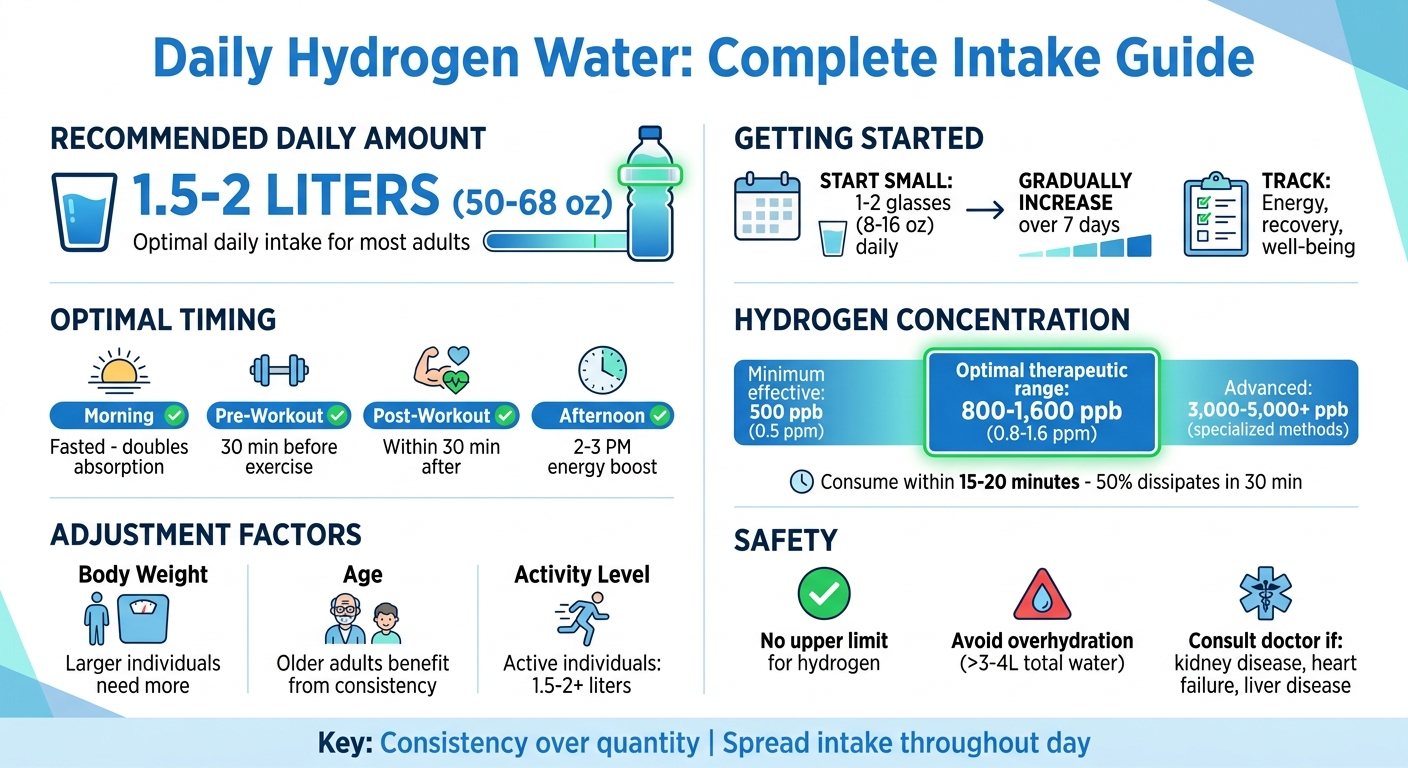
Daily Hydrogen Water Intake Guide: Recommended Amounts and Concentration Levels
How Much Hydrogen Water to Drink Daily
Standard Daily Amount
Research indicates that healthy adults generally benefit from drinking 1.5 to 2 liters (about 50–68 ounces) of hydrogen-rich water daily. This amount not only meets typical hydration needs but also provides enough molecular hydrogen to support antioxidant activity and promote cellular health.
If you're just starting with hydrogen water, try 1–2 glasses (8–16 ounces) a day to gauge how your body responds. Pay attention to changes in energy, recovery, or overall well-being before gradually increasing your intake. Studies have shown positive effects at various levels. For instance, individuals with metabolic syndrome saw improvements with as little as 0.9 to 1 liter per day, while athletes reported reduced blood lactate levels and better power output with daily intakes of 1.5 to 2 liters. To maximize benefits, consistency is key - spreading your intake throughout the day helps maintain steady cellular support.
Next, let’s explore how personal factors might influence your ideal intake.
Adjusting for Personal Factors
Your optimal hydrogen water intake can vary based on factors like body weight, age, and activity level. Body weight plays a big role, as larger individuals naturally need more fluids to stay hydrated. Age is another consideration - older adults may find consistent intake beneficial for managing oxidative stress.
Activity level is crucial too. If you’re highly active, you might require 1.5–2+ liters daily to support hydration and recovery. For those with certain health conditions, such as metabolic syndrome or type 2 diabetes, studies have shown that drinking 1 liter or more daily can significantly improve health markers.
"The right amount of hydrogen water varies by individual, influenced by age, weight, health, and kidney issues." – Evolved H2O
To make adjustments easier, products like Edenvia Molecular Hydrogen tablets allow you to customize your intake. Just dissolve a tablet in water to create hydrogen-rich water that aligns with your lifestyle and wellness goals. Tailoring your consumption can help you maximize the antioxidant benefits and meet your unique needs.
sbb-itb-6860cc4
Getting Started with Hydrogen Water
Start Small and Track Results
If you're just starting with hydrogen water, try beginning with a single 10-ounce (about 300 mL) serving each day. This gradual introduction helps you gauge how your body reacts. After the first week, you can slowly increase your intake to 2–3 bottles daily, depending on your activity level and overall health goals.
"Start with 1–2 glasses (250–500 mL/day) at around 1–2 ppm concentration, and build from there if desired." – Dafina Fondaj, PhD
Consider running a 7-day trial to monitor improvements in energy, recovery, and mental clarity. Keep a daily log to track these changes. It's important to remember that hydrogen water is meant to complement your regular water intake, not replace it entirely.
Once you notice positive effects, incorporate it into a consistent daily routine for ongoing benefits.
Building a Daily Routine
After your initial trial, establish a schedule to get the most out of hydrogen water. Spreading your servings across the day ensures steady cellular support. Here are some suggestions for timing your intake:
- Morning (Fasted): Drinking on an empty stomach can double absorption, making it a great way to boost antioxidant support compared to traditional options and mental focus for the day ahead.
- Pre-Workout: Have a serving about 30 minutes before exercising. This timing helps counter oxidative stress during physical activity.
- Post-Workout: Consume within 30 minutes after your workout to help with inflammation and speed up recovery.
- Afternoon: Use it to combat the mid-afternoon energy dip (around 2:00–3:00 PM) and maintain focus.
"Hydrogen works best when it becomes part of your rhythm... space it out throughout the day to give your cells ongoing support." – Jacob Colvin Walker
For optimal results, try Edenvia Molecular Hydrogen tablets. Dissolve them in water and drink within 10–15 minutes to ensure maximum potency. Consistency is key - regular daily use is far more effective than occasional large doses.
Hydrogen Concentration Levels
Optimal Concentration Range
Hydrogen concentration is typically measured in parts per billion (ppb) or parts per million (ppm), where 1 ppm equals 1,000 ppb. According to the International Hydrogen Standards Association (IHSA), the minimum effective threshold for hydrogen is set at 500 ppb (0.5 ppm). However, research shows that the optimal therapeutic range lies between 800–1,600 ppb (0.8–1.6 ppm).
At standard room temperature and pressure, water can naturally saturate at around 1,600 ppb, which has been shown to improve inflammatory and metabolic biomarkers. In contrast, concentrations below 500 ppb may not be enough to trigger key biological responses, such as selective neutralization of harmful free radicals.
Understanding these concentration ranges is essential for determining when elevated levels might provide additional benefits.
Does More Hydrogen Mean Better Results?
It’s possible to achieve hydrogen concentrations exceeding 1,600 ppb using specialized methods like tablets or pressurized systems. These methods can boost levels to 3,000–5,000+ ppb. While higher concentrations may offer specific benefits, such as aiding athletic recovery or addressing targeted therapeutic needs, absorption tends to plateau beyond a certain point.
"Hydrogen water above 1,600 ppb might seem ideal, but absorption plateaus after a certain point. The key is consistency and freshness, not chasing extreme numbers." – Dafina Fondaj, PhD
One reason for starting with higher concentrations is the natural hydrogen loss that occurs after preparation - about 50% dissipates within 30 minutes of exposure to air. Quick consumption is crucial to retain the therapeutic effects. For example, water with 5,000 ppb delivers nearly 20 times more hydrogen to the small intestine than inhaling 4% hydrogen gas.
To confirm the hydrogen concentration at home, H2Blue reagent drops are a reliable option, with each drop corresponding to roughly 100 ppb. On the other hand, ORP meters are not recommended for measuring hydrogen levels, as their readings are heavily influenced by pH and do not offer accurate results. A recent study from 2024 revealed that 75% of tested hydrogen water devices delivered less than 70% of their advertised concentration.
For optimal results, products like Edenvia Molecular Hydrogen tablets are effective, but it’s important to consume the water within 15–20 minutes of preparation to ensure maximum potency.
THE BENEFITS OF HYDROGEN WATER TO FIGHT OXIDATIVE STRESS AND INFLAMMATION | 045 DR. PAUL BARATTIERO
Safety and Precautions
Before adding hydrogen water to your daily routine, it’s important to understand the safety considerations involved.
Maximum Safe Daily Amount
There’s no defined upper limit for molecular hydrogen since the body naturally gets rid of any excess through the lungs. However, the real concern lies in overall water intake. Drinking too much water can lead to hyponatremia, also known as water intoxication.
Clinical studies have shown no signs of liver or kidney toxicity with up to 2 liters of hydrogen water daily. This aligns with general recommendations of 1–2 liters for the best results. These amounts fall well within the safe hydration range of 3–4 liters of total water per day.
Interestingly, over 1,000 clinical studies have been reviewed, and none have reported serious adverse effects in peer-reviewed literature. In Japan, where hydrogen water has been widely used for more than 50 years, 200 million bottles are sold annually without any reported safety issues. Some people may experience mild, temporary side effects during the first couple of weeks, such as bloating, increased gas, or more frequent urination, as their gut microbiome adjusts.
Considerations for Medical Conditions
While hydrogen water is generally safe, certain health conditions may require extra caution. If you have chronic kidney disease, heart failure, or liver disease, it’s essential to consult your doctor before increasing your water intake. These conditions can cause fluid retention, making it important to stick to individualized water limits.
"Individuals with chronic kidney disease, heart failure, or liver disease may retain extra fluids. If you have these conditions, it's a good idea to talk to your doctor about how much water to drink." – Healthdirect Australia
For those undergoing chemotherapy or radiation therapy, it’s worth discussing with your oncologist. There’s a theoretical concern that the antioxidant properties of hydrogen water could interfere with treatments that rely on oxidative stress. Additionally, hydrogen water's ability to modestly improve insulin sensitivity means that people on insulin or sulfonylureas should carefully monitor their blood sugar levels. If you’re pregnant, breastfeeding, or managing a chronic condition, it’s always a good idea to check with your healthcare provider before making significant changes to your intake.
Conclusion
Daily Consumption Summary
To support your wellness, aim for 1.5 to 2 liters (50–68 ounces) of hydrogen water each day. The concentration of hydrogen plays a key role, meaning even smaller servings can provide benefits if the levels are adequate. The key is consistency - regular intake is far more effective than occasional large amounts. Incorporating hydrogen water into your daily hydration routine is a simple and effective way to enhance your overall well-being.
Getting Started Today
Start your day with a glass of hydrogen water to rehydrate after sleep. Follow up with additional servings around activities like exercise or during the mid-afternoon to maintain its benefits throughout the day. Spreading your intake ensures your cells receive consistent antioxidant support.
Edenvia Molecular Hydrogen tablets make this process effortless. Just drop a tablet into water, let it dissolve, and drink within 15–20 minutes to maximize hydrogen concentration. These tablets are third-party tested and come with a 30-day money-back guarantee, so you can try them without worry. Begin your journey today and elevate your hydration routine with powerful antioxidant support.
FAQs
How do I know if hydrogen water is working for me?
Hydrogen water might make a difference if you notice shifts like feeling more energetic, experiencing less inflammation, or recovering faster after physical activity. Begin with 1–2 glasses a day and see how your body reacts. Keep an eye on your overall health and any noticeable improvements with consistent use.
Can I drink hydrogen water at night or before bed?
Yes, drinking hydrogen water at night is perfectly safe and may even support relaxation and improve sleep quality. It’s gentle on the stomach, won’t interrupt your rest, and doesn’t lead to bloating, making it a great choice for staying hydrated in the evening.
Do I need to change my daily intake on workout days?
When hitting the gym or engaging in physical activity, try drinking 1 to 1.5 liters of hydrogen water around your workout. This can help with both performance and recovery. On regular days, though, the typical suggestion is 1 to 2 glasses (8–16 ounces) per day. Of course, you can tweak this based on how active you are and what your body needs.