

Complete Guide to Reducing Inflammation Naturally
Reducing inflammation is key to improving long-term health and preventing chronic illnesses. Chronic inflammation can damage tissues, increase the risk of heart disease, diabetes, arthritis, and even some cancers. The good news? You can take control with natural strategies that target the root causes of inflammation.
Key Strategies:
- Diet: Incorporate anti-inflammatory foods like fatty fish, leafy greens, berries, and nuts while avoiding processed and sugary foods.
- Lifestyle: Exercise regularly (20–30 minutes a day), maintain good sleep habits, manage stress through meditation or yoga, and practice proper oral hygiene.
- Supplements: Use options like curcumin, omega-3 fatty acids, and molecular hydrogen to reduce inflammatory markers like CRP.
- Hydrogen-Rich Water: Drinking 1–2 liters daily can lower inflammation by targeting harmful free radicals.
By consistently following these steps, you can reduce inflammation naturally and support overall health. Start small - swap sugary drinks for green tea, add salmon to your meals, or try hydrogen-rich water. These small changes can make a big difference.
Natural Strategies to Reduce Inflammation
Anti-Inflammatory Foods and Diet
What you eat plays a major role in managing inflammation. Foods like fatty fish - salmon, mackerel, and sardines - are rich in EPA and DHA omega-3 fatty acids. These compounds block pro-inflammatory molecules and suppress NF-kB activation, a key driver of chronic inflammation.
Adding leafy greens and cruciferous vegetables like kale, broccoli, and Brussels sprouts to your meals can further help. These veggies contain sulforaphane and kaempferol. Sulforaphane activates the Nrf2 antioxidant pathway, while kaempferol works to block inflammatory cytokines. And don’t forget berries - blueberries, strawberries, and blackberries - packed with anthocyanins that inhibit COX-2, an enzyme often targeted by pain medications.
Incorporating these foods into everyday meals - think grilled salmon with a side of broccoli or a spinach salad topped with walnuts and berries - can make a noticeable difference over time.
Lifestyle Changes for Reducing Inflammation
Small adjustments to your daily routine can also help keep inflammation in check. Aerobic exercise is a great place to start. Just 20 minutes of brisk walking can release endorphins that lower inflammation. A study from 2025 showed that moderate to high-intensity aerobic workouts, done 2–3 times a week for 30–60 minutes, significantly improved inflammatory markers in older adults. However, take it slow - overexercising can have the opposite effect.
Another key factor? Sleep. Poor or irregular sleep patterns are closely tied to increased inflammation. Aim for consistent bedtimes and wake times, even on weekends, and get bright sunlight in the morning to help regulate your body’s internal clock. Managing stress is equally important. Techniques like meditation, yoga, or deep breathing can lower systemic inflammation by calming your stress response. As Richard Davidson, a Professor of Psychology and Psychiatry, puts it:
Social connectedness really alters the threshold for stress responsivity in the brain.
Even oral hygiene plays a part. Brushing with an electric toothbrush and flossing daily helps reduce gum inflammation, preventing harmful bacteria and inflammatory molecules from entering your bloodstream. Spending time in nature - whether it’s a park, forest, or near water - also offers anti-inflammatory benefits. Just 2 hours a week can help your body shift out of a constant stress mode.
For those looking to take it further, targeted supplements can amplify these efforts.
Natural Supplements and Antioxidants
Certain natural supplements can provide additional support. Curcumin, found in turmeric, is especially effective. A 2014 study showed that cancer patients taking 150 mg of curcumin daily for 8 weeks experienced a significant drop in inflammatory markers. To improve absorption, pair curcumin with black pepper and a healthy fat like olive oil or avocado.
Omega-3 fatty acids from fish oil are another excellent option. These fats compete with inflammatory omega-6s, helping to lower inflammatory molecules. A daily dose of 1–2 grams of combined EPA/DHA is common. Ginger, known for its gingerol and zingerone content, targets COX-2 and inflammatory cytokines, making it particularly helpful for managing blood sugar and joint health. Up to 2 grams per day is recommended.
One standout supplement is molecular hydrogen. Unlike traditional antioxidants like Vitamin C or E, molecular hydrogen selectively targets harmful hydroxyl radicals while leaving beneficial ones intact. It also helps regulate the NF-kB pathway, reducing pro-inflammatory cytokines like TNF-alpha and IL-6. Clinical trials on hydrogen water showed reductions in CRP levels by 15%–30% after 4–12 weeks of daily use. For the best results, drink hydrogen-rich water within 15–20 minutes of preparation, ideally on an empty stomach in the morning.
Keep in mind that most natural supplements take 4–12 weeks of consistent use to show noticeable effects. If you’re on blood thinners, check with your doctor before adding ginger, garlic, or high-dose fish oil to your routine, as they may have blood-thinning properties.
sbb-itb-6860cc4
How Molecular Hydrogen Reduces Inflammation
The Science Behind Molecular Hydrogen
Molecular hydrogen stands out from most antioxidants by targeting only the most harmful free radicals, such as hydroxyl radicals and peroxynitrite, while leaving beneficial molecules like hydrogen peroxide and nitric oxide untouched. It achieves this by inhibiting the NF-kB pathway, which controls over 200 pro-inflammatory genes, and activating the Nrf2-Keap1 system to stimulate the body’s natural antioxidant defenses, including enzymes like superoxide dismutase and catalase. Thanks to its tiny molecular size, H₂ can easily cross cell membranes, enter mitochondria, and even pass through the blood-brain barrier - reaching areas many antioxidants cannot. These findings are backed by more than 2,000 published studies.
This unique cellular activity explains the practical benefits seen with hydrogen-rich water.
Health Benefits of Hydrogen-Rich Water
Adding hydrogen-rich water to your daily routine is straightforward and offers measurable benefits. Clinical research shows that drinking this water regularly can lower C-Reactive Protein (CRP) levels - a key marker of inflammation - by 15% to 30% over 4 to 12 weeks. In a pilot study involving rheumatoid arthritis patients, those who consumed water with 4–5 ppm dissolved hydrogen daily for 12 weeks experienced significant reductions in disease activity and improved joint comfort. Athletes have also benefited, reporting decreased lactate levels, reduced creatine kinase (a marker of muscle damage), and less muscle soreness after just two weeks of use.
For best results, aim for hydrogen-rich water with at least 1,000 PPB, though higher concentrations (3,000–8,000+ PPB) may offer even greater benefits. Drink 1–2 liters daily, ideally on an empty stomach or 30 minutes before exercise, and consume it within 15–20 minutes of preparation for maximum effectiveness.
How Molecular Hydrogen Complements Other Methods
Beyond its standalone benefits, molecular hydrogen enhances other natural approaches to reducing inflammation. Unlike NSAIDs, which can cause side effects like gastrointestinal bleeding or kidney damage, H₂ tackles inflammation at its root without any known side effects or drug interactions. With FDA GRAS status and a 60-year history of safe use in Japan, it pairs seamlessly with anti-inflammatory foods, regular exercise, and stress management practices.
While curcumin has limited absorption (1–3%), molecular hydrogen boasts near-complete bioavailability, making it an excellent addition to other supplements and wellness routines. Consistent daily use over 4–12 weeks can lead to noticeable reductions in inflammatory markers, such as CRP, which can be tracked through routine blood tests. By combining hydrogen-rich water with dietary changes, lifestyle improvements, and natural supplements, you create a well-rounded strategy for managing inflammation effectively.
Want Less Inflammation? Eat These!
How to Start Reducing Inflammation Naturally
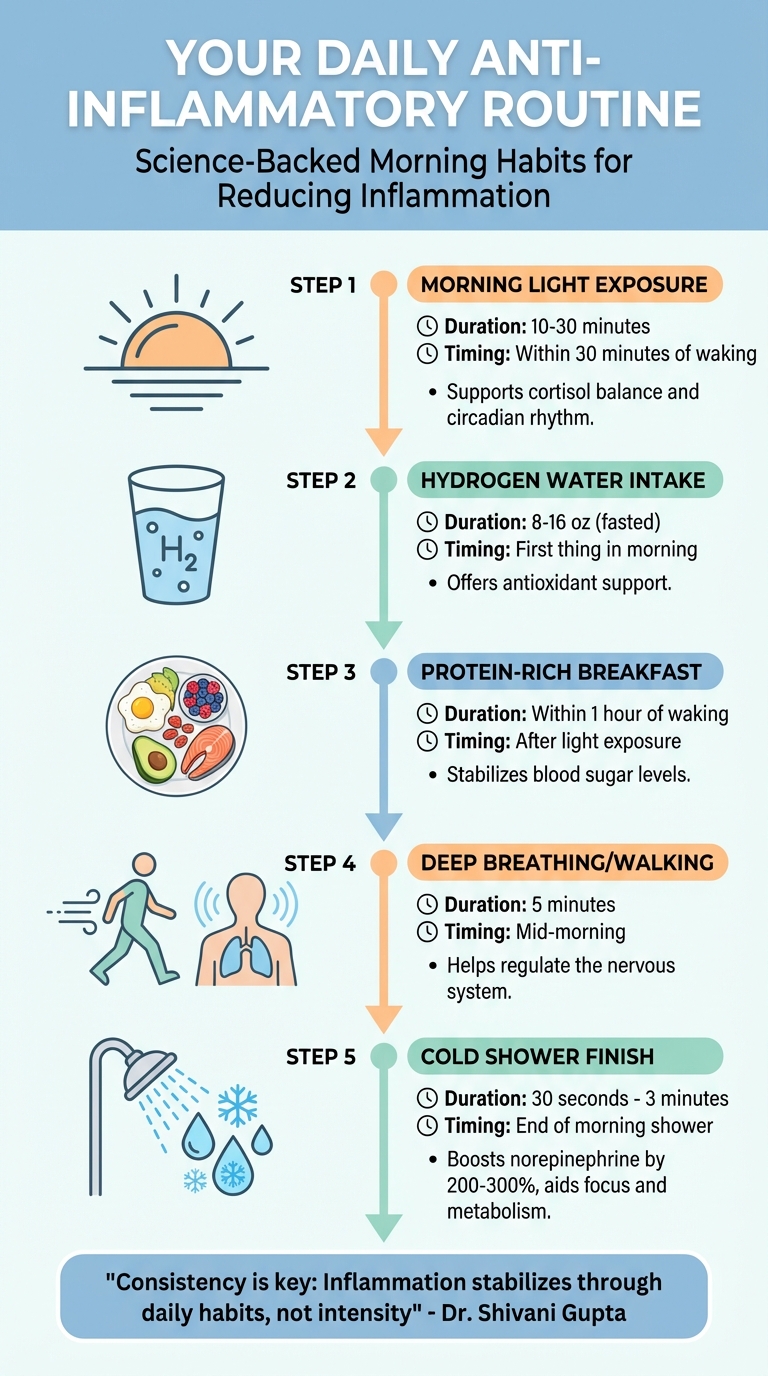
Daily Anti-Inflammatory Routine: 5 Science-Backed Morning Habits
Building Your Daily Anti-Inflammatory Routine
Managing inflammation requires creating a steady, daily pattern that supports your body's healing systems. Dr. Shivani Gupta from Fusionary Formulas explains it best: "Inflammation does not stabilize through intensity. It stabilizes through consistency".
A strong start to your day can make a big difference. Begin by stepping outside for natural sunlight exposure - 10–15 minutes on sunny mornings or 20–30 minutes if it's cloudy - within the first 30 minutes of waking. This simple habit helps balance cortisol levels and keeps your circadian rhythm on track. Pair this with a protein-packed breakfast within an hour of waking to avoid glucose spikes that could contribute to inflammation.
Throughout your day, carve out moments to reset. Take slow, intentional breaths or enjoy a short walk outdoors. These small actions help calm your nervous system and signal safety to your body. Since your gut plays a major role in immune health, eat mindfully - chew your food thoroughly and eat at a slower pace for better digestion.
Here’s a quick summary of daily activities to include:
| Activity | Duration | Primary Benefit |
|---|---|---|
| Morning Light Exposure | 10–30 minutes | Supports cortisol balance and circadian rhythm |
| Hydrogen Water Intake | 8–16 oz (fasted) | Offers antioxidant support |
| Cold Shower Finish | 30 seconds – 3 minutes | Boosts norepinephrine, aiding focus and metabolism |
| Deep Breathing/Walking | 5 minutes | Helps regulate the nervous system |
| Protein-Rich Breakfast | Within 1 hour of waking | Stabilizes blood sugar levels |
For an additional boost, try ending your morning shower with 30 seconds of cold water. Over time, you can work up to 2–3 minutes. This practice can increase norepinephrine levels by 200% to 300%, which may enhance focus and support your metabolism.
These consistent habits prepare your body to take full advantage of targeted anti-inflammatory strategies, such as hydrogen-rich water.
Getting Started with Hydrogen-Rich Water
Hydrogen-rich water is another powerful tool to include in your routine. Start your day with 8–16 oz of freshly prepared hydrogen-rich water on an empty stomach. Drink it within 15–20 minutes of preparation to ensure maximum absorption.
For the best results, aim for water with at least 1,000 PPB (1 ppm) of dissolved hydrogen. Higher concentrations - up to 8,000 PPB - may provide even stronger anti-inflammatory effects. Since molecular hydrogen is highly volatile, timing is crucial. For Edenvia tablets, simply drop one into 12–16 oz of cold water, let it dissolve fully, and drink immediately.
To maximize benefits, try drinking 1–2 liters of hydrogen-rich water daily. Consuming it about 30 minutes before exercise can also help decrease exercise-induced inflammation and muscle soreness. While individual results may vary, noticeable reductions in markers like C-reactive protein often occur after 2–4 weeks of consistent use.
Conclusion
Main Points to Remember
Chronic inflammation plays a central role in the development of major chronic illnesses. According to preventive medicine expert David L. Katz, this hidden process gradually damages cells and tissues, creating a cycle of degeneration that can lead to serious health issues. The silver lining? You have more control over this process than you might realize.
Combining a balanced diet, regular physical activity, stress management, and the unique benefits of molecular hydrogen offers an effective way to tackle inflammation. Start with a diet rich in plant-based, antioxidant-loaded foods. Beyond nutrition, focus on managing stress with techniques like meditation or yoga, stick to a steady sleep schedule, and engage in moderate exercise. Even something as simple as a 20-minute brisk walk can significantly reduce inflammation.
Molecular hydrogen adds another layer to your approach by targeting harmful free radicals without disrupting beneficial signaling molecules. Backed by over 2,000 studies, it’s been shown to lower C-Reactive Protein levels by 15–30% after 4 to 12 weeks of daily use. Drinking hydrogen-rich water is an easy, science-supported way to boost your anti-inflammatory efforts. Dr. Josh Redd puts it simply:
Almost everyone has the power to reduce their inflammation. The key is to use the right tools.
These strategies provide a solid starting point for meaningful, actionable change.
Start Making Changes Today
Small changes can lead to big results. Swap butter for extra virgin olive oil, replace soda with green tea, or choose fatty fish instead of red meat. These simple adjustments, practiced consistently, can make a noticeable difference over time.
To get started, pick one or two strategies from this guide and stick with them for the next 30 days. For example, begin your day with 10–15 minutes of morning sunlight, drink 1–2 liters (about 34–68 fluid ounces) of hydrogen-rich water on an empty stomach, or spend two hours a week in nature. Pair these lifestyle habits with hydrogen-rich water to maximize your anti-inflammatory routine. The key to success lies in consistent, daily effort.
FAQs
How do I know if my inflammation is chronic?
Chronic inflammation tends to fly under the radar, unlike acute inflammation, which often comes with visible signs like redness or swelling. Instead, it can quietly manifest through ongoing symptoms such as fatigue, brain fog, bloating, or even mood shifts. Over time, it may impact major systems in the body, including the digestive or cardiovascular systems.
If you're dealing with persistent, unexplained symptoms, it’s a good idea to keep track of them and consult a healthcare professional. They can run tests to determine if chronic inflammation might be playing a role in your health concerns.
Can hydrogen-rich water be used with my medications?
Hydrogen-rich water is typically safe to consume with most medications, and there haven’t been any reported negative interactions. In fact, it might even offer some added benefits in certain situations. However, if you have any specific concerns, it’s a good idea to check with your healthcare provider before making it a part of your daily routine.
Which anti-inflammatory changes work fastest?
Hydrogen therapy offers one of the quickest ways to tackle inflammation by addressing oxidative stress. Methods like drinking hydrogen-rich water or incorporating molecular hydrogen into baths or cold plunges can work swiftly to reduce inflammation. Hydrogen's ability to penetrate deeply into cells allows it to neutralize free radicals and aid in cellular repair, helping restore balance at the cellular level.