

How to Choose the Right Antioxidant Supplement
Antioxidants protect your body from harmful free radicals, which can cause cell damage, aging, and diseases like heart issues and neurodegenerative disorders. But not all antioxidant supplements are equal. Here's what you need to know:
- Targeted Action: Look for supplements that neutralize harmful radicals (e.g., hydroxyl radicals) while sparing beneficial ones.
- Absorption: Fat-soluble antioxidants (like Vitamin E or CoQ10) work better with healthy fats, while water-soluble ones (like Vitamin C) have specific limitations.
- Purity and Dosage: Avoid excessive doses, as they can backfire by increasing oxidative stress. Choose third-party-tested products.
- Clinical Evidence: Research-backed supplements, like molecular hydrogen, offer selective benefits without disrupting natural processes.
For a standout option, molecular hydrogen is highlighted for its unique ability to target harmful radicals selectively and support cellular health without side effects. Edenvia tablets, for instance, offer high hydrogen concentrations, ensuring effectiveness and safety.
What is Oxidative Stress and How Do Antioxidants Work?
How Free Radicals Damage Your Cells
Free radicals are unstable molecules missing a paired electron. To stabilize themselves, they "steal" electrons from healthy components in your body - like DNA, proteins, and the fats in cell membranes. This theft sets off a chain reaction of damage, affecting nearby molecules as well.
Anthony DiMarino, a Registered Dietitian at Cleveland Clinic, explains it this way:
"Free radicals are missing an electron from their outer shell. That makes them unstable, so they go and steal an electron from the molecules in your skin cells, or from your blood cells or from wherever they can. That causes damage to surrounding cells."
Although your body naturally creates free radicals as part of metabolism, external factors like pollution, UV rays, smoking, alcohol, and even chronic stress can ramp up their production. When free radicals pile up faster than your body can neutralize them, it leads to oxidative stress. This imbalance doesn’t just speed up visible aging - it also plays a role in conditions like cardiovascular disease, cancer, and neurological disorders. It’s a process that underscores the importance of having effective protective systems in place.
How Antioxidants Neutralize Free Radicals
Antioxidants are your body’s built-in defense against the chaos caused by free radicals. They work by donating electrons to stabilize these unstable molecules, breaking the chain of cellular damage - all without becoming unstable themselves. Your body produces its own antioxidants, like the enzymes superoxide dismutase and catalase, which help stop oxidative damage before it starts.
Certain vitamins, such as C and E, act as powerful "chain-breaking" antioxidants. Vitamin C works in the watery areas of your cells, while vitamin E focuses on protecting fatty cell membranes and LDL cholesterol from oxidation. Other nutrients, like selenium and beta-carotene, also contribute to this defense system.
One interesting aspect of antioxidants is their selectivity. While some target a wide range of reactive oxygen species, others, like molecular hydrogen vs traditional antioxidants, focus on neutralizing the most harmful radicals - such as hydroxyl radicals and peroxynitrite - while sparing beneficial reactive oxygen species. Understanding these selective actions is crucial when choosing antioxidant supplements.
sbb-itb-6860cc4
The Top 5 Antioxidants That Can Improve Your Health
How to Evaluate Antioxidant Supplements
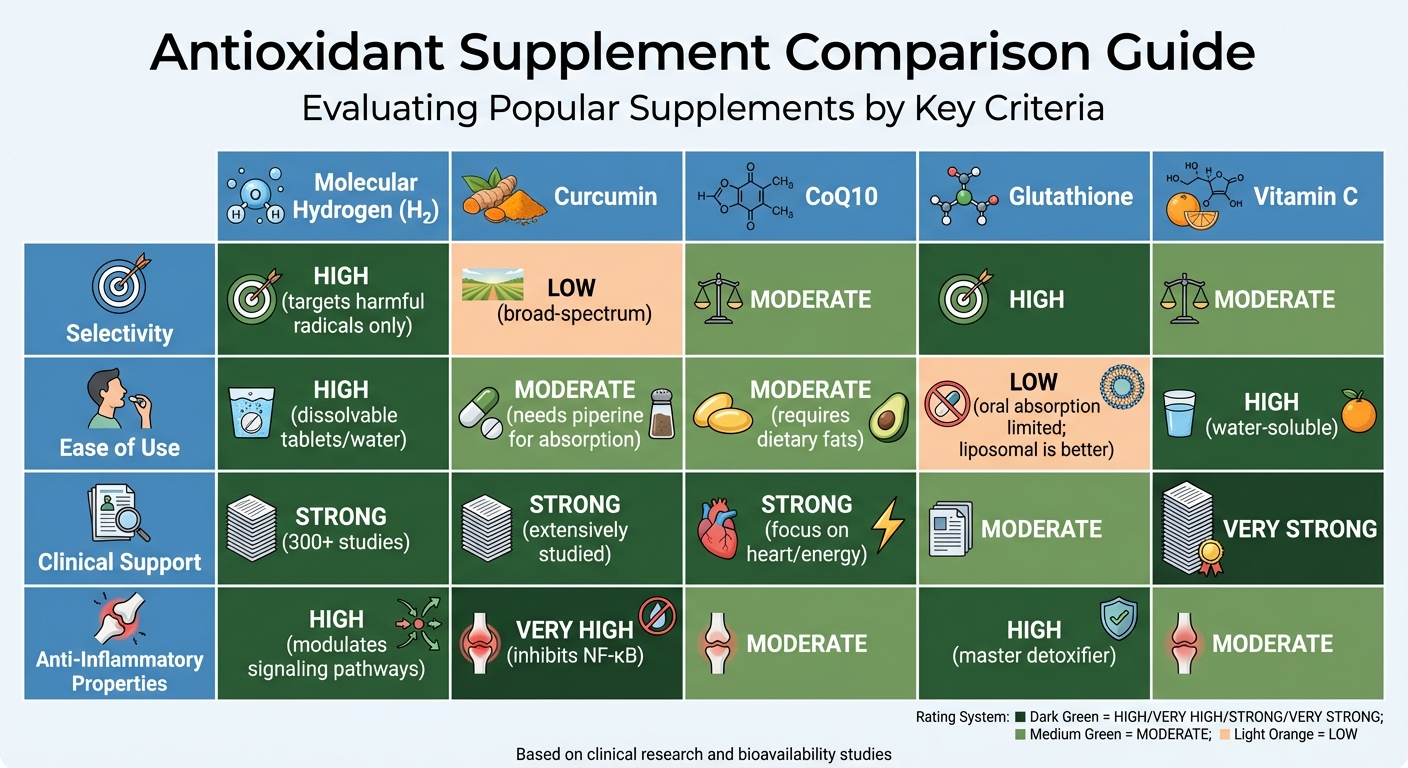
Antioxidant Supplement Comparison: Molecular Hydrogen vs Curcumin vs CoQ10 vs Glutathione vs Vitamin C
What to Look For: Effectiveness, Purity, and Absorption
When choosing antioxidant supplements, targeted action is key. Look for products that neutralize harmful free radicals like hydroxyl and peroxynitrite, while sparing beneficial reactive oxygen species (ROS) that support immune function and cellular signaling.
Absorption matters. A supplement's effectiveness hinges on its bioavailability - how well it reaches your cells. For fat-soluble antioxidants like Vitamin E, CoQ10, and astaxanthin, consuming them with dietary fats boosts absorption. Among these, CoQ10 in its ubiquinol form is especially effective for older adults, as it absorbs better than ubiquinone. On the other hand, water-soluble antioxidants such as Vitamin C have their quirks: doses above one gram may reduce absorption rates and even cause stomach discomfort.
Purity is another critical factor. Choose supplements that have been tested by third-party labs to ensure they contain standardized active compounds. Be cautious of products offering extremely high doses - anything between 70% and 1,660% of the Daily Value. Excessive amounts can cause antioxidants to act as "pro-oxidants", which might increase oxidative stress instead of reducing it. The National Center for Complementary and Integrative Health emphasizes that antioxidants in supplements may behave differently than those in whole foods, which naturally combine various substances.
Lastly, prioritize clinical evidence. Human trials provide insights into how antioxidants work within the body, factoring in digestion, metabolism, and interactions with natural processes. For example, the AREDS study showed that a specific mix of antioxidants and zinc reduced the risk of advanced age-related macular degeneration by about 25%. Similarly, molecular hydrogen has been heavily researched, with over 321 articles published by mid-2015 highlighting its therapeutic potential.
The table below offers a quick comparison of popular antioxidants based on these criteria.
Supplement Evaluation Criteria Comparison
| Antioxidant | Selectivity | Ease of Use | Clinical Support | Anti-Inflammatory Properties |
|---|---|---|---|---|
| Molecular Hydrogen (H₂) | High (targets harmful radicals only) | High (dissolvable tablets/water) | Strong (300+ studies) | High (modulates signaling pathways) |
| Curcumin | Low (broad-spectrum) | Moderate (needs piperine for absorption) | Strong (extensively studied) | Very High (inhibits NF-κB) |
| CoQ10 | Moderate | Moderate (requires dietary fats) | Strong (focus on heart/energy) | Moderate |
| Glutathione | High | Low (oral absorption is limited; liposomal is better) | Moderate | High (acts as a master detoxifier) |
| Vitamin C | Moderate | High (water-soluble) | Very Strong | Moderate |
Why Molecular Hydrogen Stands Out as an Antioxidant
How Molecular Hydrogen Works in Your Body
Molecular hydrogen (H₂) has a unique way of working in the body. Unlike general antioxidants that target all free radicals, H₂ specifically neutralizes the most harmful ones, such as hydroxyl radicals (•OH) and peroxynitrite (ONOO⁻), while leaving beneficial oxidants intact. This selectivity helps maintain essential cellular signaling pathways. When H₂ reacts with hydroxyl radicals, the only byproduct is water (H₂O), avoiding the formation of secondary free radicals. In contrast, high doses of traditional antioxidants like Vitamins C and E can sometimes produce weaker radicals that may lead to pro-oxidant effects.
"H2 is unique because it only neutralizes only the harmful free radicals such as hydroxyl radicals. There is no concern of overdosing with H2 because it doesn't disturb the redox balance inside the cells." – Victor Yoon, Primonutra
H₂'s small molecular size allows it to move quickly through cell membranes, including crossing the blood-brain barrier, and reach mitochondria - where most free radicals are produced. Beyond neutralizing harmful radicals, H₂ also activates the Nrf2 pathway. This triggers the body to produce its own antioxidant enzymes like superoxide dismutase, catalase, and glutathione peroxidase. Its ability to act selectively and penetrate deeply into cells highlights its wide-ranging potential.
Health Benefits of Molecular Hydrogen
Research has shown that molecular hydrogen offers numerous health benefits, particularly in reducing inflammation and oxidative stress. Over 1,500 peer-reviewed studies back its therapeutic effects. For example, an 8-week double-blind, placebo-controlled study published in ScienceDirect found that individuals with chronic high-altitude disease who drank hydrogen-rich water saw significant decreases in inflammatory markers. This improvement was linked to activation of the Nrf2 and NF-κB pathways, which enhance antioxidant enzyme activity. Another study in the International Journal of Medical Sciences reported that four weeks of oral hydrogen supplementation reduced levels of C-reactive protein (CRP) and erythrocyte sedimentation rate (ESR), both key indicators of inflammation.
Many users have noted benefits like better joint comfort, improved mobility, and quicker recovery after exercise, often within just one or two weeks. Unlike traditional antioxidants, which can disrupt oxidative signals needed for muscle growth and recovery, H₂ supports the body’s natural adaptations without interfering with these beneficial processes. Additionally, molecular hydrogen has an excellent safety record, with no reported side effects at therapeutic doses. Its only byproduct is water, making it a safe and effective option.
Edenvia Molecular Hydrogen Tablets: Product Overview
What Makes Edenvia Tablets Effective
Edenvia molecular hydrogen tablets are engineered to provide a high dose of hydrogen when dissolved in water. Each tablet contains 20 mg of elemental magnesium, which reacts with water to release molecular hydrogen. When dissolved in 16.9 fl oz (500 mL) of purified or distilled water, a single tablet can produce hydrogen concentrations as high as 21.5 parts per million (ppm). For comparison, most products in the market deliver only 0.1 to 4.0 ppm. This means Edenvia tablets can deliver 2 to 5 times more hydrogen than typical alternatives.
These tablets are produced in GMP-certified, FDA-registered facilities, ensuring both quality and safety. Independent lab testing verifies the hydrogen concentration and purity of each batch, so you can trust the product's effectiveness.
To use, simply drop one tablet into 500 mL (16.9 fl oz) of room-temperature purified or distilled water. Stir until it fully dissolves, then drink it right away. For the best results, consume on an empty stomach or before meals to help your body absorb the hydrogen more efficiently.
Edenvia Pricing Options and Value
Edenvia provides flexible pricing plans to accommodate different budgets and wellness goals, all covered by a 30-day money-back guarantee.
| Plan | Price Per Tablet | Total Price | Included Benefits |
|---|---|---|---|
| Single Purchase | $33.95 | $33.95 | Standard shipping |
| Buy 1 Get 1 Free | $16.98 | $33.95 (2 packs) | Free Cellular Recovery Protocol |
| Buy 2 Get 2 Free | $12.76 | $50.99 (4 packs) | Free Cellular Recovery Protocol |
The Buy 2 Get 2 Free plan offers the best value, with a cost of just $12.76 per tablet - saving you around 62% compared to the single purchase option. This package also includes priority express shipping and access to the Cellular Recovery Protocol, a guide to seamlessly incorporating molecular hydrogen into your daily routine.
How to Choose and Start Using an Antioxidant Supplement
Identify Your Health Goals
Start by pinpointing your specific health priorities. For example, if you're looking to support heart health and energy levels, consider supplements with CoQ10 in its ubiquinol form or resveratrol, as these ingredients are linked to these benefits. On the other hand, if you're focused on skin health and minimizing signs of aging, vitamin C, vitamin E, and astaxanthin can help protect collagen and guard against UV damage. For immune support and detoxification, ingredients like glutathione and quercetin may help bolster your body's defenses.
Stick to one or two targeted supplements to avoid overwhelming your system. For example, smokers may need an extra 35 mg of vitamin C daily to counteract the oxidative stress caused by toxins. Tailoring your choice to your specific needs ensures more effective results.
Check for Clinical Evidence and Quality Testing
Once you've outlined your goals, make sure the supplement's claims are supported by human clinical trials. Rely on trusted resources like ClinicalTrials.gov or PubMed to research the effectiveness of specific ingredients. Human trials provide a clearer picture of how a supplement might work for you, compared to laboratory studies alone.
Equally important is choosing products that have undergone third-party testing. This ensures they meet standards for purity, potency, and are free from contaminants. Pay attention to the form of the supplement as well - certain forms are absorbed better by the body. For example, ubiquinol is the more absorbable form of CoQ10, while liposomal formulations of vitamin C and glutathione often offer enhanced bioavailability. Supplements like Edenvia tablets are produced under strict quality controls and undergo independent testing to confirm their hydrogen concentration and purity.
After verifying the product's quality, you can confidently begin using it while keeping an eye on your progress.
Begin Use and Track Your Results
Follow the recommended dosage on the product label and introduce one new supplement at a time, spacing them out over 1–2 weeks. This gradual introduction helps you observe how your body reacts and makes it easier to spot any side effects. For fat-soluble antioxidants, take them with healthy fats to improve absorption.
Keep in mind that antioxidant benefits take time to develop. Monitor your energy levels, recovery, and inflammation over several weeks or months to assess the supplement's impact. If you're on medications - such as blood thinners or chemotherapy - consult your healthcare provider before starting any new supplement, as some antioxidants could interfere with these treatments.
Conclusion
Choosing the right antioxidant supplement starts with understanding your body's specific needs. Are you aiming to support heart health, protect your skin, or manage inflammation? Once you’ve identified your goals, it’s crucial to select a supplement backed by solid clinical evidence and verified through third-party testing. This ensures you’re getting exactly what’s promised on the label. All of this ties back to the earlier discussion about oxidative stress and the importance of selecting antioxidants with precise action.
What sets antioxidants apart is their selectivity. Molecular hydrogen, for instance, is highly selective - it targets the most harmful radicals, such as hydroxyl (•OH) and peroxynitrite (ONOO⁻), while leaving beneficial signaling molecules untouched. Research supports this:
"Hydrogen acts as a therapeutic antioxidant by selectively reducing cytotoxic oxygen radicals." – Ohsawa et al.
Edenvia Molecular Hydrogen tablets are a practical way to harness these targeted benefits. When dissolved in water, each tablet produces hydrogen-rich water with therapeutic levels of molecular hydrogen, leaving only water as a byproduct - completely free of any pro-oxidant risks. At just $12.76 per tablet, with third-party lab verification and a 30-day money-back guarantee, Edenvia offers a convenient and effective option for promoting cellular health.
FAQs
How do I know if I need an antioxidant supplement?
If you're dealing with oxidative stress - caused by things like pollution, an unbalanced diet, or not getting enough sleep - you might find an antioxidant supplement helpful. Common signs that could point to a need for extra antioxidants include dull skin, feeling fatigued, or signs of aging. While it's always best to get antioxidants from nutrient-rich foods, talking to a healthcare provider can help you decide if a supplement is a good option for your specific needs.
Can antioxidants ever make oxidative stress worse?
Yes, consuming antioxidants in excessive amounts - particularly through high-dose supplements - can sometimes backfire and lead to increased oxidative stress. This happens because overuse may cause a pro-oxidant effect, which can interfere with the body’s natural cellular balance. To stay safe, stick to recommended dosages and consult a healthcare professional before adding supplements to your regimen.
How fast should I expect results from molecular hydrogen?
It might take at least a month of daily molecular hydrogen supplementation to start noticing any effects. Research indicates that some individuals may not experience significant cognitive improvements within the first month of drinking hydrogen-rich water. Outcomes often depend on personal health factors and specific goals.