

10 Best Anti-Inflammatory Supplements for Joint Health
If you’re dealing with joint pain or stiffness, anti-inflammatory supplements can help manage inflammation, reduce pain, and support joint mobility. Below are the top 10 supplements for joint health, based on research and user feedback:
- Molecular Hydrogen Tablets: Reduce inflammation and oxidative stress with selective antioxidants. Benefits often appear within 1–2 weeks.
- Glucosamine and Chondroitin: Protect cartilage and reduce pain, with effects comparable to NSAIDs for knee osteoarthritis.
- Omega-3 Fatty Acids: Lower joint tenderness and inflammatory markers, especially with 2–3 grams of EPA/DHA daily.
- Curcumin (Turmeric Extract): Targets inflammation and provides relief similar to NSAIDs, but with fewer side effects.
- Boswellia Serrata: Reduces inflammation by blocking 5-LOX enzymes and supports cartilage health.
- MSM (Methylsulfonylmethane): Offers quick relief from joint stiffness and enhances cartilage repair.
- Magnesium Glycinate: Supports muscle relaxation, reduces inflammatory markers, and aids joint flexibility.
- Ginger Extract: Eases joint pain by suppressing inflammatory pathways and improving mobility.
- Vitamin D: Reduces inflammation and supports cartilage repair, especially for those with low Vitamin D levels.
- Collagen Peptides: Rebuilds cartilage and reduces inflammation, improving joint resilience over time.
These supplements work best when combined with a balanced diet, regular exercise, and weight management. Always consult your doctor before starting any new supplement, especially if you’re on medication. Below is a quick comparison for easy reference.
Quick Comparison
| Supplement | Key Benefit | Recommended Dose | Onset of Benefits |
|---|---|---|---|
| Molecular Hydrogen Tablets | Reduces oxidative stress, inflammation | 1 tablet daily | 1–2 weeks |
| Glucosamine & Chondroitin | Protects cartilage, reduces pain | 1,500 mg Glucosamine + 800–1,200 mg Chondroitin | 6–12 weeks |
| Omega-3 Fatty Acids | Lowers joint tenderness, inflammation | 2–3 grams EPA/DHA daily | 4–12 weeks |
| Curcumin | Targets inflammation, reduces pain | 1,000 mg daily | 6–12 weeks |
| Boswellia Serrata | Blocks 5-LOX enzymes, protects cartilage | 300–500 mg 2–3x daily | 1–2 weeks |
| MSM | Reduces stiffness, supports cartilage | 3 grams daily | 1–2 weeks |
| Magnesium Glycinate | Relaxes muscles, reduces inflammation | 200–400 mg daily | 4–6 weeks |
| Ginger Extract | Eases pain, improves mobility | ~0.48 g daily | 4–12 weeks |
| Vitamin D | Reduces inflammation, supports cartilage | 4,000 IU daily | 3–6 months |
| Collagen Peptides | Rebuilds cartilage, reduces inflammation | 10–15 grams daily | 8–24 weeks |
These supplements address joint health from different angles, offering options to match your specific needs and preferences.
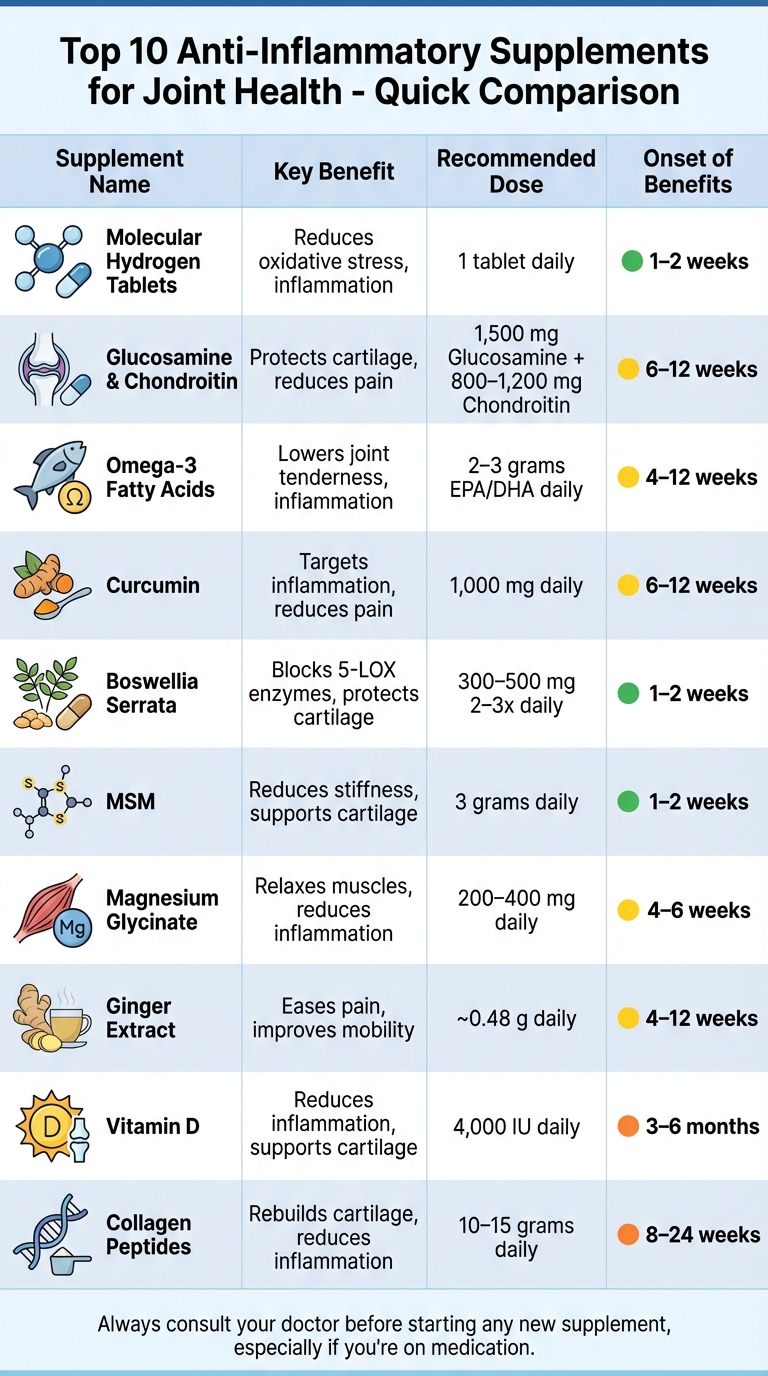
Top 10 Anti-Inflammatory Supplements for Joint Health Comparison Chart
1. Edenvia Molecular Hydrogen Tablets

Effectiveness in Reducing Inflammation
Molecular hydrogen (H₂) works as a selective antioxidant, targeting harmful free radicals like hydroxyl radicals while leaving beneficial reactive oxygen species intact. This balance is crucial, as it allows cellular signaling to continue while reducing inflammation. By lowering pro-inflammatory cytokines, H₂ helps alleviate swelling and joint stiffness.
In a user study, 90% reported reduced inflammation and pain within just 1–2 weeks. These tablets, when dissolved in water, create hydrogen-rich water with concentrations as high as 12 parts per million (PPM) - a stark contrast to the typical 1.6 PPM found in regular water. This higher concentration allows hydrogen to effectively penetrate joint tissues and mitochondria, tackling oxidative stress right at its source.
Support for Joint Mobility and Flexibility
Edenvia Molecular Hydrogen Tablets also play a role in improving joint mobility and reducing stiffness. By slowing cartilage breakdown and enhancing mitochondrial function, they contribute to better joint health. Thanks to its tiny size (2 Da), H₂ can pass through biological membranes and reach areas that larger antioxidants cannot.
Users have reported impressive results: 92% experienced better joint comfort and mobility, while 89% noticed reduced stiffness and quicker recovery times. Benefits often become noticeable within 7–10 days, with more significant improvements seen after 2–4 weeks. These results align with findings from clinical studies, further supporting their effectiveness.
Scientific Evidence and Clinical Backing
The benefits of molecular hydrogen are supported by a wealth of scientific research. Over 2,000 publications and 1,000 peer-reviewed studies highlight its potential across more than 170 health conditions. Among these, 81 clinical trials have specifically examined H₂ therapy for inflammatory issues. The MDPI Molecules Journal notes that H₂ "can maintain tissue homeostasis and can be more clinically useful than strong antioxidants that indiscriminately neutralize both beneficial and harmful ROS species".
Key Ingredients and Their Specific Benefits
Edenvia tablets are powered by a magnesium-based formula that reacts with organic acids like malic, tartaric, and adipic acids to release pure hydrogen nanobubbles into water. Beyond generating H₂ gas, magnesium also aids muscle function and recovery. To use, simply drop one tablet into room-temperature or chilled water, wait 3 minutes for it to dissolve, and drink within 30 minutes. For the best results, consistent use over 3 months is recommended.
sbb-itb-6860cc4
2. Glucosamine and Chondroitin
Effectiveness in Reducing Inflammation
Glucosamine and chondroitin work together to protect cartilage by blocking enzymes that break it down while supplying the materials needed to maintain its structure. This approach helps address inflammation directly, rather than just masking symptoms.
Studies show that taking 1,500 mg of glucosamine sulfate daily can slow cartilage loss by 20–30% over two years. When combined with chondroitin, the effects are even stronger. For instance, a 2026 review revealed that this combination reduced pain scores by about 20% more than glucosamine alone in individuals with moderate-to-severe knee osteoarthritis. The MOVES trial also found that the glucosamine-chondroitin combo was just as effective as the NSAID celecoxib in easing knee pain and swelling. These anti-inflammatory properties often lead to better joint movement and comfort.
Support for Joint Mobility and Flexibility
Glucosamine sulfate strengthens cartilage by forming its structural framework, while chondroitin enhances its ability to retain water, improving shock absorption and resistance to pressure. Many users report less joint creaking during activities like climbing stairs. Chondroitin also helps improve hand function, and using glucosamine for more than three months has shown benefits in conditions like temporomandibular joint osteoarthritis, improving mouth opening.
"There are some studies that show improved joint flexibility and range of motion with glucosamine sulfate. That's the one I would take if you're going to take it for joint stiffness."
- Farshad Fani Marvasti, MD, MPH, Director of Public Health, Prevention, and Health Promotion, The University of Arizona
Scientific Evidence and Clinical Backing
Clinical research backs the benefits of glucosamine and chondroitin, alongside user-reported improvements in mobility. In the U.S., around 6.5 million adults (2.6% of the population) have used one or both supplements. A 2017 survey found that chondroitin was the most popular dietary supplement among adults aged 35 and older with osteoarthritis. Chris D'Adamo, PhD, Director of Research & Education at the University of Maryland School of Medicine Center for Integrative Medicine, highlights the evidence:
"If you look at the totality of the evidence for glucosamine and chondroitin for osteoarthritis of the knee, it's very strong"
Key Ingredients and Their Specific Benefits
When choosing a supplement, glucosamine sulfate is preferable to glucosamine hydrochloride, as the sulfate form is more effective. The sulfate itself plays a role in supporting cartilage health. The recommended daily dose is 1,500 mg of glucosamine sulfate paired with 800–1,200 mg of chondroitin sulfate. Taking these with meals can improve absorption and reduce the chance of stomach discomfort. Results typically become noticeable after 6 to 12 weeks of consistent use.
Most glucosamine supplements are made from shellfish, so individuals with shellfish allergies should look for synthetic or corn-based alternatives. Additionally, those on blood thinners like warfarin should consult their doctor, as these supplements could increase bleeding risks.
3. Omega-3 Fatty Acids
Effectiveness in Reducing Inflammation
Omega-3 fatty acids, particularly EPA and DHA, play a critical role in reducing joint inflammation. They work by competing with arachidonic acid for enzymes and suppressing the NF-κB pathway, which triggers inflammatory cytokines like TNF-α and IL-1β. A meta-analysis from 2026, which reviewed over 70 studies, found that a daily intake of 2–3 grams of combined EPA and DHA reduced joint tenderness scores by roughly 25%. Higher doses - above 2.6 grams daily - have also been shown to lower inflammatory markers such as C-reactive protein (CRP) and erythrocyte sedimentation rate (ESR). Another 2023 meta-analysis involving 2,070 participants highlighted omega-3s’ effectiveness in reducing arthritis pain, with a standardized mean difference of –0.29, and improving joint function, as measured by the WOMAC index. Omega-3s also contribute to inflammation resolution by acting as substrates for specialized pro-resolving mediators (SPMs) like resolvins, protectins, and maresins, which aid in tissue repair.
Support for Joint Mobility and Flexibility
Omega-3s are particularly helpful in reducing morning stiffness for individuals with inflammatory arthritis. They also inhibit cartilage-degrading enzymes such as MMP-1, MMP-3, and MMP-13, slowing the progression of post-traumatic osteoarthritis. The VITAL trial in 2024 revealed that taking 460 mg of EPA and 380 mg of DHA daily for one year significantly decreased pro-inflammatory mediators, especially in individuals with low fish consumption.
Jamie Lee McIntyre, MS, RDN, a nutrition consultant, explains: "Omega-3s (especially EPA and DHA) have natural anti-inflammatory properties. They work by decreasing the production of inflammatory chemicals (like prostaglandins and cytokines) that contribute to joint pain and stiffness".
Scientific Evidence and Clinical Backing
Clinical research supports the effectiveness of omega-3 fatty acids in managing osteoarthritis and related conditions. Studies have used daily doses ranging from 350 mg to 2,400 mg, with follow-up durations from 1 to 63 months. A 2021 analysis of 70 studies confirmed that fish oil supplementation significantly reduced disease activity, pain, and morning stiffness in people with rheumatoid arthritis. Additionally, consuming oily fish at least once or twice a week is linked to a 22% lower risk of developing diabetes, a condition often associated with arthritis. A July 2025 study showed that combining curcumin (100 mg/kg) with omega-3 (110 mg/kg) in a rat model of osteoarthritis improved pain regulation and preserved cartilage better than the NSAID celecoxib (30 mg/kg).
Key Ingredients and Their Specific Benefits
The key components of omega-3 supplements are EPA and DHA, as ALA from plant sources converts inefficiently in the body. For therapeutic benefits targeting joint health, focus on the specific milligrams of EPA and DHA listed on the label rather than the total fish oil content. Aim for a combined daily dose of 2–3 grams. Look for supplements that are molecularly distilled and third-party tested to ensure they are free from contaminants like PCBs and mercury. To improve absorption and avoid a fishy aftertaste, take omega-3 supplements with a meal that contains fat. For those seeking a vegan option, algal oil provides both EPA and DHA sustainably. If you plan to exceed 3 grams per day, consult your doctor, especially if you are taking blood-thinning medications or aspirin.
This strong evidence for omega-3s’ role in reducing inflammation and improving joint health opens the door to examining other anti-inflammatory supplements.
4. Curcumin (Turmeric Extract)
Effectiveness in Reducing Inflammation
Curcumin, the powerhouse compound in turmeric, tackles inflammation through several mechanisms. It blocks enzymes like 5-LOX, which produce inflammatory agents, and reduces cytokines such as IL-1β and TNF-α - key drivers of joint inflammation. Additionally, it suppresses NF-κB activation and inhibits COX-2, the enzyme targeted by many prescription pain relievers.
What’s impressive is that curcumin provides pain relief on par with NSAIDs but with far fewer side effects. A 2021 review of 10 high-quality studies found turmeric to be just as effective as NSAIDs in reducing pain and improving knee osteoarthritis function. Clinical trials showed that only 13% of turmeric users experienced adverse effects, compared to 38% of those on conventional drugs.
"Turmeric is one of my first choices for joint pain because of its long history and good studies showing its effectiveness", says Dr. Victoria Maizes, Founding Executive Director of the Andrew Weil Center for Integrative Medicine.
The main challenge with curcumin lies in its poor absorption - standard turmeric powder contains only 3% to 10% curcumin by weight. However, advancements in absorption technology have made it easier to unlock curcumin’s potential for improving joint health.
Support for Joint Mobility and Flexibility
Curcumin doesn’t just reduce inflammation - it also protects cartilage and enhances joint function. It inhibits enzymes like MMP-13 and ADAMTS5, which degrade cartilage. A 2025 network meta-analysis of 17 randomized controlled trials showed that bioavailability-enhanced curcumin preparations reduced WOMAC pain scores by 30% compared to placebo. When paired with NSAIDs, curcumin achieved a striking 70% reduction in VAS pain scores compared to the drug alone.
Regular supplementation can ease morning stiffness and improve joint mobility, with noticeable effects typically appearing within 6 to 12 weeks.
Key Ingredients and Their Specific Benefits
For the best results, look for supplements standardized to 95% curcuminoids. This includes curcumin, demethoxycurcumin, and bisdemethoxycurcumin - the trio responsible for turmeric’s therapeutic effects. A 2016 meta-analysis highlighted that a daily dose of 1,000 mg of curcumin is effective for managing arthritis symptoms.
| Technology | How It Works | Absorption Increase |
|---|---|---|
| Piperine (BioPerine) | Slows liver enzymes that break down curcumin | Up to 2,000% |
| Phytosome (Meriva) | Combines curcumin with phospholipids for better absorption | Approximately 29× |
| Micelle (NovaSOL) | Encapsulates curcumin in water-soluble spheres | Up to 185× |
| Nanoparticle (Theracurmin) | Breaks curcumin into ultra-small particles | Significantly enhanced |
"A curcumin product without bioavailability enhancement is largely wasted", explains Kiana Malzl, Holistic Wellness Writer at Praana Health.
Since curcumin is fat-soluble, taking it with a meal that includes healthy fats - like avocado, olive oil, or fatty fish - can further improve its absorption. If you’re on blood thinners, diabetes medications, chemotherapy, or have gallbladder issues, consult your doctor before starting supplementation.
5. Boswellia Serrata
Effectiveness in Reducing Inflammation
Boswellia Serrata, often called Indian Frankincense, is a natural option for easing inflammation and improving joint health. What sets it apart is its unique way of targeting inflammation. Unlike NSAIDs like ibuprofen that block COX enzymes, Boswellia focuses on 5-lipoxygenase (5-LOX), reducing pro-inflammatory leukotrienes that harm joint tissues. Its active compound, AKBA (acetyl-11-keto-β-boswellic acid), plays a key role in suppressing NF-κB signaling and lowering TNF-alpha levels, a major driver of inflammation.
"Unlike many conventional treatments, it specifically blocks 5-lipoxygenase (5-LOX), an enzyme responsible for joint inflammation", explains Life Nutrition.
Research backs its effectiveness. In a randomized, double-blind study involving 30 patients with knee osteoarthritis, those taking Boswellia extract experienced less pain and could walk longer distances. Additionally, a 2014 Cochrane Review highlighted that a 90-day regimen of 100 mg daily of AKBA-enriched Boswellia reduced osteoarthritis pain by almost 20 points and enhanced physical function by 8 points on a 100-point scale. Since Boswellia works through a different pathway than NSAIDs, it offers similar relief without the risk of ulcers or gastrointestinal issues.
Support for Joint Mobility and Flexibility
Boswellia also helps protect cartilage by blocking matrix metalloproteinases (MMPs) - enzymes known to break down collagen and joint tissue. A January 2025 clinical trial with 62 participants suffering from mild to moderate knee osteoarthritis showed promising results. Over 90 days, a supplement combining 300 mg of Boswellia Serrata with 250 mg of celery seed extract significantly reduced cartilage breakdown markers like MMP-3 and CTX-II and boosted collagen production.
Relief can often be felt within 7 to 14 days, with the best results appearing after 4 to 8 weeks of consistent use. These benefits make Boswellia an excellent complement to other joint health supplements.
Key Ingredients and Their Specific Benefits
When choosing a Boswellia supplement, look for products standardized to at least 65% boswellic acids, including a high concentration of AKBA, which is known for its potent anti-inflammatory properties. Some advanced formulas contain 10% or even 30% AKBA for enhanced results.
The recommended dose is 300 to 500 mg of extract, taken two to three times daily with meals to improve absorption and reduce the chance of stomach discomfort. Supplements that include BioPerine (black pepper extract) or lecithin-based delivery systems can further boost bioavailability. If you're on blood thinners, consult your doctor before adding Boswellia to your routine.
6. MSM (Methylsulfonylmethane)
Effectiveness in Reducing Inflammation
MSM, an organosulfur compound naturally found in fruits, vegetables, and grains, is widely recognized for its anti-inflammatory and antioxidant properties. It provides bioavailable sulfur, a crucial element for maintaining and repairing connective tissues and joint cartilage. Unlike some supplements that take weeks to show results, MSM works quickly by targeting inflammatory markers and oxidative stress, addressing joint inflammation directly at its source. This fast action helps improve joint mobility.
A review conducted in 2026 highlighted that a daily dose of 3 grams of MSM significantly reduces joint stiffness, with particularly strong results noted for the hands and fingers. Clinical trials have tested MSM in doses ranging from 500 mg to 6 grams per day, and the research consistently supports its safety, even at higher doses.
Support for Joint Mobility and Flexibility
Beyond its anti-inflammatory benefits, MSM is effective in enhancing joint mobility. A 12-week study at the Nizam's Institute of Medical Sciences examined 118 patients with knee osteoarthritis. Those who took 500 mg of MSM three times daily experienced a reduction in their pain index from 1.53 to 0.74, along with a significant decrease in joint swelling.
Combination therapy showed better efficacy in reducing pain and swelling and in improving the functional ability of joints than the individual agents. - P. R. Usha and M. U. R. Naidu, Department of Clinical Pharmacology and Therapeutics
When combined with glucosamine, which supports cartilage structure, MSM delivers a synergistic effect, providing faster pain relief than either supplement alone.
Key Ingredients and Their Specific Benefits
When paired with glucosamine sulfate, MSM enhances both structural support and pain relief. It's important to choose pure MSM, which should be entirely odorless. A garlic-like smell indicates contamination with DMSO, which is linked to higher toxicity. Tablets are generally recommended over powders or topical applications, as they have the strongest backing from clinical studies.
For targeting joint stiffness and improving mobility, a daily dose of 3 grams of MSM is recommended. To further boost results, combining MSM with 1,500 mg of glucosamine sulfate is often advised. Some individuals may experience mild gastrointestinal discomfort, such as bloating or indigestion, but taking MSM with meals can help minimize these effects. Additionally, MSM is not listed on the 2026 WADA Prohibited List, making it a safe option for competitive athletes. Its dual ability to reduce inflammation and strengthen cartilage makes MSM a key player in managing joint stiffness and pain.
7. Magnesium Glycinate
Effectiveness in Reducing Inflammation
Magnesium glycinate helps manage inflammation by regulating key markers in the body. Low magnesium levels are directly linked to higher levels of C-reactive protein (CRP) and pro-inflammatory cytokines, both of which contribute to joint inflammation. This supplement pairs magnesium with glycine, an amino acid known for its own anti-inflammatory properties.
Unlike magnesium oxide or citrate, magnesium glycinate is easily absorbed in the small intestine and is less likely to cause digestive discomfort. Magnesium also plays a role in over 300 enzymatic processes that impact joint health, including maintaining the structure of bones and connective tissues.
"Magnesium plays a crucial role in regulating inflammation by influencing inflammatory markers in the body." - ine+ nutrition
Beyond its anti-inflammatory effects, magnesium glycinate supports joint health by aiding muscle relaxation, which can further enhance mobility and comfort.
Support for Joint Mobility and Flexibility
Magnesium acts as a natural calcium blocker, allowing muscles to relax and easing the strain on joints. When magnesium levels are low, muscles surrounding joints can stay tense, leading to increased mechanical stress on the joints. By encouraging muscle relaxation, magnesium glycinate helps reduce this stress, improving joint flexibility and reducing stiffness.
"By promoting muscle relaxation, magnesium glycinate can help reduce the physical load on your joints, which many people find helps with overall mobility and comfort." - Cymbiotika
Glycine, a component of magnesium glycinate, also promotes collagen production. Collagen is essential for the health of cartilage, tendons, and ligaments. Additionally, magnesium helps protect chondrocytes, the cells responsible for maintaining joint cartilage. Most people notice improvements in mobility and reduced joint pain within 4 to 6 weeks of regular use.
Scientific Evidence or Clinical Backing
Magnesium glycinate has a Grade B rating for its clinical effectiveness, based on an analysis of over 100 studies. It has been rated 10/10 by independent researchers as a "Proven" supplement for muscle and nerve function, with a consensus score of 9/10. For most adults, the recommended daily dose ranges from 200 mg to 400 mg of elemental magnesium, with 400 mg being the most effective dose for about 80% of users.
| Dose (mg) | Effectiveness Level | Clinical Status |
|---|---|---|
| < 200 mg | 0–52% | Sub-therapeutic |
| 200–400 mg | 52–80% | Effective (Sweet Spot) |
| 400 mg | ~80% | Optimal |
| > 600 mg | 80% | Diminishing Returns |
It usually takes 3 to 4 weeks of consistent use to restore magnesium levels and experience noticeable improvements in joint comfort.
Key Ingredients and Their Specific Benefits
The chelated structure of magnesium glycinate offers a dual advantage. Magnesium promotes muscle relaxation and works alongside glycine to support collagen production, reduce inflammation, and activate Vitamin D for better calcium absorption.
"Magnesium is required to 'activate' Vitamin D. Without sufficient magnesium, the Vitamin D you take or get from the sun cannot be converted into its active form, which is necessary for the body to absorb calcium properly." - Cymbiotika
For best results, take 200–400 mg daily with meals to enhance absorption and minimize stomach upset. Taking it in the evening may also help with sleep due to its calming effects. Costs typically range from $35 to $50 per month. Pairing magnesium glycinate with Vitamin D3 and K2 can further improve joint health by ensuring calcium is directed into bones rather than soft tissues. This makes it an excellent addition to any joint health routine.
8. Ginger Extract
Effectiveness in Reducing Inflammation
Ginger extract is packed with compounds that help tackle inflammation at its source. These compounds work by suppressing inflammatory markers like TNF‑α and COX‑2 in joint synovial cells, which are known to drive joint swelling and discomfort. Additionally, ginger extract reduces the production of prostaglandins and leukotrienes - chemicals that amplify pain and stiffness in the joints.
"Ginger exerts its bioactivities via a number of mechanisms such as inhibiting the activation of tumor necrosis factor α and cyclooxygenase-2 in human synoviocytes." - Springer Nature, Discover Food
Clinical studies have shown that ginger extract can make a noticeable difference for arthritis patients, particularly those dealing with knee pain. By reducing inflammation, it eases pain and improves mobility, making day-to-day activities less challenging for individuals with chronic joint issues. The result? Less stiffness, better movement, and improved quality of life.
Support for Joint Mobility and Flexibility
In a 12-week clinical trial conducted by researchers from Woosuk University, 100 participants with mild knee osteoarthritis were given 1.6 g of a product containing 0.48 g of steamed ginger extract (GGE03) daily. This randomized, double-blind, placebo-controlled study found that those taking the ginger extract experienced significant pain relief and better K‑WOMAC scores - an assessment tool for pain, stiffness, and physical function - compared to the placebo group.
"GGE03 intake is useful as a functional food because it has beneficial effects in terms of improving joint pain as well as managing or preventing knee OA without side effects." - Hyang-Im Baek et al.
For people with mild knee osteoarthritis, incorporating about 0.48 g of steamed ginger extract daily over 12 weeks may help reduce pain and improve joint flexibility. These benefits highlight the potential of ginger as a natural option for managing joint issues.
Key Ingredients and Their Specific Benefits
Ginger contains over 115 bioactive compounds, with the most prominent being gingerols, shogaols, paradols, and zingerone. Each of these compounds plays a unique role in supporting joint health:
| Active Compound | Primary Source | Key Joint Benefit |
|---|---|---|
| Gingerols | Fresh Ginger | Inhibits pro‑inflammatory cytokines |
| Shogaols | Dried/Heated Ginger | Reduces inflammation and provides pain relief |
| Paradols | Ginger Oleoresin | Offers antioxidant and anti-inflammatory support |
| Zingerone | Cooked Ginger | Contributes to overall anti-inflammatory effects |
Fresh ginger is rich in 6‑gingerol, known for its strong anti-inflammatory and antioxidant properties. On the other hand, dried ginger contains more 6‑shogaol, which is particularly effective for pain relief and reducing inflammation. Depending on your needs, you can choose fresh ginger for its higher gingerol content or dried ginger for its shogaol concentration.
Since there are no universal dosage guidelines for using ginger to manage arthritis symptoms, consulting a healthcare professional before starting a supplement is always a good idea.
9. Vitamin D
Effectiveness in Reducing Inflammation
Vitamin D plays a role in reducing inflammation by targeting several key processes in the joints. It helps lower prostaglandin and cytokine production while also reducing knee effusion-synovitis volume, which is a marker of inflammation inside the joint.
"Vitamin D reduces inflammation by blocking pro-inflammatory cytokines and scavenging free radicals that damage cells." - Vanessa Imus, MS, RDN, Integrated Nutrition for Weight Loss
The presence of vitamin D receptors in joint cartilage and synovial tissue highlights the importance of maintaining adequate levels for joint health. A 2025 randomized, double-blind study found that a daily dose of 4,000 IU of vitamin D significantly reduced disease activity (DAS-28 score) and pain (VAS score) in rheumatoid arthritis patients. Participants saw an average reduction of 1.17 points in the DAS-28 score and an 8.26 mg/L decrease in C-reactive protein (CRP) levels, both indicators of reduced systemic inflammation. These effects not only help with pain relief but also improve joint function over time.
Support for Joint Mobility and Flexibility
Vitamin D supports joint health in several ways. It strengthens muscles around the joints, reducing strain, and aids in cartilage repair, which helps cushion bones. Research shows that individuals with serum vitamin D levels below 30 ng/mL are twice as likely to experience knee pain compared to those with higher levels. Additionally, those with levels under 37.5 nmol/L face a threefold greater risk of osteoarthritis progression. A 2022–2023 study at the Rheumatology Clinic of the University Clinical Centre of Kosova involving 100 Caucasian rheumatoid arthritis patients found that taking 4,000 IU of vitamin D daily for six months led to significant reductions in both pain and disease activity compared to a control group.
Key Ingredients and Their Specific Benefits
The form of vitamin D and its co-nutrients are crucial for its effectiveness. Vitamin D supplements are available in two main forms: D2 (ergocalciferol) and D3 (cholecalciferol). Vitamin D3 is generally preferred because it is better at raising and maintaining serum vitamin D levels. For enhanced benefits, consider a formulation that includes vitamin K2, particularly the MK-7 form. While vitamin D improves calcium absorption, vitamin K2 ensures calcium is directed to bones and teeth, preventing it from building up in soft tissues.
Before starting a supplement regimen, it’s important to check your current vitamin D levels with a blood test. Optimal levels for joint health typically fall between 40–60 ng/mL. If you’re deficient, a starting dose of 4,000–5,000 IU per day is often suggested, followed by a blood test after three months to track progress. To maximize absorption, take vitamin D with a meal that includes healthy fats, such as avocado or olive oil. Lastly, review your current multivitamin or protein supplement to ensure you’re not exceeding safe levels of vitamin D intake.
The Best Supplements for Joint Health & Arthritis
10. Collagen Peptides
Collagen peptides play a dual role in supporting joint health: they help ease inflammation and rebuild cartilage, contributing to stronger, more resilient joints.
Effectiveness in Reducing Inflammation
Collagen peptides tackle inflammation through two distinct mechanisms. Undenatured (native) type II collagen interacts with gut-associated lymphoid tissue, triggering regulatory T cells. These cells migrate to the joints, where they release anti-inflammatory cytokines like TGF-β, IL-10, and IL-4, while reducing pro-inflammatory markers such as TNFα and IL-1β. A 2026 meta-analysis revealed that taking just 40 mg of undenatured type II collagen (UC-II) daily reduced rheumatoid arthritis markers by about 40%.
On the other hand, hydrolyzed collagen peptides follow a different path. Once absorbed, these peptides (like Pro-Hyp and Pro-Hyp-Gly) accumulate in cartilage and stimulate chondrocytes to produce extracellular matrix components, including proteoglycans and type II collagen. This process slows cartilage breakdown and reduces autoantigen release, which often triggers inflammation in osteoarthritis.
Collagen peptides don't just address inflammation - they also strengthen joint structures.
Support for Joint Mobility and Flexibility
Supplementing with collagen peptides has been shown to improve joint mobility and reduce pain. For example, consuming 15 grams daily can increase collagen synthesis by 153%. In a 12-week study, healthy adults experiencing joint pain reported significant relief during activities like walking, climbing stairs, and squatting after taking 5 grams of specific collagen peptides daily.
"Individuals who supplement with collagen show a decrease in osteoarthritis symptoms, such as knee pain or restricted movement." - Keith Baar, Molecular Exercise Physiologist, UC Davis Health
Collagen production naturally declines after the age of 25–30, leading to thinner cartilage and stiffer joints.
Key Ingredients and Their Specific Benefits
The type and source of collagen make a big difference. Undenatured type II collagen, often sourced from chicken, works effectively at low doses of around 40 mg to reduce immune-driven inflammation. Meanwhile, hydrolyzed collagen peptides, typically derived from grass-fed bovine sources, require higher doses of 10–15 grams daily to provide the raw materials needed for cartilage repair.
For optimal results, pair collagen with vitamin C, which supports collagen synthesis. Athletes may benefit from taking collagen about an hour before exercise to enhance tissue-specific synthesis. Clinical improvements in joint mobility and pain are typically noticeable after 8–24 weeks of consistent use.
Conclusion
Anti-inflammatory supplements focus on slowing joint degradation by addressing systemic inflammation, oxidative stress, and metabolic imbalances. They provide a proactive option that might help reduce reliance on NSAIDs, which are associated with side effects like kidney damage and stomach ulcers when used long-term. For example, glucosamine sulfate has been shown to slow knee cartilage loss by as much as 30% over two years.
Before starting any new supplement, it's essential to consult your doctor, particularly if you're on prescription medications. Many joint supplements, such as omega-3s, curcumin, and Boswellia, can interact with blood thinners or medications for blood pressure. This highlights the role of supplements as a complement to, not a replacement for, traditional medical treatments. Look for products with USP or NSF certification to ensure quality and accuracy, and introduce one supplement at a time, giving it 4–8 weeks to evaluate its effectiveness.
"Supplements support joint health, they don't cure disease. If you have significant joint problems, they should complement medical care, not replace it." - The Founder, Joint Ease Lab
Supplements are most effective when combined with a balanced lifestyle. Regular physical activity improves joint health by boosting blood flow to the tissues, while an anti-inflammatory diet, such as the Mediterranean diet, helps lower systemic inflammation. Maintaining a healthy weight reduces stress on weight-bearing joints, and adequate sleep plays a key role in managing pain perception.
"Addressing diet, exercise, sleep, and supplementation as discrete therapeutic targets may improve patient-reported outcomes, reduce medication burden, and mitigate comorbid disease risk." - Son Nguyen, Stanford Prevention Research Center
When paired with regular exercise, weight management, and a nutrient-rich diet, supplements can be part of a sustainable plan for long-term joint health. Together, these strategies help maintain joint function and minimize inflammation over time.
FAQs
Which supplement is best for my type of joint pain?
The right supplement for joint pain largely depends on what's causing the discomfort and your specific health requirements. If inflammation is the issue, turmeric or its active compound, curcumin, might help alleviate pain and swelling. For pain tied to osteoarthritis, supplements like glucosamine and chondroitin are often recommended. Meanwhile, omega-3 fatty acids from fish oil can help ease inflammation associated with conditions like rheumatoid arthritis. Always consult a healthcare professional to determine the best choice for your needs.
Can I take these supplements with NSAIDs or blood thinners?
It's crucial to talk to a healthcare professional before taking these supplements with NSAIDs or blood thinners. For example, SAM-e could interact with these medications or lead to side effects. A doctor can evaluate any risks and guide you on how to use them safely with your existing treatments.
How do I know if I should start with vitamin D or magnesium?
Choosing between vitamin D and magnesium depends on what your body needs most. Vitamin D plays a key role in maintaining strong bones and boosting your immune system. A lack of it may lead to joint pain or inflammation. On the other hand, magnesium helps with muscle function, calms inflammation, and supports overall joint health. If you're uncertain about what your body might be missing, consider consulting a healthcare provider. They can run blood tests to pinpoint deficiencies and guide you toward the right choice.