


Hydrogen water is regular water infused with molecular hydrogen (H2), often praised for its potential to reduce inflammation and act as an antioxidant. While it’s generally considered safe, with the FDA granting it GRAS (Generally Recognized as Safe) status, a few mild side effects may occur. Here's what you need to know:
- Mild Digestive Symptoms: Temporary bloating, gas, or diarrhea may happen as your gut adjusts. Starting with smaller amounts (4–9 oz daily) can help.
- Rare Headaches or Dizziness: These are uncommon and usually resolve within a few days. Dehydration may also play a role.
- Theoretical Risks: Overhydration (hyponatremia) from excessive water intake is a concern, though not specific to hydrogen water.
- Caution for Specific Groups: Pregnant women, children, and those with kidney disease or diabetes should consult a doctor before use.
Clinical studies involving over 1,600 participants found no serious adverse effects, and over 1,000 studies confirm its safety. For most people, hydrogen water can be introduced gradually and consumed in moderation (0.5–1.5 liters daily) without issues.
I Drank HYDROGEN WATER For an Entire YEAR
sbb-itb-6860cc4
Side Effects Documented in Clinical Research
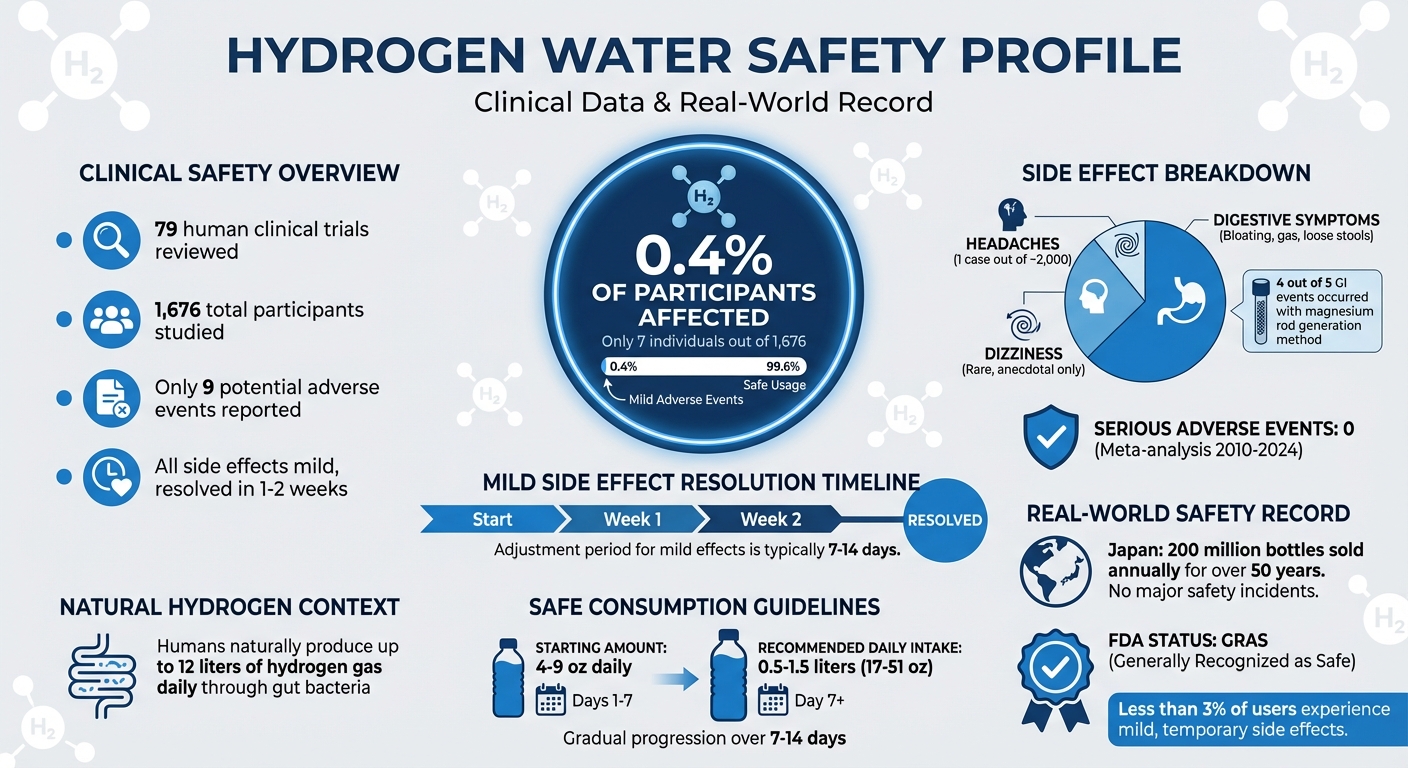
Hydrogen Water Safety Profile: Clinical Study Results and Side Effects
Hydrogen-rich water has been shown to have an excellent safety profile, with clinical studies reporting an extremely low occurrence of side effects. A review of 79 human clinical trials, involving 1,676 participants, recorded only 9 potential adverse events across 7 individuals. This equates to just 0.4% of participants experiencing any side effects, most of which were mild and resolved within 1–2 weeks as the body adjusted.
Digestive Symptoms
The most commonly reported side effects involve temporary digestive changes. These include bloating, increased gas, loose stools, and occasional diarrhea. Such effects are believed to result from the gut microbiome adapting to the introduction of exogenous hydrogen, as well as an osmotic response similar to what occurs with high fiber intake. Since humans naturally produce up to 12 liters of hydrogen gas daily through the breakdown of carbohydrates by gut bacteria, adding hydrogen externally may temporarily disrupt this balance.
Interestingly, one study found that 4 out of 5 reported gastrointestinal events occurred during trials using magnesium rods to generate hydrogen. To minimize these effects, it's recommended to start with a smaller amount of hydrogen-rich water (around 4–9 oz daily) and gradually increase intake over 7–14 days, allowing the gut microbiome time to adjust. While digestive symptoms are the most frequent, rare neurological side effects have also been noted.
Headaches and Dizziness
Headaches and dizziness are uncommon and primarily anecdotal side effects. Among nearly 2,000 participants studied, only one case of headache was formally documented. When these symptoms do occur, they are typically reported within the first few days of use and tend to resolve on their own within 2–3 days. There is no clear evidence linking these symptoms directly to hydrogen-rich water. In many cases, dehydration or other dietary factors are more likely culprits.
Some researchers suggest that molecular hydrogen’s potential effects on neurological functions and alertness might temporarily impact brain signaling, causing mild headaches in a small number of new users. If headaches arise, drinking plenty of regular water can help rule out dehydration as a factor.
Uncommon and Theoretical Risks
Although clinical studies generally report few side effects, there are some theoretical risks worth noting. These aren't common but deserve attention, especially for specific groups or in extreme scenarios.
Hyponatremia from Excessive Water Intake
Drinking too much water, regardless of the source, can lead to hyponatremia. This condition involves a dangerous drop in blood sodium levels and is most often seen in athletes or individuals who overhydrate without replenishing electrolytes.
Research indicates that consuming between 0.5 and 3 liters of water daily is generally safe for healthy individuals, without causing electrolyte imbalances. To stay safe, moderation is essential. Experts recommend a daily intake of 0.5 to 1.5 liters (approximately 17 to 51 ounces).
"Practical harms include overhydration (hyponatremia) if water intake becomes excessive - a risk that applies to any water source and typically concerns athletes or those drinking large volumes, not hydrogen per se." - Factually Health Analysis
Considerations for Certain Populations
Certain groups should exercise caution and seek medical advice before consuming hydrogen water, particularly if the formulation includes magnesium salts. These groups include:
- Pregnant or breastfeeding women
- Children under 18
- Individuals with kidney disease
- Diabetic patients
For those with kidney issues, monitoring fluid intake is critical. Diabetics may also need to watch their blood sugar levels more closely, as hydrogen water could improve insulin sensitivity. This effect might require adjustments to medications, which should only be done under medical supervision.
Despite these theoretical concerns, hydrogen-rich water has demonstrated an excellent safety profile in clinical studies. A meta-analysis of 38 human trials conducted between 2010 and 2024 found no serious adverse events linked to hydrogen therapy. Additionally, Japan has sold roughly 200 million bottles of hydrogen water annually over the past 50 years without any major safety incidents reported. These findings highlight the importance of tailored guidance for at-risk populations while reinforcing the overall safety of hydrogen water.
Medical Applications of Hydrogen Water
Research suggests that hydrogen water could help reduce side effects from intensive treatments like radiation therapy for cancer patients. Its potential therapeutic benefits are becoming clearer through clinical studies, complementing its established safety profile.
Effects During Radiation Therapy
A 2006 randomized, placebo-controlled study with 49 liver tumor patients showed promising results. Participants who drank 1.5–2.0 liters of hydrogen-rich water daily for six weeks reported fewer gastrointestinal issues, such as appetite loss and taste changes, compared to the placebo group. They also maintained better quality-of-life scores, while tumor response rates remained comparable between the two groups (48% vs. 50%).
"Daily consumption of hydrogen-rich water is a potentially novel, therapeutic strategy for improving QOL after radiation exposure. Consumption of hydrogen-rich water reduces the biological reaction to radiation-induced oxidative stress without compromising anti-tumor effects."
– Medical Gas Research
Antioxidant and Anti-Inflammatory Properties
Hydrogen water's antioxidant abilities play a key role in minimizing treatment-related complications. It targets harmful hydroxyl radicals, which are responsible for the majority of radiation-induced cell damage, while preserving the body's overall antioxidant capacity. This process helps stabilize reactive oxygen metabolite levels without negatively affecting liver function or blood composition.
"Hydrogen, a therapeutic medical gas, has antioxidant properties and reduces inflammatory events in tissues."
– Medical Gas Research
These findings underscore hydrogen water's potential to ease treatment side effects while maintaining its safety. Its anti-inflammatory benefits make it a simple addition to daily routines.
For those exploring these benefits, Edenvia Molecular Hydrogen offers tablets that dissolve in water to create hydrogen-rich water, promoting cellular health and well-being.
Conclusion
Extensive studies show that hydrogen water is both safe and potentially beneficial. The U.S. Food and Drug Administration classifies molecular hydrogen as "Generally Recognized as Safe" (GRAS), with fewer than 3% of users experiencing mild and temporary side effects.
The body naturally produces hydrogen and eliminates any excess through exhalation, making toxicity concerns virtually nonexistent. On top of its safety, hydrogen water acts as a selective antioxidant, offering support at the cellular level and helping to ease inflammation.
A good starting point is 8 ounces (250 ml) daily, which can be gradually increased to 1–2 liters as your body adjusts. If you are pregnant, nursing, have kidney concerns, or take medications for blood pressure or diabetes, it’s wise to consult your healthcare provider before incorporating it into your routine.
With its strong safety record, hydrogen water can be a valuable addition to a balanced wellness plan. If you're curious about trying it, Edenvia Molecular Hydrogen offers easy-to-use tablets that dissolve in water, creating hydrogen-rich water designed to support cellular health and reduce inflammation.
FAQs
How can I tell if hydrogen water is causing my symptoms?
If you're wondering whether hydrogen water might be behind certain symptoms, keep an eye out for digestive issues like bloating, gas, diarrhea, or more frequent bowel movements. These are among the most commonly reported side effects by users. Should you experience any of these, it’s a good idea to reach out to a healthcare professional to discuss your concerns.
Does the way hydrogen water is made affect side effects?
Hydrogen water is created through different processes, such as water infusion or inhalation, and these methods can influence its safety profile. While research indicates that side effects are uncommon, they are typically mild when they do occur. Reported issues include symptoms like loose stool or diarrhea.
Can hydrogen water interact with diabetes or blood pressure meds?
There isn't much scientific evidence to show that hydrogen water interacts with diabetes or blood pressure medications. So far, no specific side effects from such interactions have been reported. Still, if you're worried about how it might affect your medications, it's always a good idea to talk to your healthcare provider.